











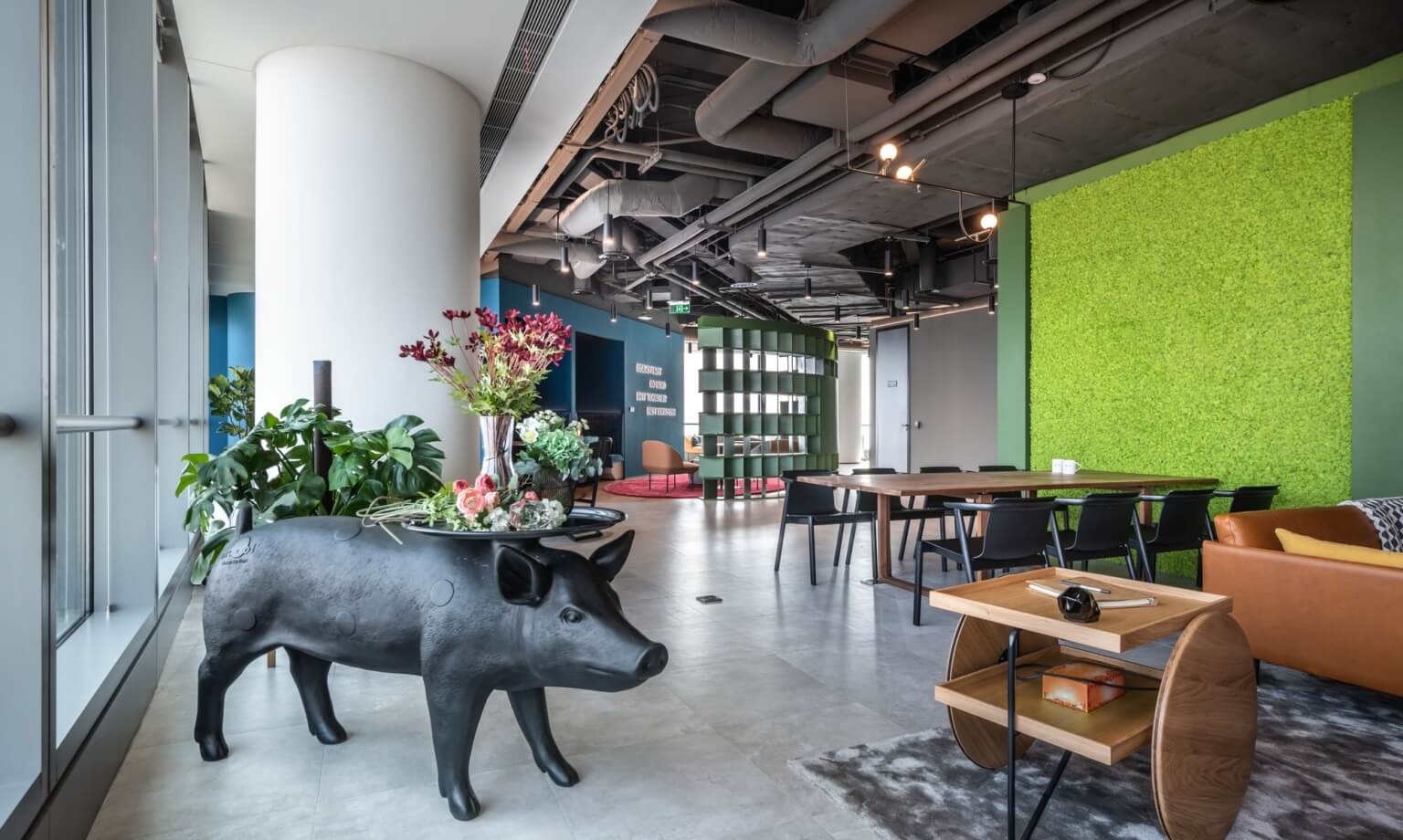
- Ce que vous apprendrez
- How to choose the right furniture for every area of your coworking space
- Which coworking furniture to prioritize when working with different budgets
- What to look for when buying commercial office furniture
- How occupancy and booking data can help you make smarter layout and furniture decisions over time
If you’re opening a coworking space (or giving your current one a refresh), furniture is probably one of the biggest investments you’ll make. It’s also one of the first things members notice.
Comfortable chairs, practical desks, and inviting lounge areas can make people want to stay longer and come back more often. On the other hand, uncomfortable furniture or a poor layout can quickly leave a bad impression, even if everything else is working well.
In this guide, I’ll share the coworking furniture I’ve seen in almost every coworking space, what to look for before buying it, and the practical lessons I’ve learned from researching successful spaces.
What is coworking space furniture?
Coworking space furniture includes all the desks, chairs, meeting room furniture, lounge seating, storage, and other furnishings that make a shared workspace comfortable and functional.
Unlike traditional office furniture, it’s designed for spaces used by many different people throughout the day. It needs to be durable enough for everyday use, flexible enough to support different ways of working, and comfortable enough for members who may spend hours working, collaborating, or meeting clients.
Before buying coworking furniture
One mistake I see quite often is people choosing coworking furniture before they’ve planned how the space will actually be used.
Every coworking community is different. Some spaces are filled with freelancers quietly working on their own projects. Others are home to startup teams that spend half the day collaborating. Some mainly attract remote employees looking for a comfortable place to work, while others regularly host workshops, networking events, or client meetings.
The more you understand your members, the easier it becomes to choose furniture they’ll actually enjoy using. So, before buying anything, I’d ask myself a few simple questions:
- Will most members use hot desks or dedicated desks?
- How often will meeting rooms be booked?
- Will people spend most of the day working quietly, or collaborating with others?
- Do members regularly take video calls?
- Will clients and visitors come through the space?
- Do I plan to host community events outside normal working hours?
The answers will help you decide how much space to dedicate to desks, meeting rooms, quiet areas, lounge seating, and social spaces. Speaking of:
Coworking layouts are changing
A few years ago, many coworking spaces tried to fit as many desks into the available space as possible. Today, many operators are taking a different approach when designing their spaces.
Coworking industry research shows the average coworking space now provides around 14.4 m² (155 ft²) per desk, with more space dedicated to meeting rooms, quiet areas, collaboration zones, and private offices. Researchers also found that desk density alone has little impact on coworking space profitability. Instead, successful coworking spaces focus on creating the right mix of spaces for the way people work today.
I think that’s a much better way to think about coworking furniture too. Rather than asking, “How many desks can I fit?”, I’d ask, “What kinds of spaces will help my members do their best work?”
Planning your coworking space by zones
Once you’ve thought about your members, I’d stop thinking about furniture for a moment and start thinking about zones instead.
People don’t spend eight hours sitting at the same desk anymore. They move between focused work, meetings, coffee breaks, phone calls, and informal conversations throughout the day. Your furniture should support all of those activities.
Here’s the mix of spaces I’d aim for in most coworking spaces:
Zone | Objectif | Coworking furniture to include |
|---|---|---|
Reception | Welcome visitors and members | Reception desk, waiting chairs, storage |
Open workspace | Flexible hot desking | Shared desks, ergonomic chairs |
Dedicated desk area | Permanent member workstations | Larger desks, monitor arms, lockers |
Quiet area | Focused work | Privacy screens, acoustic seating |
Salles de réunion | Team meetings and client calls | Conference tables, meeting chairs, whiteboards |
Phone booths | Private calls | Acoustic booths or privacy pods |
Lounge | Informal work and networking | Sofas, lounge chairs, coffee tables |
Café or kitchen | Breaks and casual conversations | Dining tables, café seating, bar stools |
Outdoor space (if available) | Flexible working and relaxation | Weather-resistant tables and seating |
Giving members different environments to choose from usually creates a much better experience than filling the entire office with rows of identical desks.
Some people do their best work at a traditional workstation. Others prefer a sofa for an hour or two, while some like standing desks or quiet corners away from the busiest parts of the office.
The more choice you can offer, the more likely members are to find a space that works for them.
Must-have office furniture for coworking spaces
Every coworking space is different, but there are a few coworking furniture categories I’d consider essential:
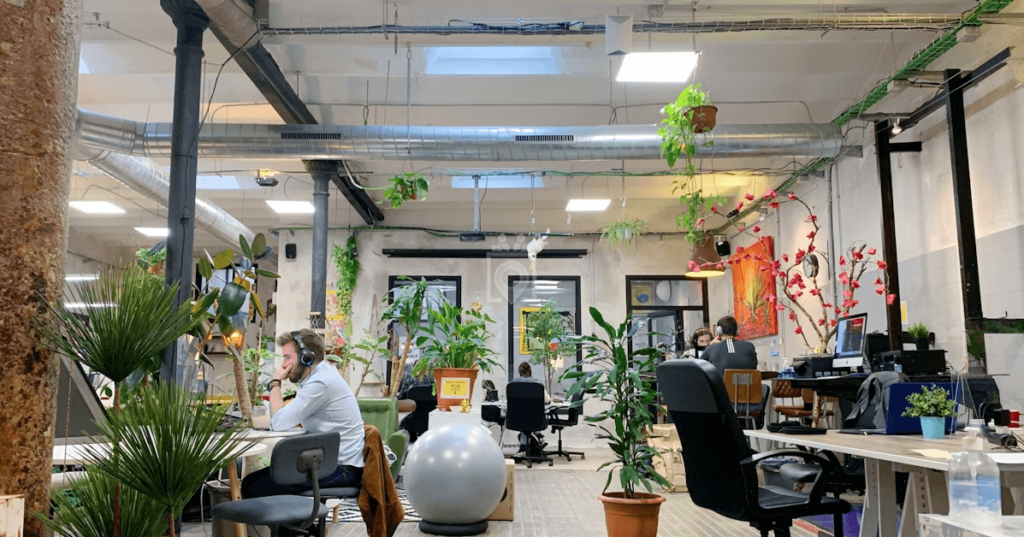
Coworking desk furniture
Desks are the heart of any coworking space, but I wouldn’t fill the office with just one type. People work in different ways, so giving members a few options usually creates a much better experience.
For example, you might include:
- Hot desks for flexible members
- Dedicated desks for long-term members
- Height-adjustable desks for people who like to alternate between sitting and standing
- Larger shared tables for teams working together
When choosing desks, I’d look for practical features rather than flashy designs. Things like durable surfaces, built-in cable management, and enough room for two monitors can make a much bigger difference than unusual shapes or premium finishes.
Remember that desks will probably be used every day, so it’s worth choosing furniture for coworking spaces that’s built to last.
Ergonomic office chairs
If I had to spend a little more money on one piece of furniture, it would probably be the office chair.
Members might sit there for six, eight, or even ten hours a day. A comfortable chair won’t necessarily convince someone to join your coworking space, but an uncomfortable one is something they’ll notice surprisingly quickly.
I’d look for chairs with:
- Adjustable height
- Good lumbar support
- Adjustable armrests
- Breathable mesh backs
- Smooth-rolling wheels
- Durable commercial-grade materials
Quality office chairs usually cost more upfront, but they often last much longer than residential furniture and are far easier to maintain.
Meeting room furniture
Meeting rooms have a different job than the rest of your coworking space, so they need different furniture too.
Some meetings last 15 minutes, while others run for hours. People might be brainstorming with colleagues, presenting to clients, or jumping on video calls, so comfort and practicality matter just as much as appearance.
I’d start with a conference table that’s the right size for the room. It’s tempting to fit in as many seats as possible, but leaving enough space for people to move around makes the room feel much more comfortable.
A typical meeting room also benefits from:
- Comfortable meeting chairs
- A whiteboard or glass board
- A screen for presentations and video calls
- Small storage cabinets for cables and supplies
If you’re planning several meeting rooms, I’d also vary their sizes. A couple of smaller rooms for two to four people are often booked more frequently than one large boardroom.
- Quick tip
Industry surveys show meeting rooms remain one of the most requested areas, so they’re worth furnishing just as thoughtfully as your open workspace.
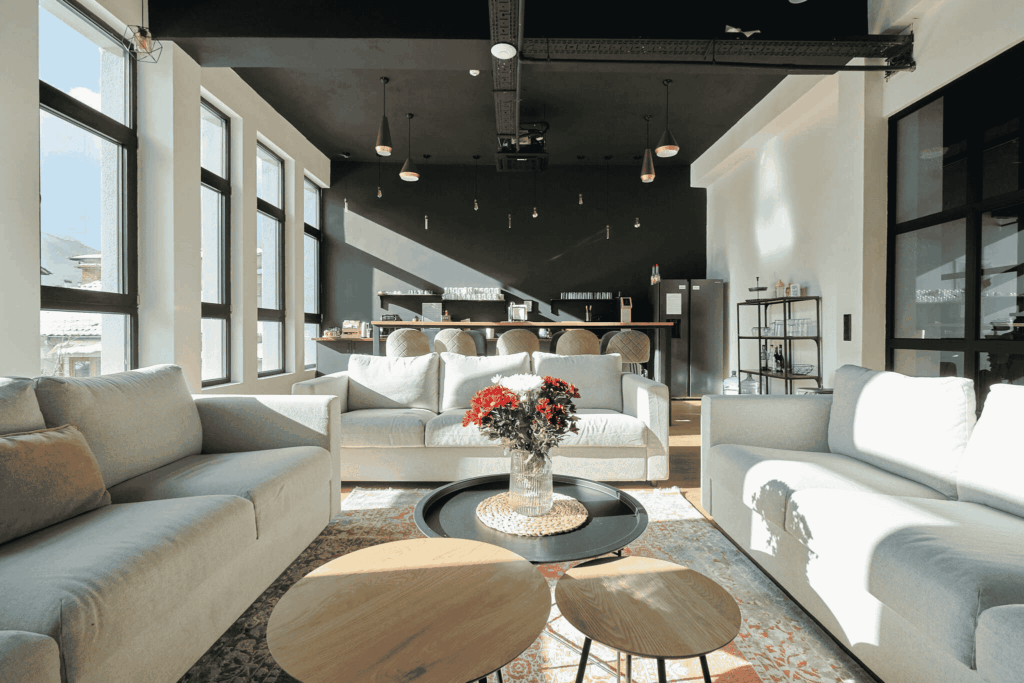
Lounge furniture
One thing I’ve noticed while researching coworking spaces is that the lounge is rarely just a place to relax. It’s where people catch up over coffee, answer emails between meetings, have informal conversations, or simply work somewhere different for an hour.
A comfortable lounge might include:
- Sofas
- Lounge chairs
- Coffee tables
- Side tables
- Ottomans
- Modular seating
If you have enough space, try creating a few smaller seating areas instead of one large sofa in the middle of the room. It gives members more privacy and makes the space feel more inviting.
Privacy furniture
One of the biggest challenges in any coworking space is noise. Open workspaces are great for collaboration, but they’re not ideal when someone needs to take a client call or focus on an important project.
That’s why I’d always try to include at least a few quiet spaces. Depending on your budget, this could be:
- Acoustic phone booths
- Meeting pods
- High-backed lounge seating
- Privacy screens
- Acoustic dividers
You don’t necessarily need many phone booths, but having a few places where members can work without distractions makes a huge difference to the overall experience.
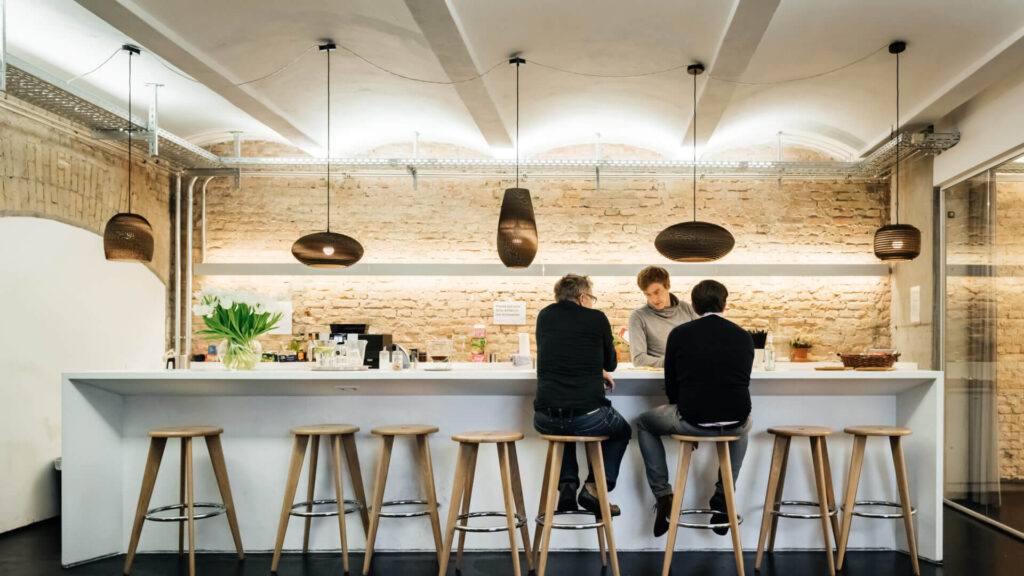
Café furniture
The kitchen is often where the community comes together.
People grab lunch, chat over coffee, or meet someone they haven’t spoken to before. In many coworking spaces, it’s one of the easiest places to build connections.
I’d try to offer a mix of seating, such as:
- Dining tables
- Café tables
- Bar seating
- Communal benches
Different seating heights make the space feel more relaxed and give members options depending on whether they’re eating lunch, having a quick meeting, or working for a little while.
Reception furniture
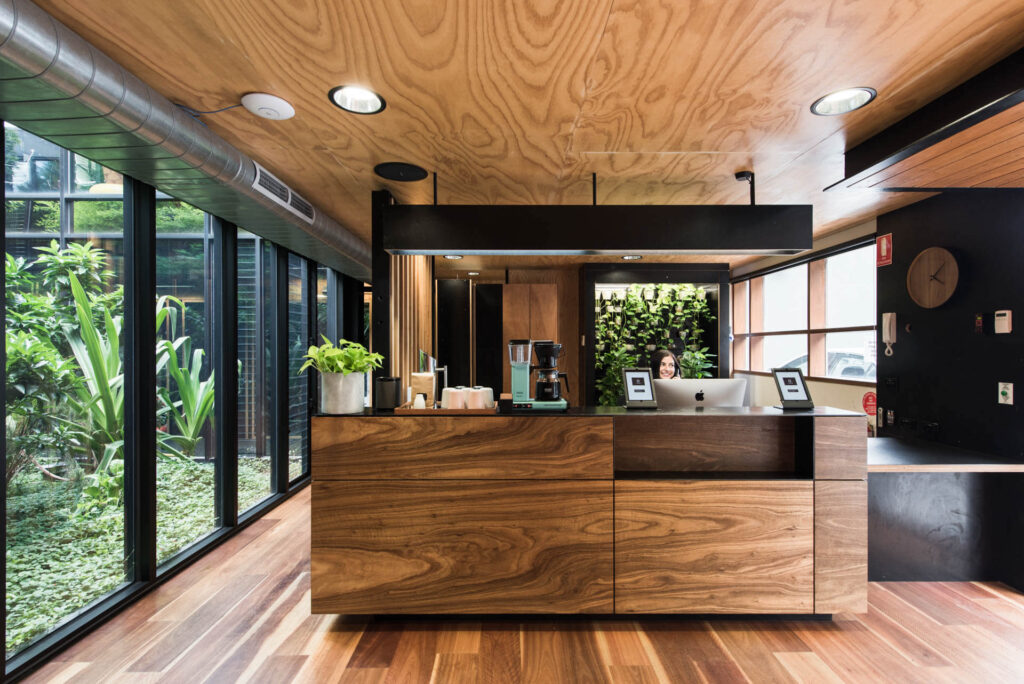
Your reception area creates the first impression of your coworking space. Even if you have a self-service check-in system, it’s worth making this area feel welcoming.
I’d usually include:
- A reception desk
- Comfortable waiting chairs
- Storage for deliveries and supplies
- Small tables
- Space for branding or signage
Try not to overcrowd the entrance. Visitors should be able to walk in, check in, and find their way around without feeling cramped.
Storage
Storage isn’t the most exciting part of furnishing a coworking space, but members definitely appreciate it. Not everyone wants to carry a laptop bag, coat, or backpack around all day.
Depending on your membership types, you could include:
- Personal lockers
- Mailboxes
- Coat storage
- Shelving
- Charging lockers
- Filing cabinets for dedicated desk members
Dedicated desk members will usually expect more permanent storage, while hot desk users are often happy with secure lockers they can use during the day.
Once you know what furniture you need, the next step is deciding what to buy.
What makes good coworking furniture?
I’ve found that the best coworking spaces don’t necessarily have the most expensive furniture. They definitely invest in furniture that’s built for everyday use and works well for different types of members, though. Here are the things I’d pay the most attention to:
Durability
Coworking furniture gets a lot more use than furniture in a typical home office. Desks are used by different people every day. Chairs get rolled around constantly. Tables are moved for events and meetings. That’s why I’d choose commercial office furniture whenever the budget allows.
Look for features like:
- Scratch-resistant desktops
- Easy-to-clean materials
- Strong warranties
- Replaceable parts
- Durable frames
Spending a little more upfront often saves money later because you’re replacing furniture less often.
The material you choose affects more than just how your coworking space looks. It also influences how long the furniture lasts, how easy it is to clean, and how much maintenance it needs over the years.
Here are a few of the most common options:
Material | Advantages | Things to keep in mind |
|---|---|---|
Laminate | Durable, affordable, and easy to clean | Doesn't have the same premium look as wood |
Solid wood | Warm, high-end appearance | More expensive and needs more care |
Metal | Extremely durable and sturdy | Can feel a little industrial |
Mesh | Great for office chairs because it stays cool | Quality varies quite a bit |
Upholstered fabric | Comfortable and inviting | Look for stain-resistant commercial fabrics |
For most coworking spaces, I’d probably choose laminate desks paired with quality ergonomic chairs. They’re practical, durable, and much easier to maintain than many premium finishes.
Ergonomics
Good-looking furniture is great. Comfortable furniture for coworking spaces is even better.
If members are uncomfortable after an hour, they’re much less likely to enjoy working in your space. Simple features can make a big difference, including:
- Adjustable office chairs
- Height-adjustable desks
- Monitor arms
- Footrests
- Proper desk heights
Accessibility
A good coworking space should be comfortable for as many people as possible. That doesn’t always require major changes.
Simple improvements like adjustable desks, wider walkways, accessible meeting rooms, and different seating options make your space easier for everyone to use. They’re also the kind of details members notice and appreciate over time.
Flexibilité
Coworking spaces change all the time. One day you might be hosting a workshop, the next day a networking event, and the day after that a team off-site.
Coworking furniture that’s easy to move gives you much more flexibility without having to redesign the whole office. I’d look for things like:
- Modular sofas
- Stackable chairs
- Folding tables
- Mobile whiteboards
- Rolling storage units
The easier your furniture is to rearrange, the easier it is to adapt your space as your community grows.
Sustainability
Sustainability has become more important for many coworking operators and members. While recycled materials are great, I actually think the most sustainable choice is often buying coworking space furniture that lasts.
A well-built desk that stays in your space for ten years is usually a better investment than replacing cheaper furniture every few years.
If sustainability is important to you, you could also look for furniture that’s:
- Made from responsibly sourced wood
- Built with recycled materials
- Easy to repair instead of replace
- Backed by long warranties
- Manufactured locally to reduce transport emissions
You don’t have to make every purchase based on sustainability alone, but it’s another factor worth considering when comparing different options.
Power and technology
Almost everyone arrives with at least a laptop and a phone. Some members bring monitors, tablets, cameras, or other equipment too.
I’d think about power access before buying furniture, not afterward. Features like built-in cable management, nearby outlets, USB charging, and monitor arms make workstations much cleaner and easier to use.
How to furnish different coworking spaces
If I were starting from scratch, here’s how I’d furnish three common types of coworking spaces:
A small coworking space (20-40 members)
If I only had a limited budget, I’d focus on getting the essentials right instead of trying to offer everything from day one. My priorities would be:
- Comfortable ergonomic chairs
- A mix of hot desks and dedicated desks
- One meeting room
- A small lounge area
- A kitchen or coffee corner
- A few lockers for members
I’d also leave some open space that could be adapted later as the community grows. Rather than filling every corner with desks, I’d give members a little room to spread out. A workspace that feels comfortable is usually much more appealing than one that’s simply trying to maximize capacity.
A growing coworking space (50-100 members)
As membership grows, it’s time to create more variety. At this stage, people usually expect more than just a desk. I’d consider adding:
- More meeting rooms in different sizes
- Height-adjustable desks
- Phone booths or quiet pods
- Larger collaboration tables
- Additional lounge seating
- More storage for dedicated members
This is also when I’d start paying closer attention to how the space is actually being used.
For example, are meeting rooms always full? Are standing desks more popular than expected? Do members spend more time in the lounge than at traditional workstations?
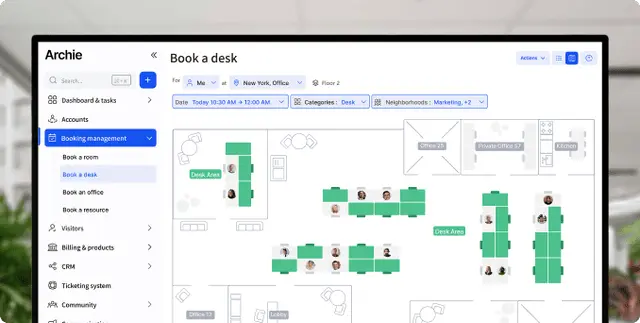
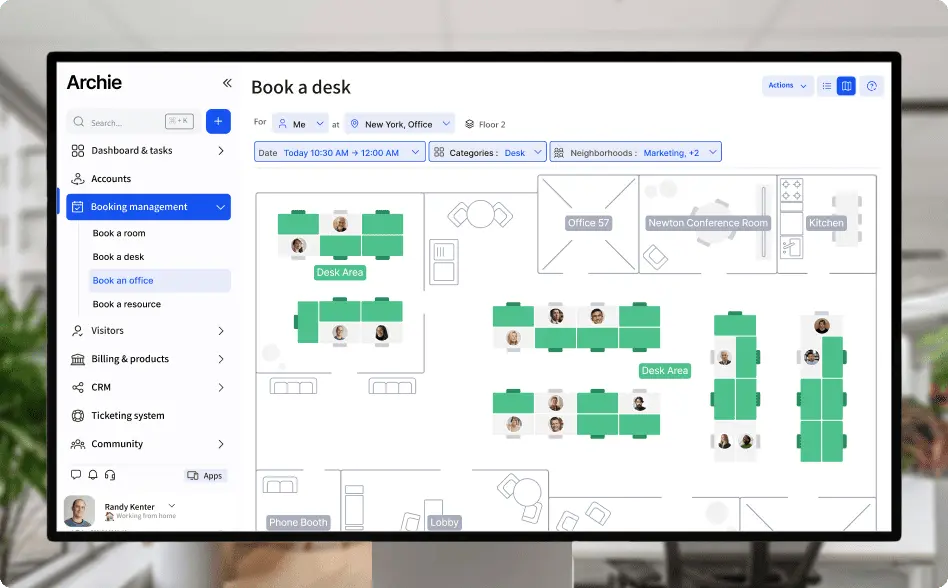
With Archie’s coworking software, you can track desk and meeting room utilization, occupancy trends, and booking patterns to see which spaces are most popular and which ones could be used more effectively.
This can help you decide where to invest next instead of simply buying more of the same coworking furniture. You might discover you need another phone booth instead of more desks, or that replacing underused workstations with additional collaboration space would create more value for your members.

A large coworking space or multi-location business
Larger spaces usually need more flexibility because they’re serving different types of members every day. Instead of thinking about individual pieces of coworking space furniture, I’d think about creating different experiences throughout the building.
That could include:
- Dedicated quiet zones
- Collaboration areas for teams
- Event spaces with movable furniture
- Private phone booths
- Larger cafés and breakout areas
- Different furniture styles for different work preferences
At this stage, I’d also make sure every furniture decision is backed by data rather than assumptions. If one location constantly has fully booked standing desks while another barely uses them, it doesn’t make sense to keep buying the same furniture everywhere.
Coworking furniture is only part of the picture
Buying the right furniture is a great start, but once your space opens, you’ll probably discover that members don’t always use it the way you expected.
Maybe your standing desks are fully booked every day while other desks stay empty. Maybe everyone gravitates towards the lounge after lunch, or your phone booths are constantly occupied.
I found that the best coworking spaces all have one thing in common: they design their spaces around people, not furniture.
That’s where coworking space management tools become really useful.
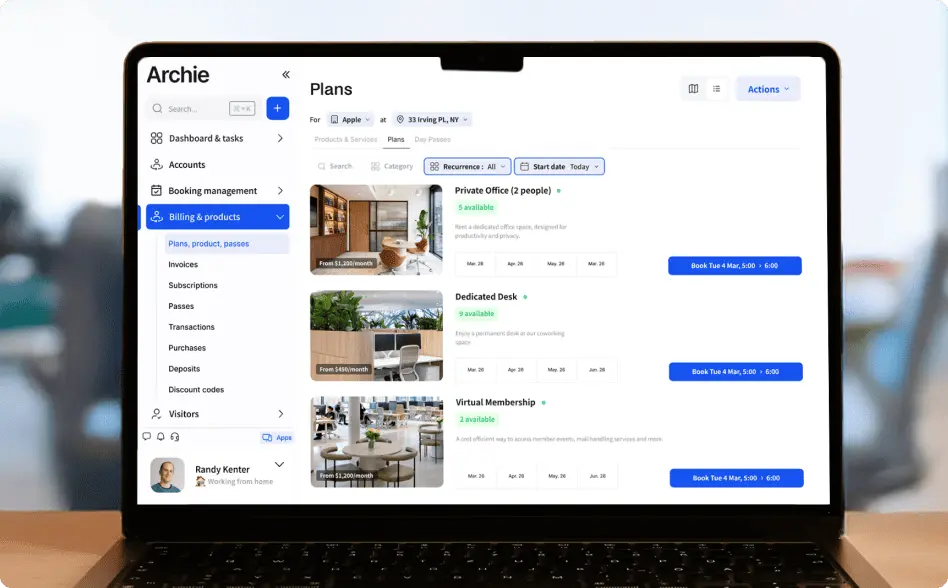
Modern coworking platforms like Archie Coworking help you go beyond simply managing memberships and bookings. They let you track desk and meeting room utilization, monitor occupancy trends, understand how different areas are being used, and identify your most popular workspaces. Many platforms also combine this with member management, meeting room scheduling, visitor management, billing, access control, and workplace analytics in one place.
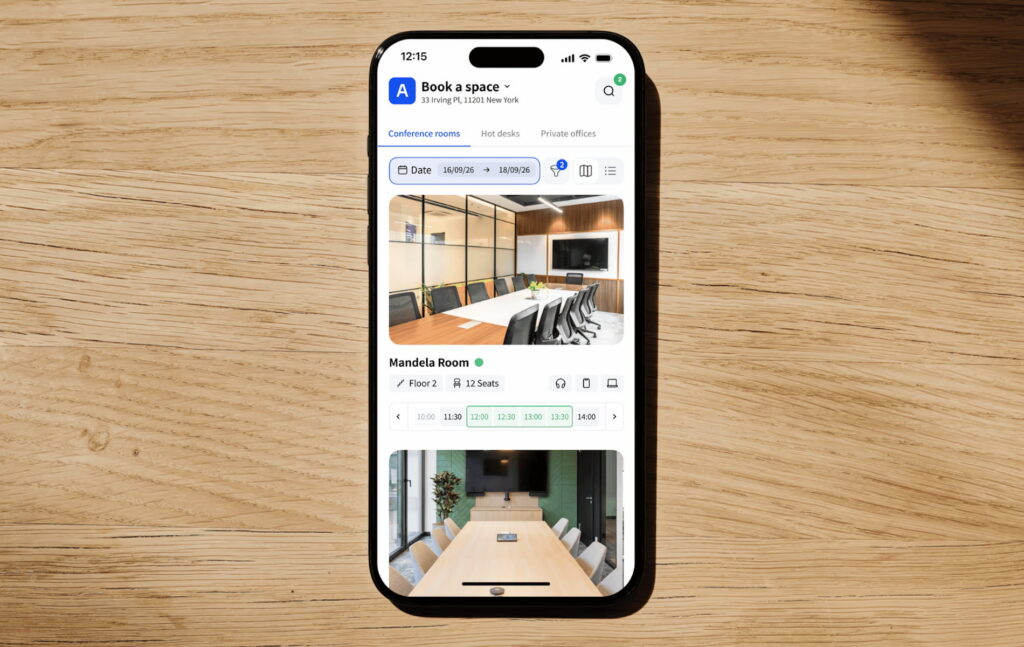
Instead of guessing what members want, you can make decisions based on real data. Maybe it’s time to add another phone booth, convert underused desks into collaboration space, or invest in more meeting rooms. Whatever the answer, you’ll have the insights to keep improving your space as your community grows.
Coworking space furniture FAQs
What furniture does every coworking space need?
At a minimum, every space needs coworking desk furniture, ergonomic office chairs, meeting room furniture, lounge seating, reception furniture, storage, and café furniture. If your budget allows, phone booths and a few height-adjustable desks are also worth considering.
Is commercial office furniture worth the investment?
Yes. Commercial furniture is designed for heavy daily use, usually lasts much longer, and is often easier to repair than residential furniture. While it costs more upfront, it often works out to be better value over time.
How often should coworking furniture be replaced?
It depends on the quality of the furniture and how heavily it’s used, but well-made commercial furniture can often last seven to fifteen years. Regular maintenance and replacing individual parts can extend its lifespan even further.
How much should I budget for coworking furniture?
There’s no single answer because it depends on the size of your space, the quality of the furniture, and the experience you want to create. When deciding where to spend more, prioritize ergonomic chairs and durable desks first, then gradually invest in additional meeting spaces, lounge furniture, and phone booths as your coworking business grows.