






Joan started as a meeting room booking tool built around sleek, low-power e-paper displays. Since then, it has grown into a broader workplace platform, adding features like desk booking, visitor management, and digital signage.
The big question is whether the polished hardware setup is worth the extra cost. With Joan, you’re usually paying for both the software subscription and the devices.
Here’s what makes the platform truly stand out, and when you should consider Joan alternatives.
💡 TL;DR:
Joan software is a good fit for small and mid-sized companies that want a complete workplace tool and really like the idea of stylish room displays. You get a lot of features in each plan, and the platform can scale as your team grows.
That said, the pricing can add up quickly, especially once you factor in hardware. Some reviews also mention shorter-than-expected battery life (around 40–50 days), and an admin experience that can feel cluttered. If you want strong workplace management without buying and managing devices, an alternative like Archie may be a better fit.
Joan vs alternatives
What is Joan?
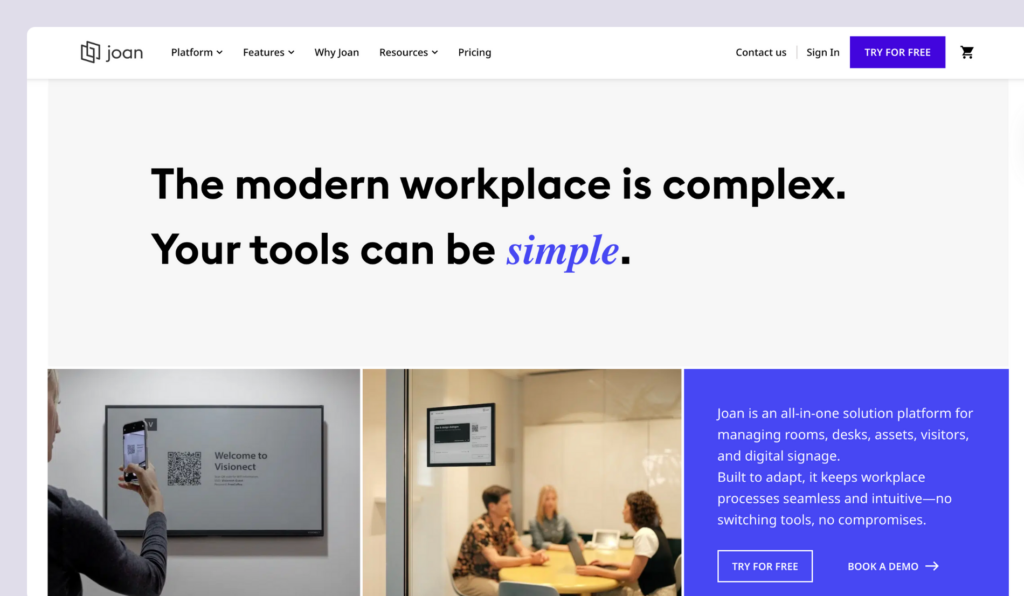
Joan launched in 2015 as a meeting room booking solution built around elegant, energy-efficient e-paper displays. Over time, Joan expanded into a full workplace platform covering desk booking, visitor management, and workplace analytics. But its signature e-paper devices are still at the core.
Since every subscription includes all of these features, Joan Workplace is particularly attractive to offices that want a single system for everything from conference room screens to visitor check-in tablets. Plus, Joan also has some AI features to help your team with bookings.
Key features of Joan
- Joan room booking: Schedule rooms with real-time availability, calendar sync, and check-in features.
- Desk booking: Hot desking with daily, weekly, or monthly reservations.
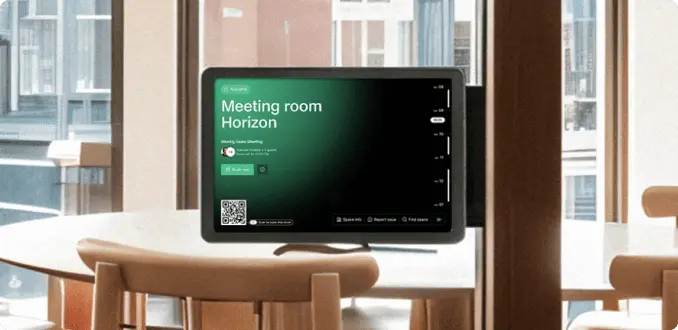
- E-paper displays: Energy-efficient room schedulers (Joan 6, Joan 6 Pro, Joan 13 Pro) with wireless mounting.
- Visitor management: Guest check-ins, security logs, and automated notifications.
- Digital signage: Display schedules, alerts, and wayfinding information on any screen.
- Mobile app: Book and manage spaces from iOS and Android devices.
- Interactive floor plans: Visual desk and room availability.
- Analytics: Room and desk usage reports, peak times, and occupancy data.
- QR code booking: Quick desk reservations via QR stickers.
Joan pricing
Joan uses a dual pricing model based on users and devices:
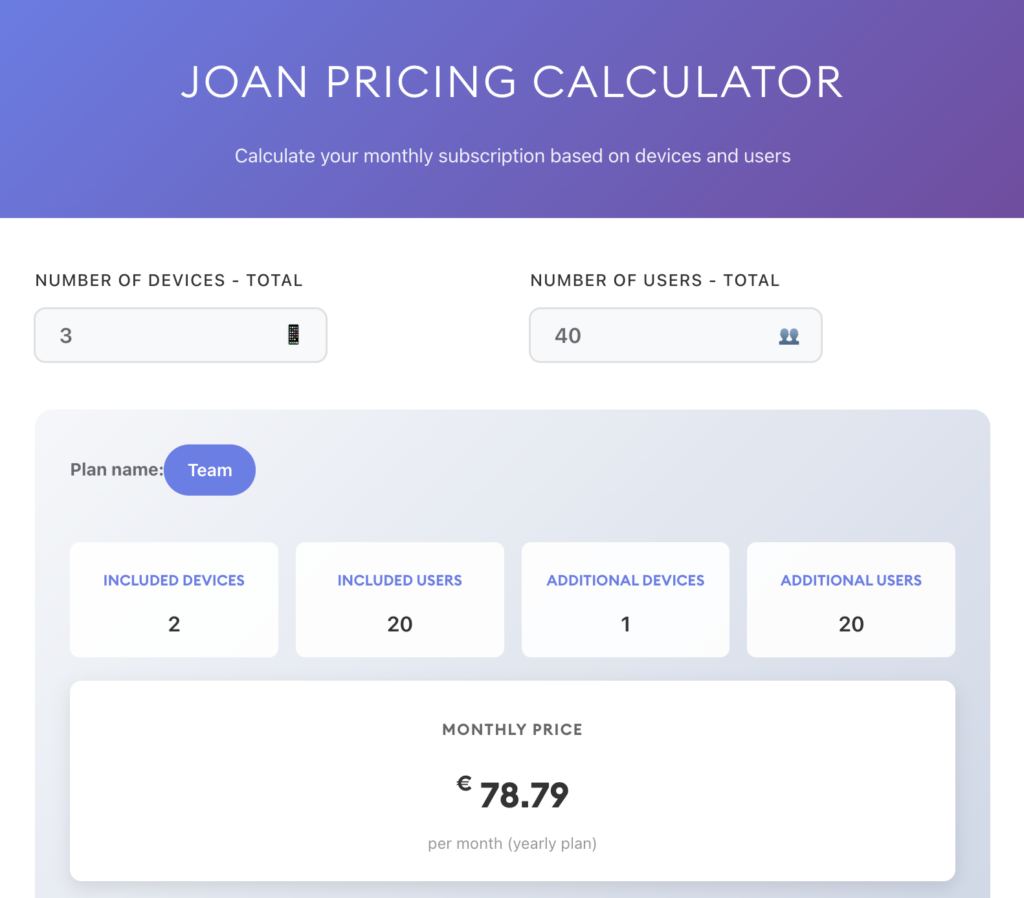
- Users: From €0.99 ($1.15) per user (employees who use Joan app to book rooms, desks, or parking) per month
- Devices: From €9.99 ($11.65) per device (each physical screen or display connected to Joan) per month
Pricing tiers:
- Team: €49 ($57) base price with 2 devices and 20 users included. Can get up to 5 devices and 50 users total.
- Business: €219 ($255) base price with 5 devices and 50 users included. Can get up to 12 devices and 150 users total.
- Organization: €499 ($580) base price with 10 devices and 100 users included. Can get up to 35 devices and 400 users total.
- Enterprise+: €999 ($1165) base price with 20 devices and 200 users. Can get unlimited devices and users.
To get the most accurate pricing for your setup, you can use Joan’s pricing calculator.
💡 Note: Joan’s software can also work on many Android and iOS devices, but only covers the very basic functionalities of booking a room and displaying the current status and schedule.
What’s great about Joan (reviews)
🟢 Beautiful hardware: The e-paper displays are frequently praised by users for being both functional and elegant. As one G2 reviewer said: “The Joan Device is an excellent elegant solution”.
🟢 Excellent customer support: Most reviews highlight how great the customer support team is. One reviewer noted: “The support team are incredibly helpful – we had a couple of teething issues, but they were on hand and assisted with fast resolutions!”
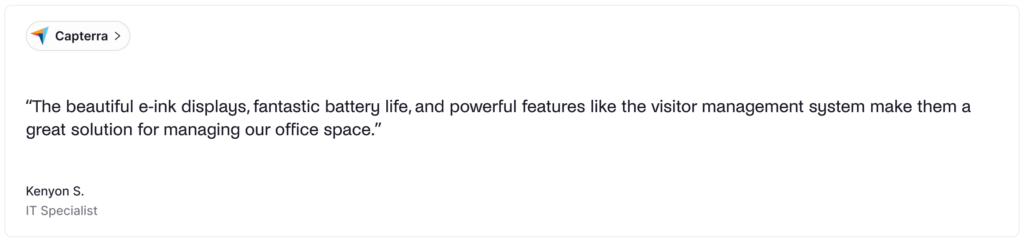
🟢 Intuitive interface: The booking experience is consistently praised. One Capterra user mentioned: “Easy to book meetings. The interface doesn’t feel too cluttered and it gives me just what I need.”
What could be improved
🔴 Battery life: Some users find the battery life shorter than expected. A G2 review stated: “The battery life is shorter than expected, lasting roughly 40-50 days even with sleep mode during non-business days/hours. Having to charge them can be a hassle.”
🔴 Device cost: The hardware pricing adds up. One Capterra reviewer mentioned: “We use Joan devices for our meeting rooms, and I would say it’s a great tool, however, the device is overpriced, since we pay a subscription as well.”
🔴 Admin interface: Some find the management portal cluttered. A user on Capterra noted: “The management interface can feel a bit overwhelming at times, as several modules we don’t use remain visible, which makes navigation less intuitive.”
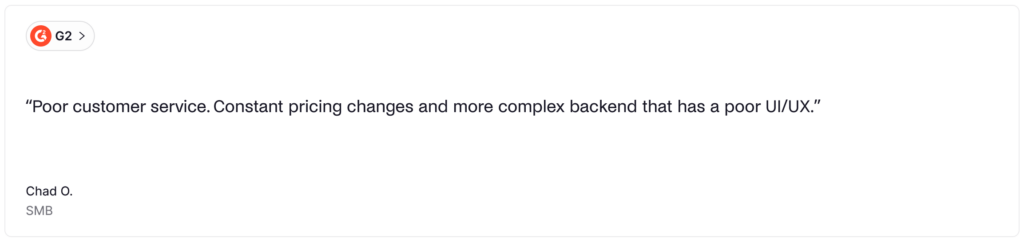
🔴 Frequent pricing changes: Some users on review sites like G2 and in places like Reddit say the pricing has changed over time, which can make budgeting and cost comparisons harder.
💡 Bottom line: Joan is an excellent choice if you want elegant hardware for meeting room displays combined with solid desk booking features. If you’re looking for a software-only solution or find the device costs too high, Joan might not be the most budget-friendly option.
Luckily, there are several strong Joan alternatives to consider.
What’s the best Joan alternative?
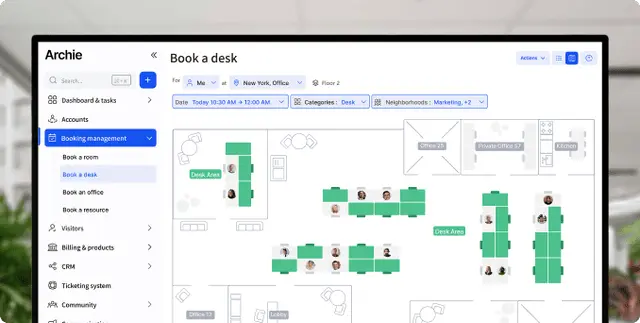
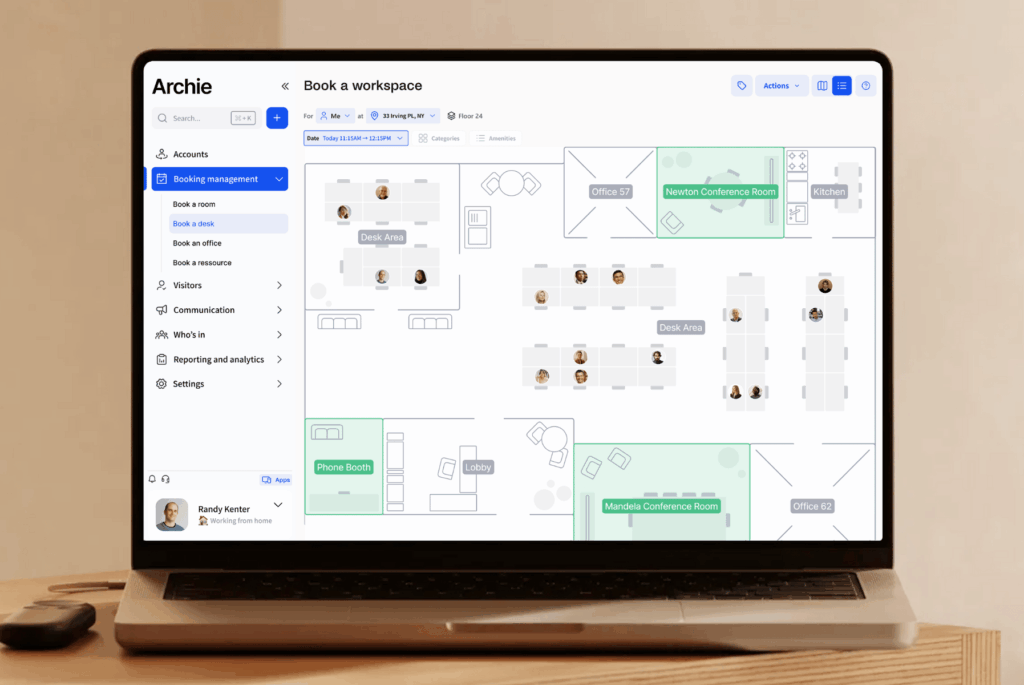
If you want full workplace management without having to buy special hardware, Archie is a strong alternative to Joan. While Archie doesn’t offer e-paper room displays, it works on both iOS and Android devices, and covers all the core workplace tools most teams need, like desk booking, meeting rooms, visitor management, and interactive floor plans.
With Joan, costs come from a few places. You pay €0.99 per user per month and €9.99 per device per month, plus the upfront cost of the hardware itself. You can use your own devices, but you won’t get the full Joan experience that way. As your team grows, these costs can rise quickly.
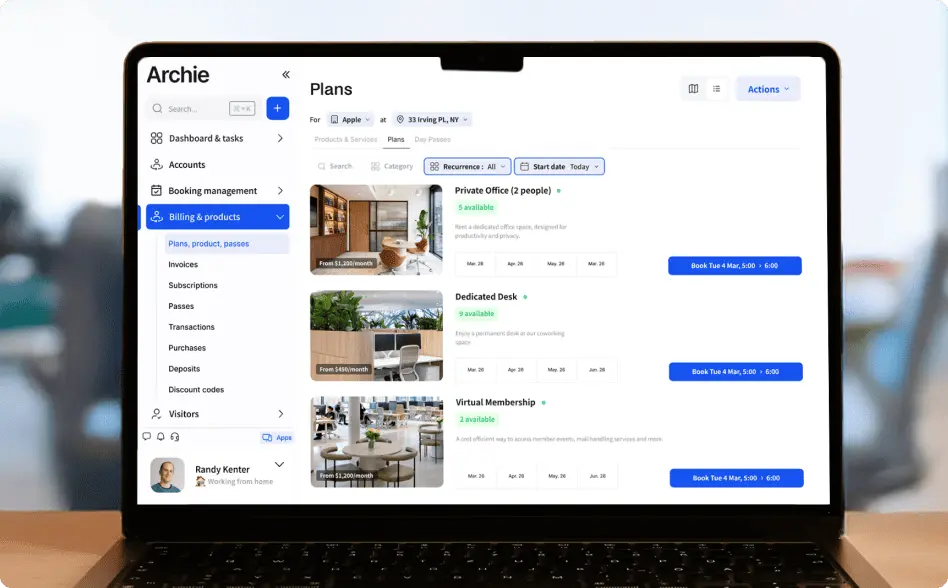
Archie keeps pricing simpler. It uses resource-based pricing, starting at $2.80 per desk and $8 per room, and works fully on standard iOS and Android devices with no feature limits. That makes it easier to scale without worrying about hardware or surprise costs.
Joan alternative #1: Archie
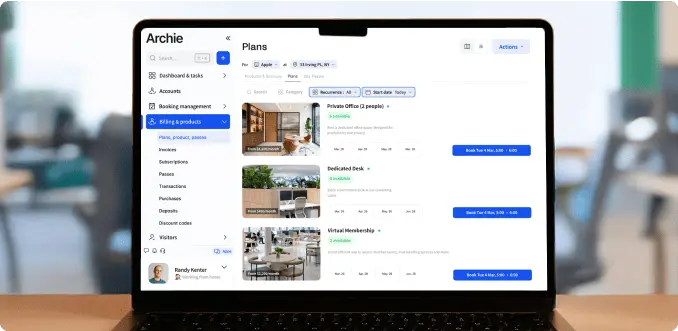
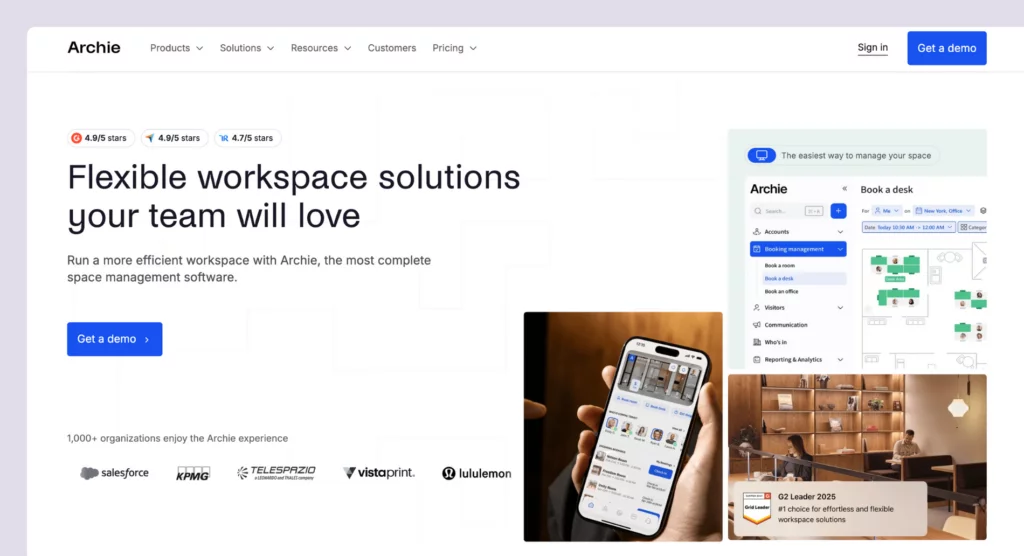
Archie is a smart workspace technology platform and the best alternative to Joan. Both tools offer a complete solution for workplaces, but Archie’s pricing model is more cost-effective and offers more flexibility when it comes to the devices you can use.
What you get with Archie
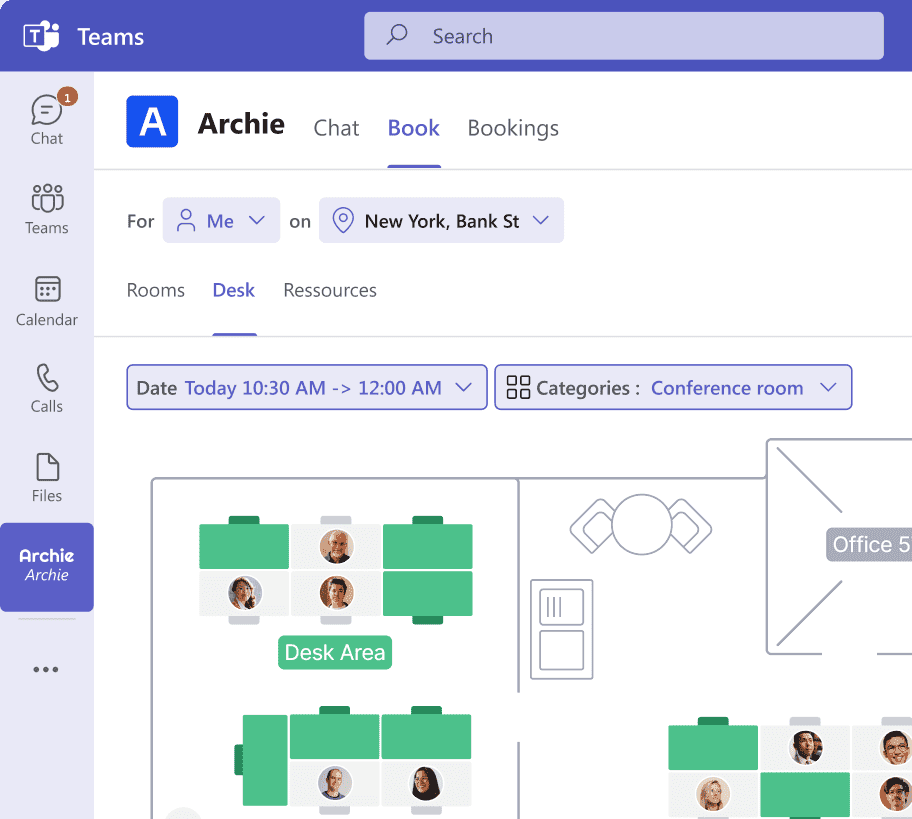
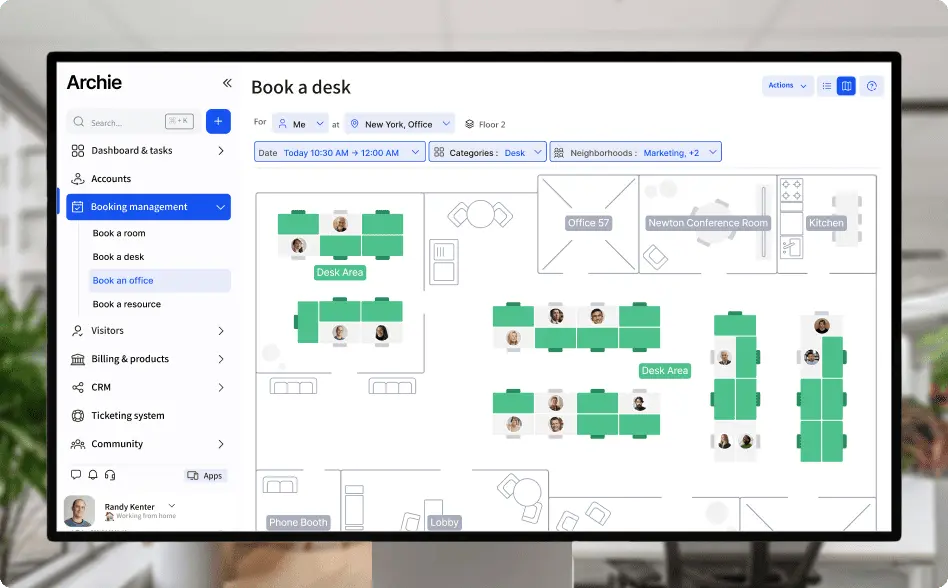
- Desk booking: Hot desking with interactive floor plans, assigned desks, and customizable zones.
- Meeting room scheduling: Book rooms with calendar sync and real-time availability.
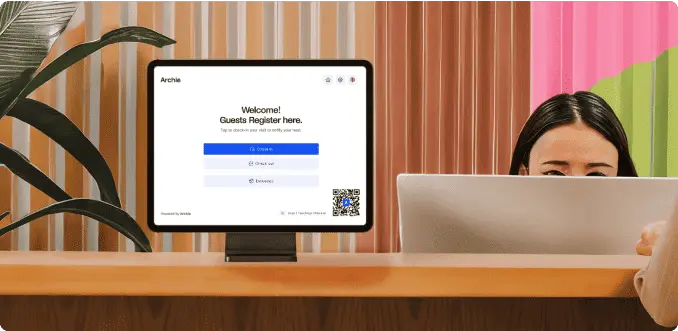
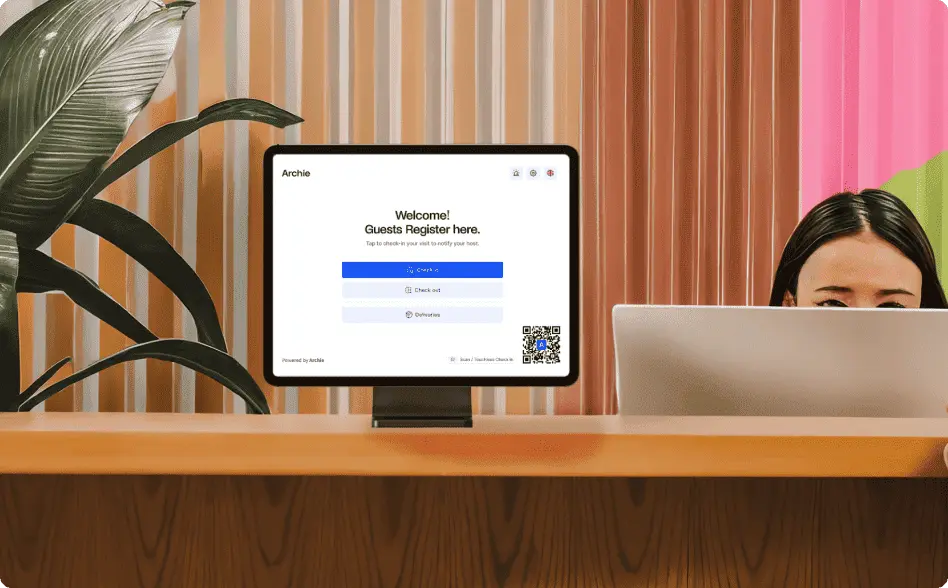
- Visitor management: Pre-registration, QR code check-ins, kiosk app, badge printing, and host notifications.
- Neighborhood zoning: Create team zones for collaboration while keeping seating flexible.
- Employee lookup: See when teammates are coming in and where they’re seated.
- Workplace analytics: Track occupancy, space usage, and workplace trends.
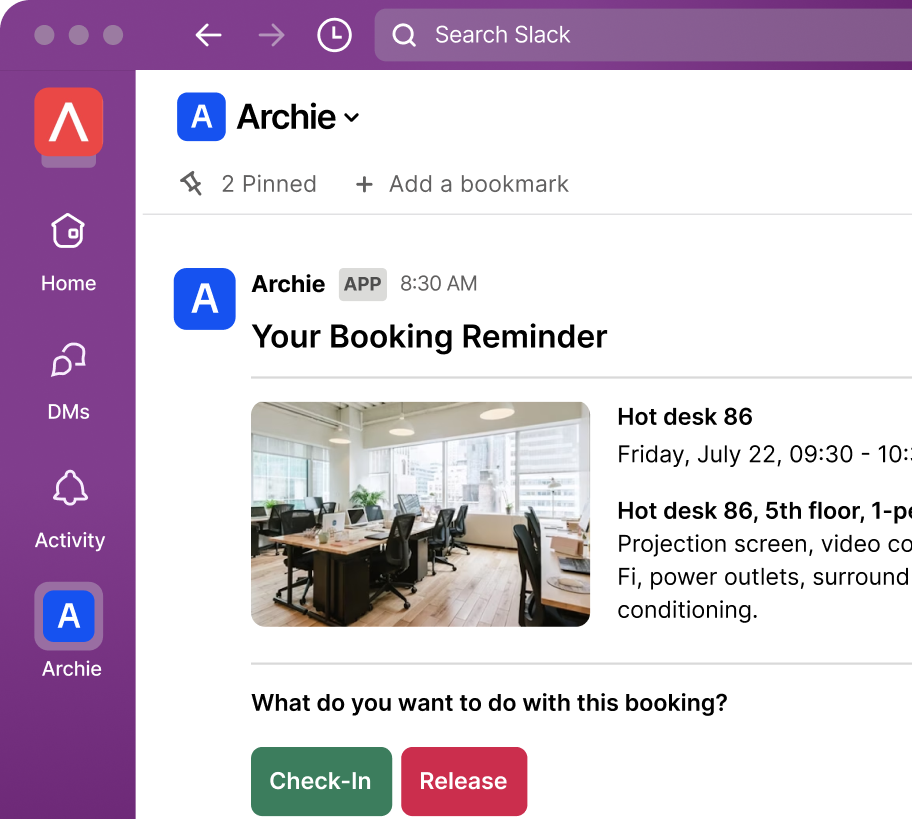
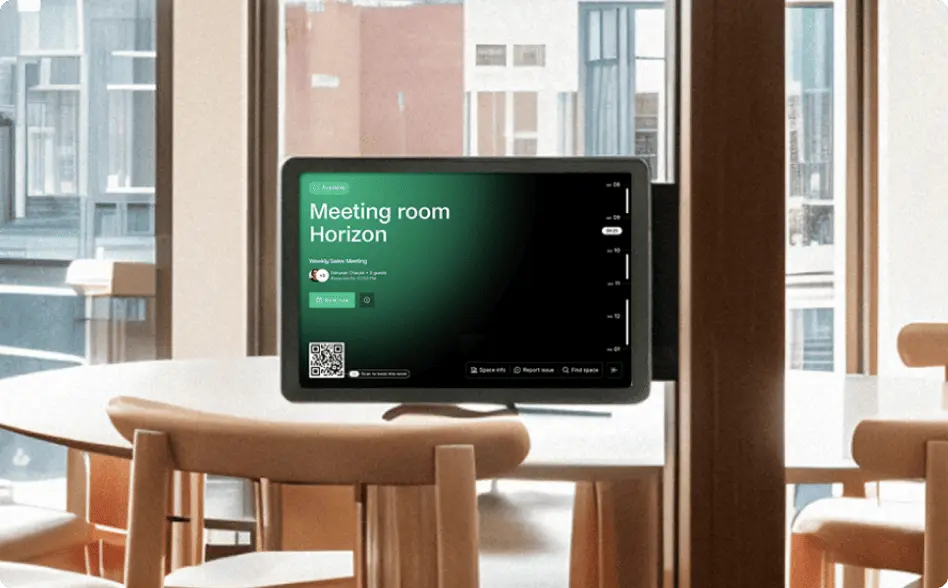
- Archie apps: Use Archie on mobile, desktop, or shared office screens like kiosks and room displays.
How much does Archie cost?
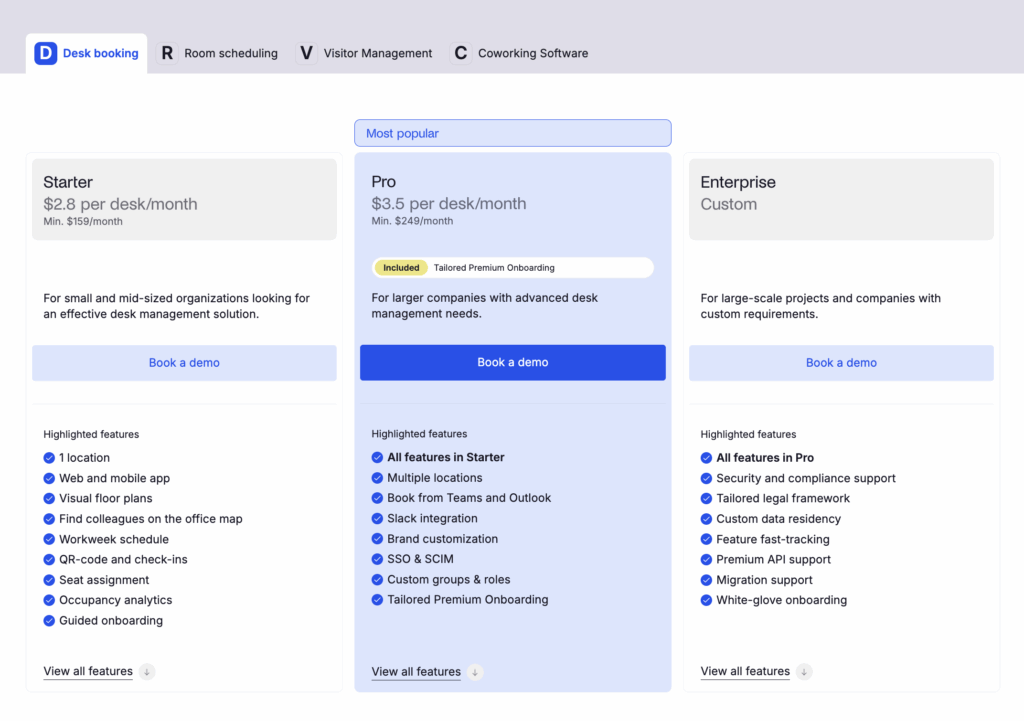
Archie uses resource-based pricing, so you pay for the desks and rooms you manage, not per employee.
- Starter: $2.80 per desk/month and $8 per room/month (minimum $159/month)
- Pro: $3.50 per desk/month and $12 per room/month (minimum $249/month), adds multi-location support, booking from Microsoft Teams and Outlook, Slack integration, brand customization, SSO and SCIM, custom groups and roles, and tailored premium onboarding.
Visitor management is an add-on module priced separately.
Who’s Archie best for?
Archie is a strong fit for mid-sized and larger offices that want full workplace management without juggling two different bills. Instead of tracking how many employees need access and how many screens you’re deploying, Archie keeps it simple: you pay for the spaces you manage, starting at $2.80 per desk and $8 per room (with a $159/month minimum).
This resource-based model can work especially well when you have more employees than desks. For example, if 100 employees share 30 desks, you’re paying for those 30 desks, not 100 user accounts.
And if you need advanced features like SSO, SCIM, access control integrations, API access, and workplace analytics, Archie can cover those needs too.
Archie limitations
Archie doesn’t offer AI booking suggestions like Joan does. Archie’s booking flow is still simple and easy to use, but if your team wants automated recommendations, like picking the best desk or room based on habits or preferences, Joan will feel stronger in that area.
Archie also doesn’t manufacture proprietary hardware, so you won’t get the aesthetic that Joan’s e-paper displays provide.
Joan alternative #2: Kadence
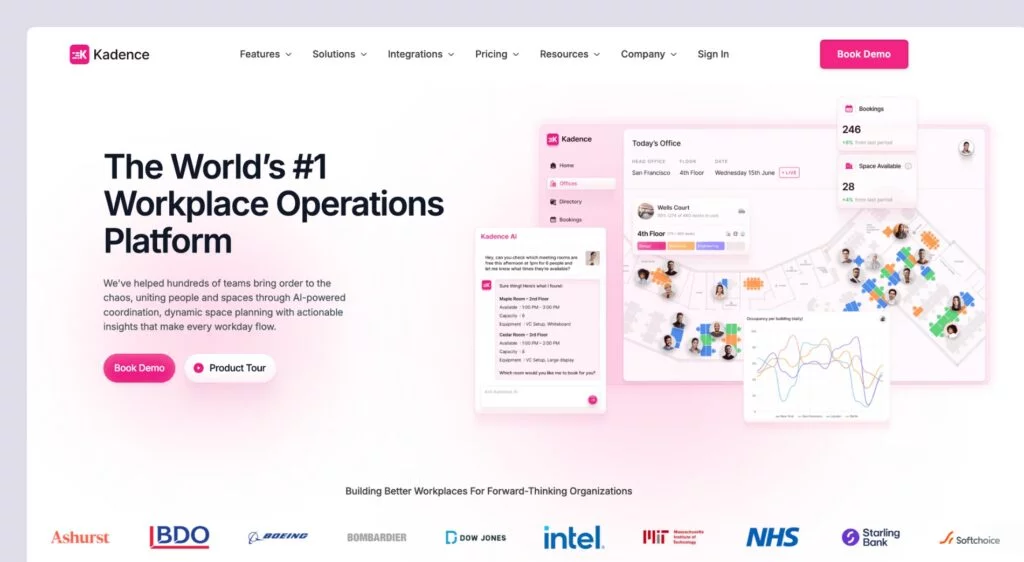
Kadence is a workplace management platform that puts a big focus on AI-powered workspace coordination. It uses interactive floor plans and AI features to help teams plan in-office days and coordinate where people sit.
What you get with Kadence
- Interactive floor plans: Book desks and rooms with real-time visual office maps showing desk availability and colleague locations.
- Desk and meeting room booking: Reserve hot desks and meeting rooms with calendar integrations and room displays.
- Kadence AI: Use AI-powered suggestions to mass-book teams and notify employees when team members are in the office.
- Visitor management: Track and record guests entering your office.
- Mobile and desktop apps: Use the user-friendly mobile apps and web access for booking.
- Analytics and insights: Get insights on occupancy, space utilization, and usage data.
- Event management: Plan and coordinate workplace events with staff notifications.
How much does Kadence cost?
Kadence currently uses custom, quote-based pricing. In the past, product research shows that plans started at around $4/user/month and included visitor management. But, for the most accurate and up-to-date pricing, you should reach out to their team for a quote.
Who’s Kadence best for?
Kadence is a good fit for teams that want AI-powered booking features without being tied to specific hardware. With interactive floor plans and AI tools like team mass booking, employees can quickly see where teammates are sitting and plan their in-office days together.
Joan offers similar coordination features, but Kadence is “software-only”, so you can use your own devices without feature limits or extra hardware costs. If you want modern workplace coordination tools without Joan’s device requirements, Kadence is a strong alternative.
Kadence limitations
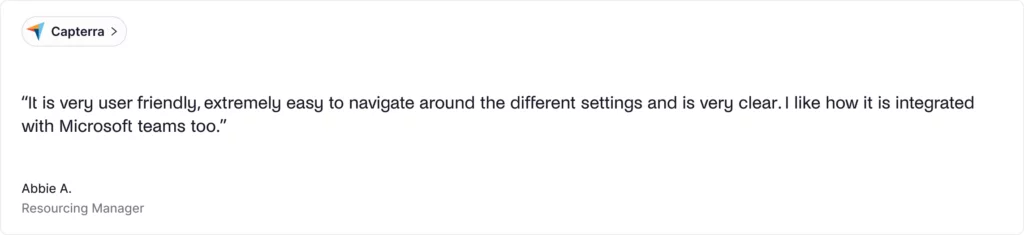
Kadence doesn’t publicly share its pricing and requires a custom quote, unlike Joan’s more transparent pricing. Based on historical research, it charges per user (historically around $4/user/month), which can get expensive for larger teams compared to resource-based models (which are offered by some other Joan alternatives). Also, some users appreciate the functionality but note it can be “a little bit costly for smaller group but will be helpful in the long run.”
Like other platforms handling high booking volumes, Kadence also occasionally experiences booking glitches when too many employees book at the same time. This can be frustrating during peak planning periods when teams are coordinating office schedules.
Another thing to note is that most of Kadence’s reviews aren’t recent, which can make it difficult to get a clear picture of how the tool is working at this time. For teams that want more recent user feedback and proven current performance, Kadence may not be the best option.
Joan alternative #3: Tactic
Tactic positions itself as a complete “workplace experience” platform, bundling all the core features into one offer, similarly to Joan. Also, like Joan, it offers a comprehensive solution, and recently introduced “Tessa AI”, which is an AI assistant that helps employees find and book space.
What you get with Tactic
- Desk booking: Hot desking, assigned seating, and neighborhood assignments with visual floor plans.
- Meeting room reservations: Book rooms with two-way calendar sync.
- Tessa AI: Use the AI assistant for booking desks and rooms and reporting issues via chat.
- Visitor management: Guest check-in, badge printing, and security tracking.
- Workplace requests: Submit catering, AV setup, and custom workspace needs.
- Space management: Track peak days, department usage, and booking trends.
- Team coordination: See who’s in the office and book near teammates.
- Office insights: Analytics dashboards for occupancy and space optimization.
How much does Tactic cost?
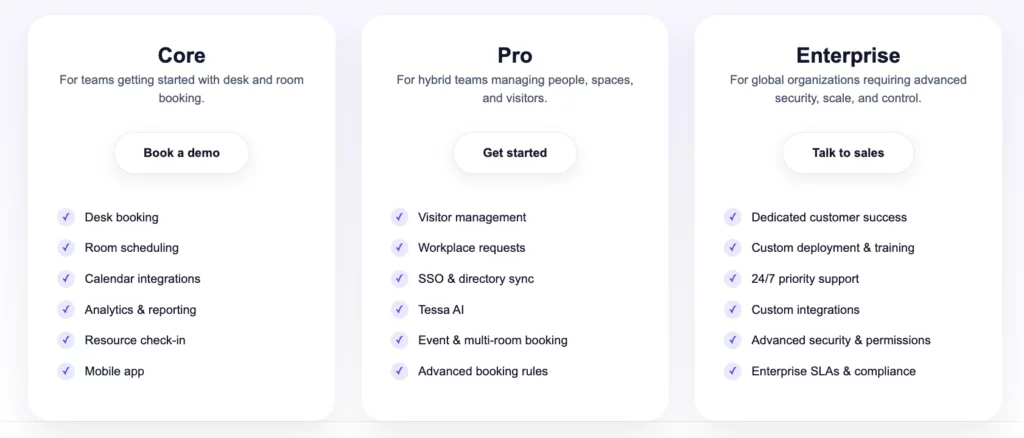
Tactic uses custom, quote-based pricing. What you pay depends on how big your workspace is and which modules you need (Desks, Rooms, Visitors, and Requests). According to Tactic’s pricing FAQ, most plans start around $5,000 per year.
Since pricing isn’t listed publicly, you’ll need to contact Tactic for an exact quote. Their team can walk you through the options and recommend a plan based on your setup.
Who’s Tactic best for?
Tactic is a strong fit for mid-sized and large companies that want a full workplace platform with AI features and hands-on onboarding. Their team can build your office maps and handle setup for you, which is helpful for busy workplace teams that don’t want to deal with hardware rollouts, like the e-paper displays Joan relies on.
Tactic limitations
Tactic doesn’t offer transparent pricing, with custom quotes starting at $5,000/year. This can be an issue for both small teams with budget constraints and larger teams that need to plan finances without lengthy sales processes.
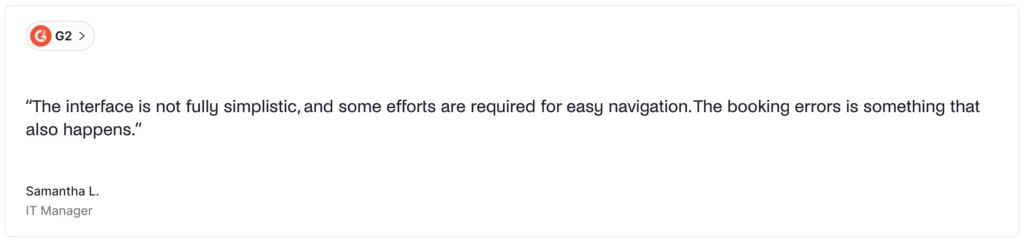
Also, despite offering a complete set of features, a few reviews noted that there are some issues and glitches with the platform: “I didn’t like that some availability displays weren’t always accurate, and we had a few misbookings. A couple of mobile interface bits felt a little clunky compared to desktop.”
Joan alternative #4: Robin
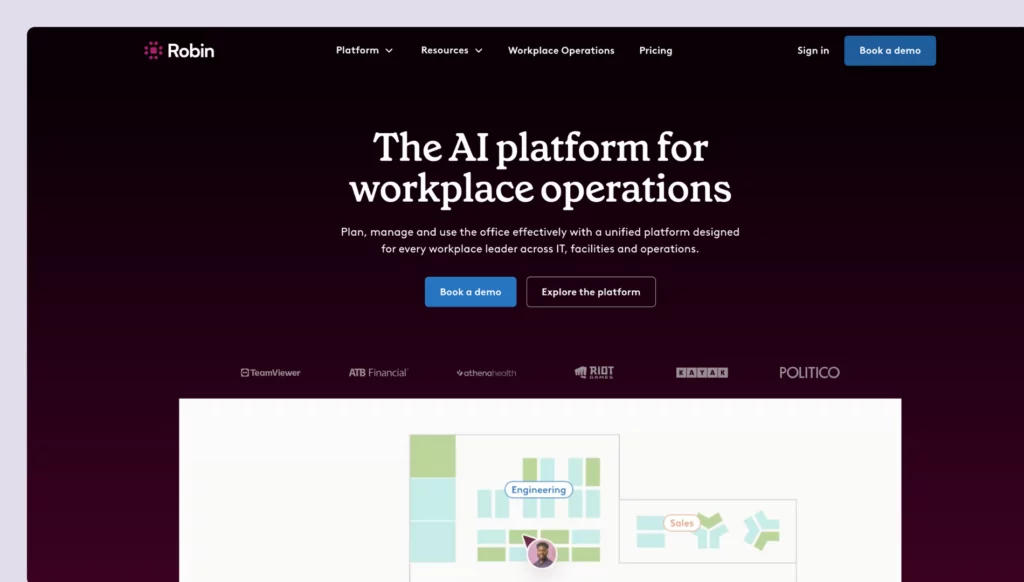
Robin is an enterprise workplace management platform built for larger teams that want a full set of workplace tools. It covers desk and room booking (including AI-powered features), but where it really stands out is employee experience: built-in surveys, feedback prompts, and satisfaction tracking, which helps teams measure how people feel about the workplace in a way Joan doesn’t.
What you get with Robin
- Desk and room booking: Reserve workspaces with AI-powered suggestions and automatic reservations.
- Employee experience tools: Built-in surveys, feedback prompts, and satisfaction tracking.
- Visitor management: Guest registration, check-in, and badge printing (iPad only).
- Advanced analytics: Comprehensive workplace data from bookings, access control, and occupancy tracking.
- Auto-cancel ghost meetings: Automatically free up underused rooms to improve space utilization.
- Wayfinding: Help employees navigate the office and find spaces.
How much does Robin cost?
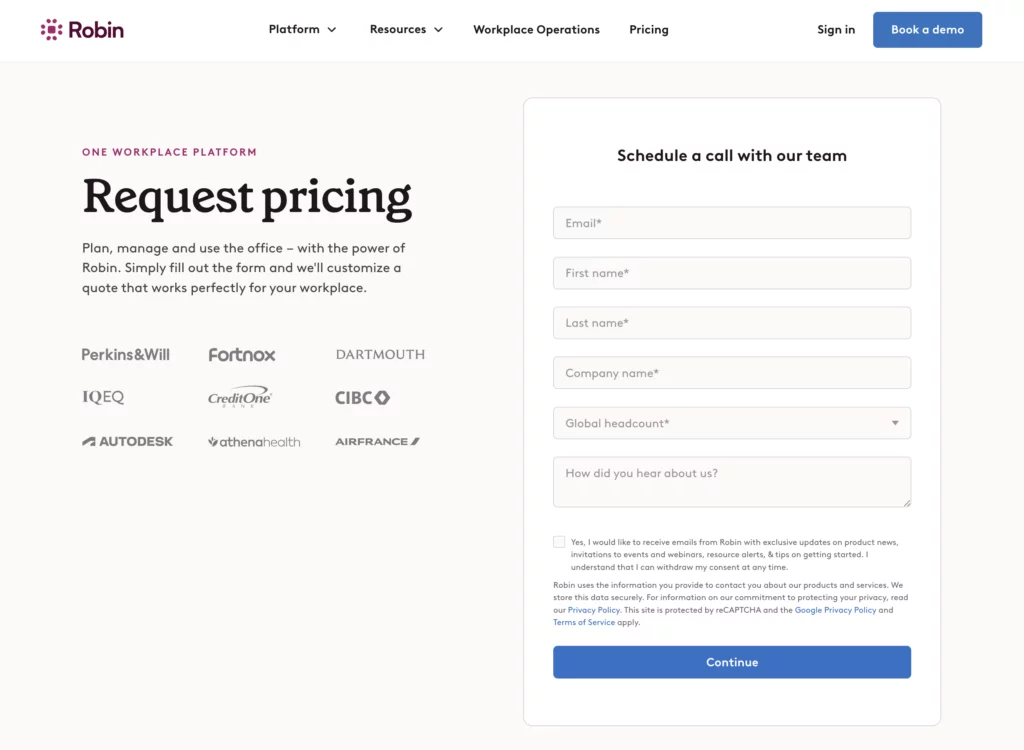
Robin operates on a quote-based, custom pricing model reflecting its focus on large enterprise organizations. It doesn’t publish plan structures publicly, so prospective buyers must contact sales directly for estimates.
Who’s Robin best for?
Robin is best for large organizations (often 500+ employees) that need strategic workplace data, not just basic desk and room booking. While Joan leans into elegant displays and meeting room scheduling, Robin is more about understanding how the workplace is being used and how employees feel about it.
If you want enterprise-level tools with deep analytics, employee sentiment features, and reporting that goes beyond what Joan typically offers, Robin is a strong fit.
Robin limitations
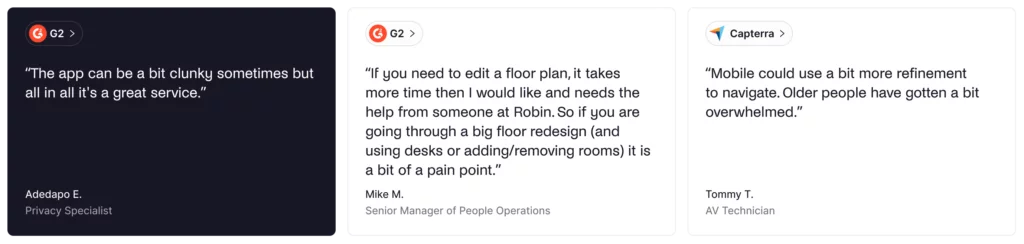
Robin’s pricing is quote-based, so you have to contact sales to get numbers. That can make it harder to budget and compare it with other tools. And because Robin is positioned for enterprise buyers, it can also end up costing more than Joan’s more straightforward, tiered subscriptions.
Another downside is floor plan management. Some teams say it’s harder to update layouts and often requires help from Robin’s team, which can slow down seating changes or office renovations. For many companies, that’s more work than Joan’s simpler desk and room setup.
Because of the higher cost, longer rollout, and overall complexity, Robin may be less appealing for smaller companies with tighter budgets that want something quicker and easier to deploy, like Joan and other Robin alternatives.
Joan alternative #5: Skedda
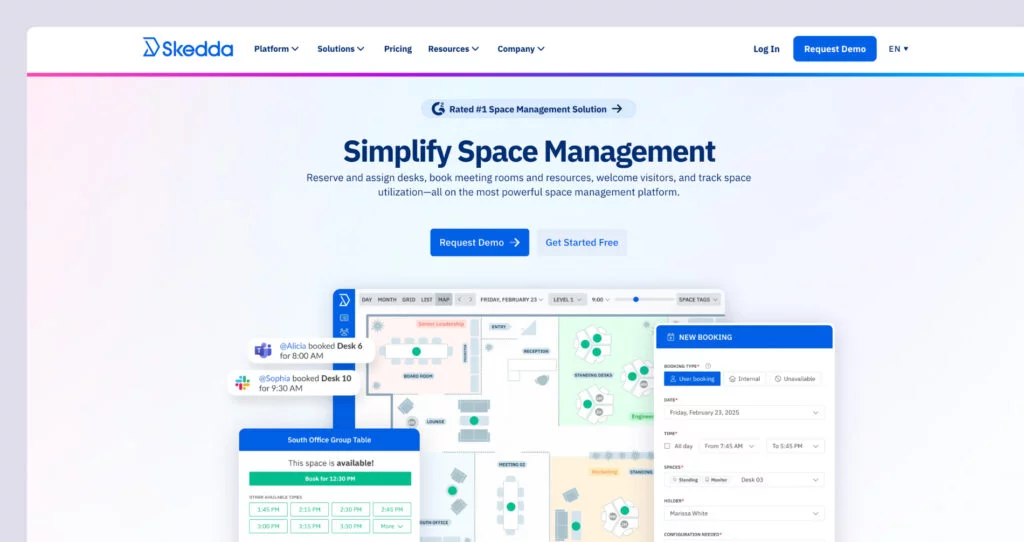
Skedda is a workplace booking tool for managing shared spaces, like desks and meeting rooms, but also things like studios, sports facilities, and coworking venues. Unlike Joan, which is an all-in-one workplace platform with e-paper displays, Skedda is mainly focused on scheduling. It doesn’t include digital signage or proprietary hardware.
What you get with Skedda
- Desk and room booking: Reserve desks, meeting rooms, and various shared spaces with interactive floor plans.
- Flexible booking rules: Set custom rules for who can book what spaces and when.
- Space usage analytics: Track utilization patterns and optimize space allocation.
- Calendar integration: Sync with Microsoft 365 and other calendar systems.
- Mobile access: Book and manage spaces on the go.
- Interactive floor plans: Visual layouts showing space availability.
- Check-in features: Confirm attendance and release unused bookings.
How much does Skedda cost?
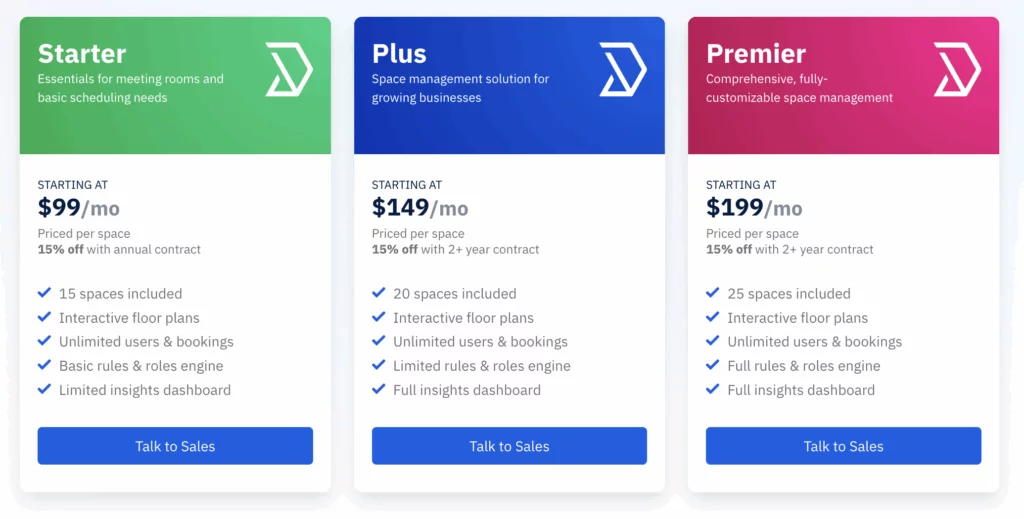
Skedda uses flat monthly plans based on how many “spaces” you manage. A space is anything bookable, like a desk, meeting room, locker, or parking spot. Add more spaces, and you may need a higher tier.
- Starter: $99/month (up to 15 spaces): Floor plans, booking rules, basic reporting (limited insights/rules).
- Plus: $149/month (up to 20 spaces): Full insights dashboard + basic branding (logo/colors).
- Premier: $199/month (25 spaces): Full rules and roles, unlimited custom fields, dedicated account manager, custom billing options.
Visitor management is a $99/month add-on (higher tiers only).
Who’s Skedda best for?
Skedda is best for organizations that need powerful, customizable booking rules and can work within its per-space pricing model. The platform provides more flexibility than Joan’s straightforward booking workflows.
If you need a tool with excellent support and don’t require Joan’s additional modules (like signage), Skedda provides that experience without hardware costs.
Skedda limitations
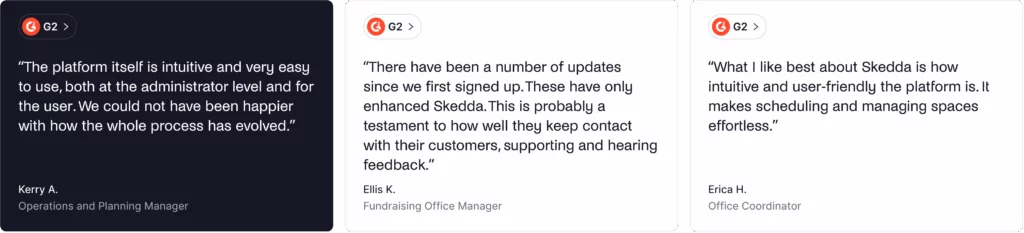
Skedda’s costs can rise quickly as you grow. The per-space pricing and tight plan limits often push teams into higher tiers sooner than expected. As one reviewer noted: “We aren’t renting out our desks to the team, unlike a workspace that would recoup costs for Skedda, so the costing for our specific use is pretty high.”
Skedda’s pricing model can be less cost-effective than other alternatives. Each space (parking, desks, rooms, etc) counts as one resource towards your plan’s limit. While Joan’s per-user pricing isn’t the best, it’s more predictable than factoring in each space you have.
For organizations needing cost-effective scaling or the comprehensive feature set Joan provides, its limitations might make it less attractive than other Skedda alternatives.
Other alternatives to Joan
- OfficeSpace: An enterprise-grade platform with advanced space planning, move management, and strategic real estate tools.
- Eden: A workplace platform with modular pricing.
- YAROOMS: A workplace management platform with strong Microsoft Teams integration and an AI assistant (Yarvis) for smart booking and insights.
Which Joan alternative should you choose?
There are several solid Joan alternatives to consider. To choose the best one for your office, think about:
✅ Pricing model. Choose between per-user pricing or resource-based pricing (Archie, Skedda). Resource-based is usually more cost-effective for teams that have more employees than desks.
✅ Pricing transparency. Check whether pricing is publicly available. Archie shows clear rates ($2.80/desk, $8/room), while Kadence, Robin, and Tactic require custom quotes.
✅ AI features. Decide if AI-powered booking is essential.
✅ Implementation timeline. Evaluate how quickly you need to go live. Archie deploys in days, while platforms like Robin or Tactic might take longer.
✅ Team size and scale. Consider your current team size and the extent of your scaling. There are plenty of solutions for smaller (Joan, Skedda), mid-sized (Archie), and enterprise (Robin) teams.
Why Archie is usually the best alternative
- Transparent, resource-based pricing. Clear rates (starting at $2.80/desk and $8/room, with a minimum of $159/month) can help you budget from the get-go.
- Fast deployment. Get operational quickly without lengthy implementation projects. Most teams are live within days, not weeks or months.
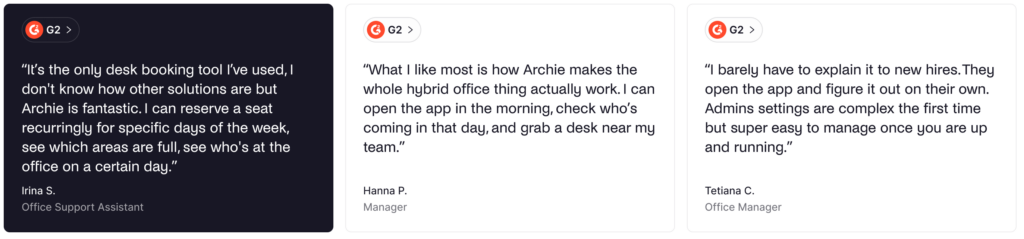
- Recent reviews you can trust. 4.9/5 rating on both G2 and Capterra with consistent, current feedback.
- Cost-effective for office teams. Resource-based pricing beats per-user models when you have more employees than desks, as is the case for most offices nowadays.
Quick head-to-heads
- Archie vs Joan: Both cover desks, rooms, and visitors. Joan comes with dual costs: a per-user fee, a per-device subscription, plus upfront hardware costs for the e-paper displays. Archie offers the same core functionality starting at $159/month, with no hardware required.
- Archie vs Kadence: Both are full workplace platforms, but Archie uses clear, resource-based pricing, while Kadence relies on custom quotes.
- Archie vs Tactic: Both handle workplace management well. Archie starts at $159/month, while Tactic typically starts around $5,000 per year with quote-based pricing.
- Archie vs Robin: Robin adds employee experience tools like surveys and satisfaction tracking but offers pretty high custom pricing plans. Archie is simpler to use, faster to roll out, and more affordable, with transparent pricing from $159/month.
- Archie vs Skedda: Skedda uses flat tiers ($99–$199/month) where every bookable item counts toward space limits. Archie charges per desk and per room ($2.80/desk, $8/room), which many teams find more predictable as they grow.
Sources
- Competitor feature & pricing pages
- Demo videos
- G2 & Capterra profiles
- Archie’s product research

Alexios Georgakopoulos
Archie’s Content Writer, coffee fiend, and resident Gen Zer who hates working in offices but loves writing about them. When he is not deep in hybrid work and coworking topics, he is obsessing over a new hobby that will probably last about a day.