









Ronspot is known for parking-first workplace management, with desk/room booking added. Parking is where Ronspot really earns its keep, with interactive maps, ANPR-based parking enforcement, and violation tracking. But if workplace management overtakes this need, their pricing for desk and room reservations is commonly cited in reviews as expensive for what you get.
If you find yourself feeling the same, here are five Ronspot alternatives worthy of putting in front of your team:
- Archie – a full workspace platform covering desks, rooms, visitors, and parking with transparent pricing with the highest G2 rating.
- Tactic – a strong pick if you want desk and room booking with an AI-assistant.
- Dibsido – the closest like-for-like swap with real parking fairness controls and a free plan Ronspot has no equivalent of.
- Deskbird – offers simple desk booking, flexible schedules, parking, and strong Teams and Slack integrations
- Officely – the simplest option for Slack-first teams, booking desks natively where Ronspot has no presence at all, but at the cost of parking and visitor features.
How you choose between them really comes down to your one real problem: budget or breadth. That has a ring to it, so keep both in mind as you scan through the alternatives I present here.
Most companies leaving Ronspot for Archie cite broader integrations and single-platform coverage at a competitive price. Even though I write for Archie, I’ll be upfront that Dibsido can still be the better specialist pick if parking alone is what’s driving the search, but usually that’s actually where Ronspot excels.
1. Archie
Archie is a workplace management platform built for medium-to-large offices juggling people and spaces. It covers desk booking, meeting rooms, visitor management, and parking spots, all inside one system.
Archie is best for offices that need more than a parking tool: teams managing desks, rooms, and guests alongside parking. Archie handles parking as a bookable resource, not as a licence-plate-recognition system. But upfront, if ANPR-based enforcement is not a need, you’ll find Archie desk and meeting room booking software a quick favorite among employees and admins.
What are the key features of Archie?
Archie’s feature set spans the whole office, not just the car park:
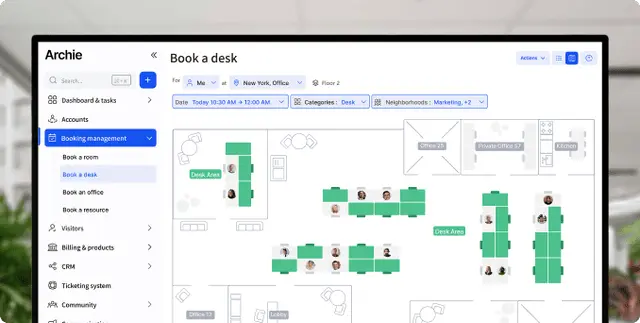
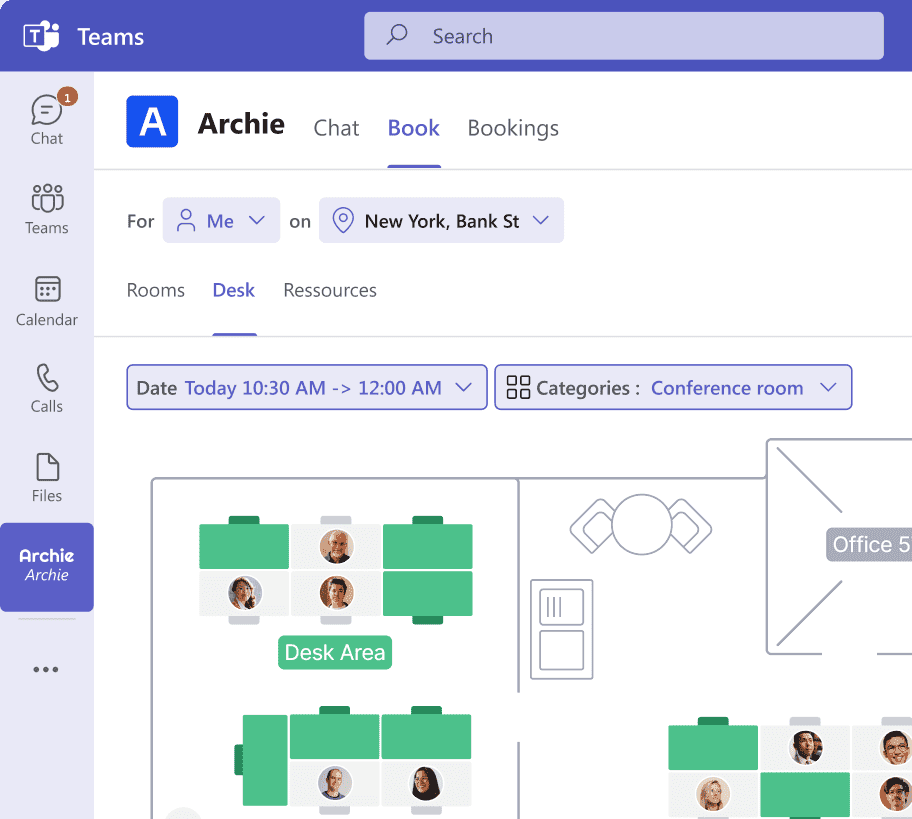
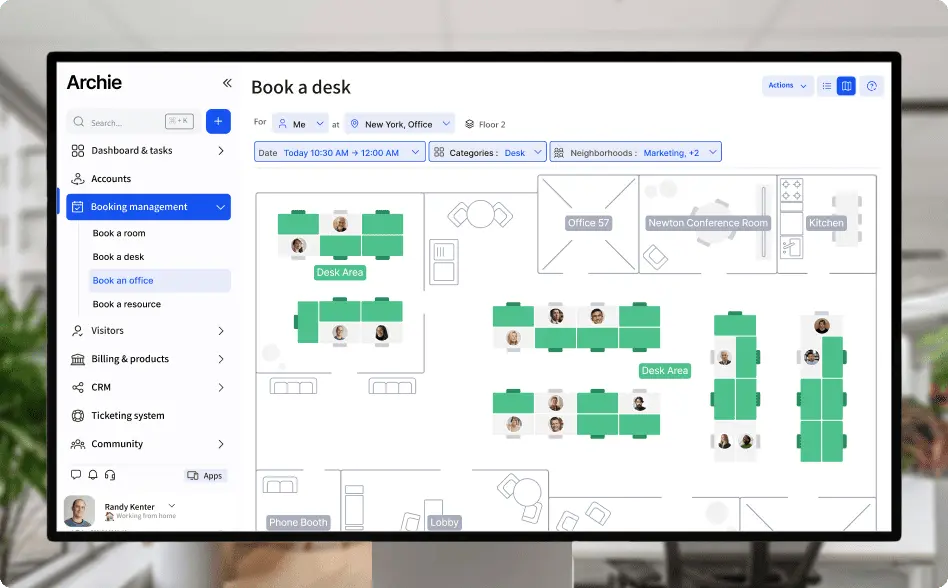
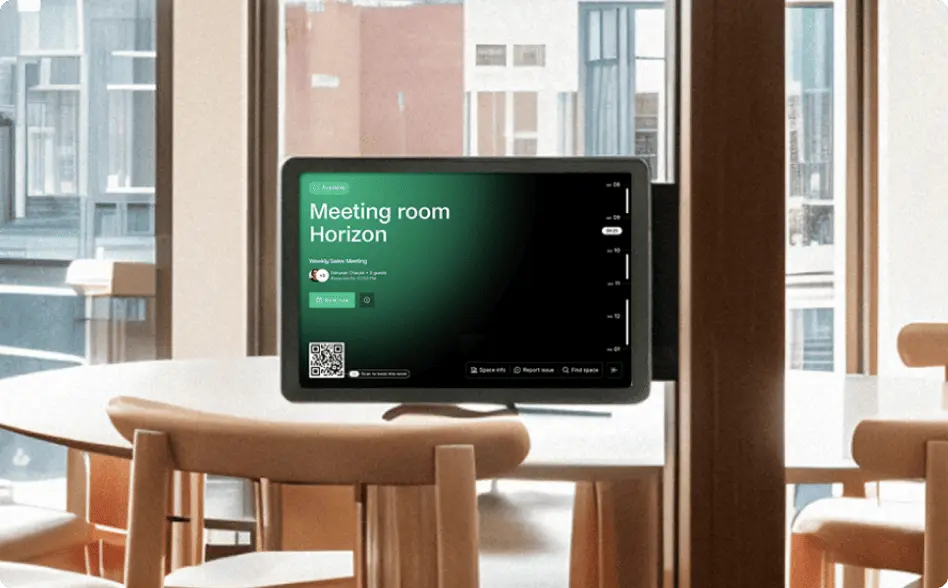
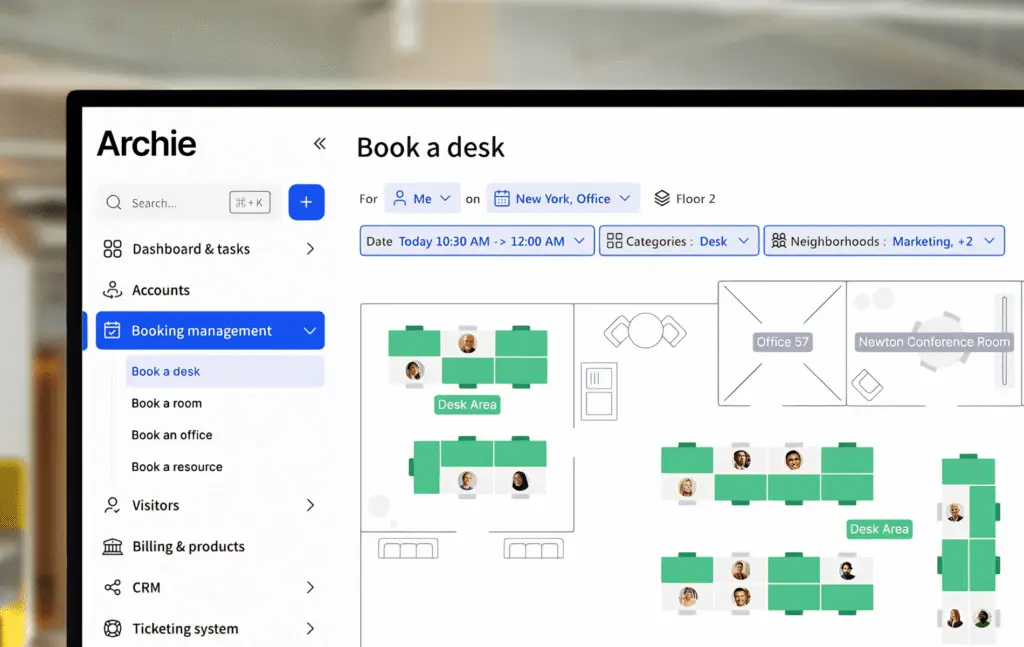
- Interactive floor plans for desks, rooms, and parking. Employees see what’s free in real time and book directly from a visual map – the same booking experience Ronspot offers for parking extended across every resource type in the building.
- Custom bookable resources, including parking spots, at no extra cost. Admins can turn any parking spot into a bookable resource with its own rules and restrictions. This covers day-to-day allocation well.
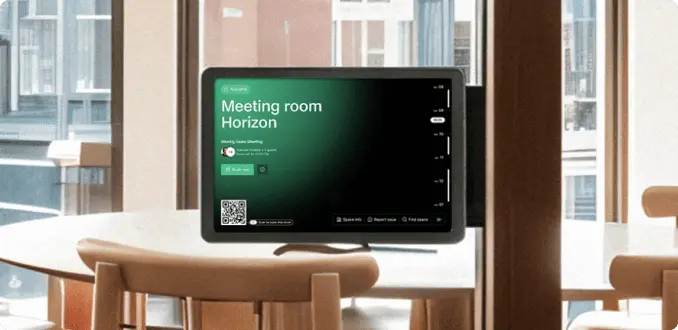
- Auto-release for no-shows. Unclaimed desks, rooms, or parking spots free up automatically instead of sitting reserved and empty — the same no-show waste Ronspot’s credit system is designed to reduce, handled without needing a separate policy engine.
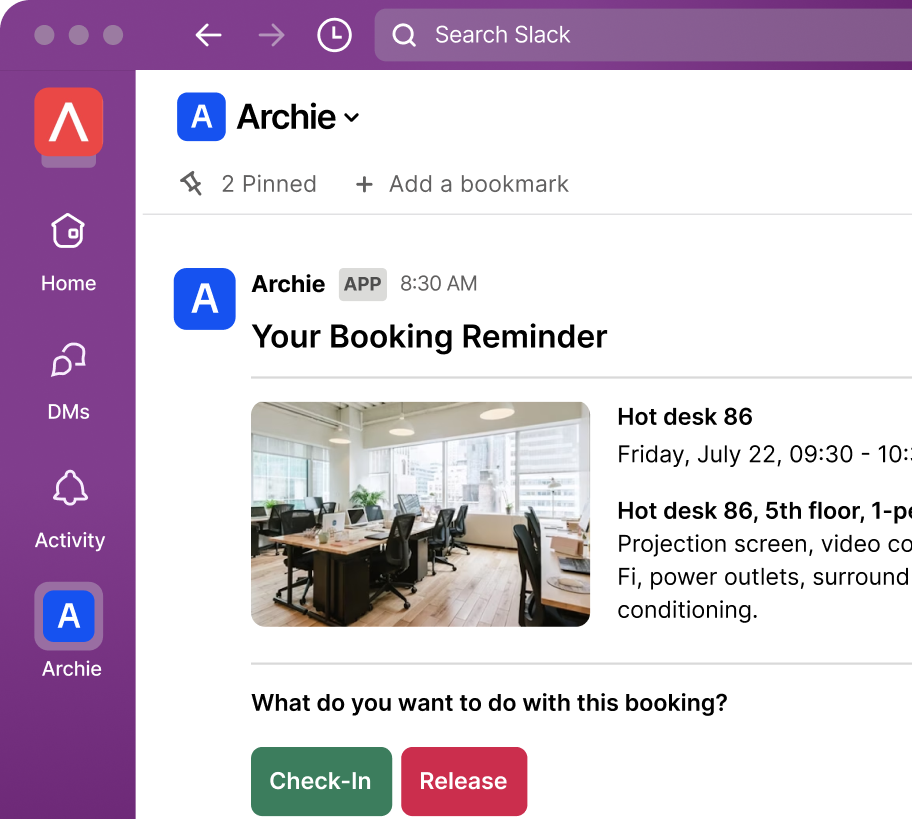
- Google Calendar, Outlook, Microsoft Teams and native Slack integration. Ronspot connects to Outlook, Teams, and Google Calendar too, but has no native Slack app — a real gap if your team lives in Slack day to day.
- Occupancy and utilization analytics. Peak days, attendance by team, real-time views of who’s on site. Ronspot’s analytics center mainly on parking usage and policy compliance; Archie’s span the whole office footprint.
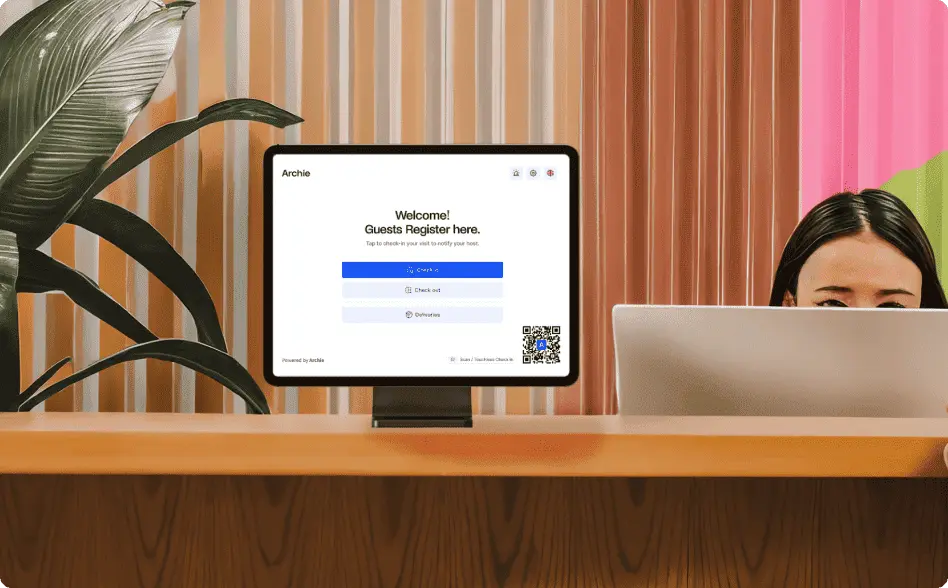
- Visitor management. Self-serve check-in, host notifications, e-signatures — Archie has a full visitor management system available as an add on that Ronspot doesn’t offer at all. For offices that get client visits or contractors on top of managing their own staff, this is one less vendor to manage.
- Booking rules and restrictions. Approval workflows, booking windows, and access limits by user group, comparable to the restriction and credit controls Ronspot applies to parking, but configurable across every resource in Archie
- User-friendly, flexible app. This is what people love most about Archie. Employees have many ways to book and adjust their schedules and plans; admins have a configurable, intuitive system.
How much does Archie cost?
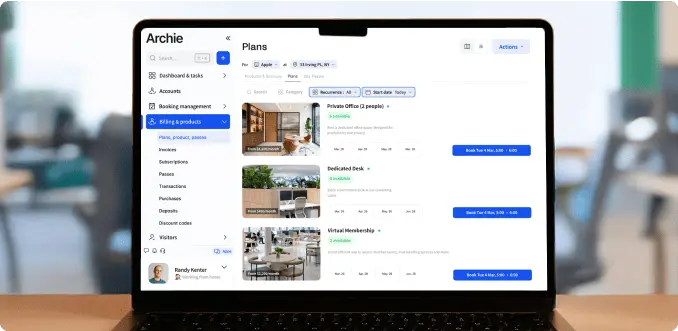
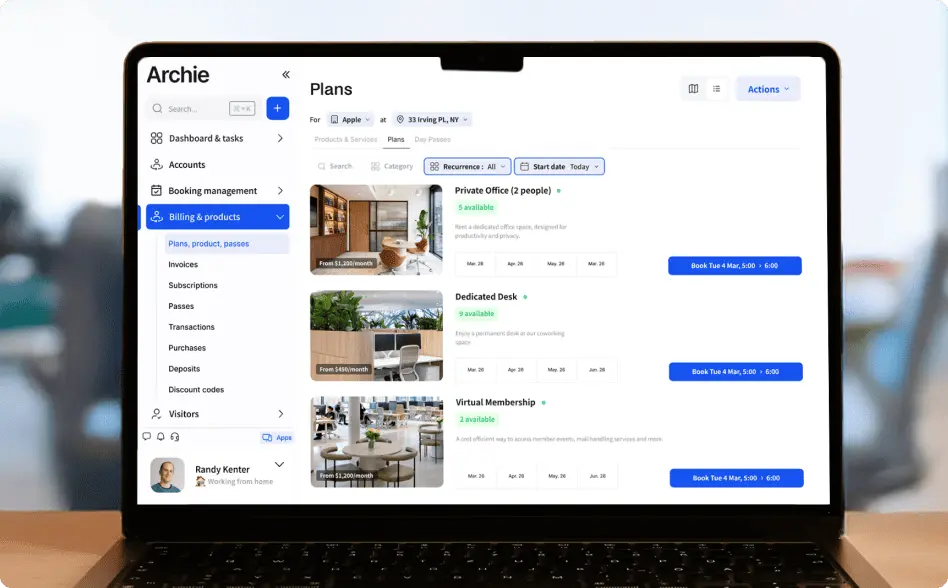
Archie publishes its pricing, which is the first meaningful difference from Ronspot’s enterprise-only, quote-based model:
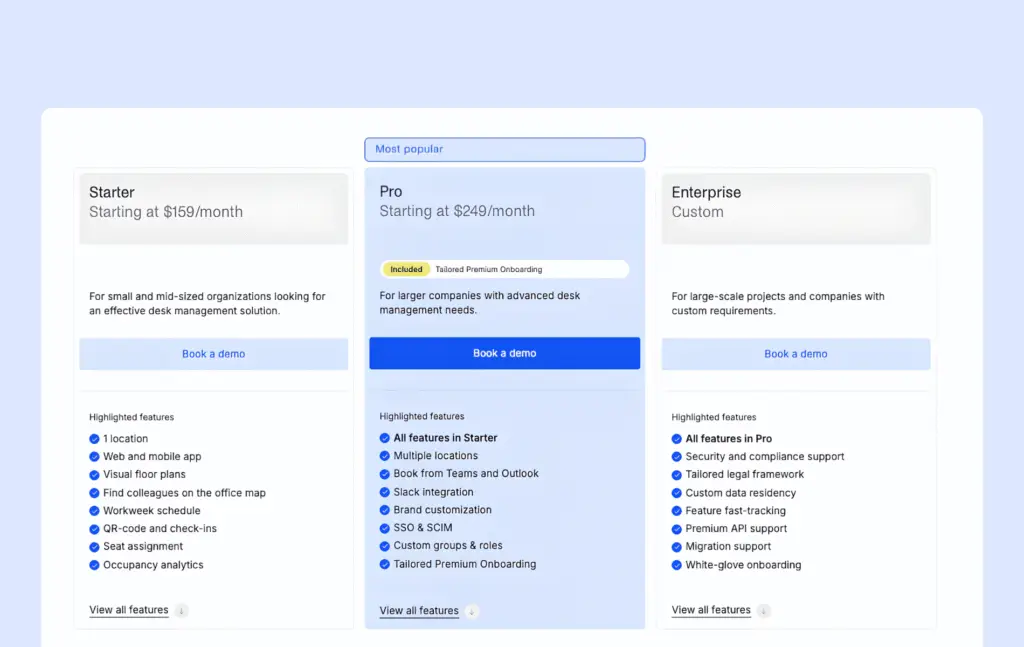
- Starter: min. $159/month — one location, floor plans, occupancy analytics, QR check-in.
- Pro: min. $249/month — multiple locations, Teams/Outlook/Slack booking, brand customization, SSO & SCIM.
- Enterprise: custom pricing for larger organizations needing security and compliance support, custom data residency, and white-glove onboarding.
You can see Archie Pricing in full before you ever talk to sales. While Visitor management costs extra, most medium-to-large companies find everything they need in the Pro plan.
What are the pros and cons of Archie?
Pros:
➕ One platform for desks, rooms, visitors, and parking
➕ Transparent, published pricing – no demo required to know what you’d pay
➕ Fast deployment — most teams are live in days
➕ Native Slack and Teams booking, not just calendar sync
Cons:
➖ Parking is handled as a general bookable resource, no ANPR or automated plate-based violation enforcement
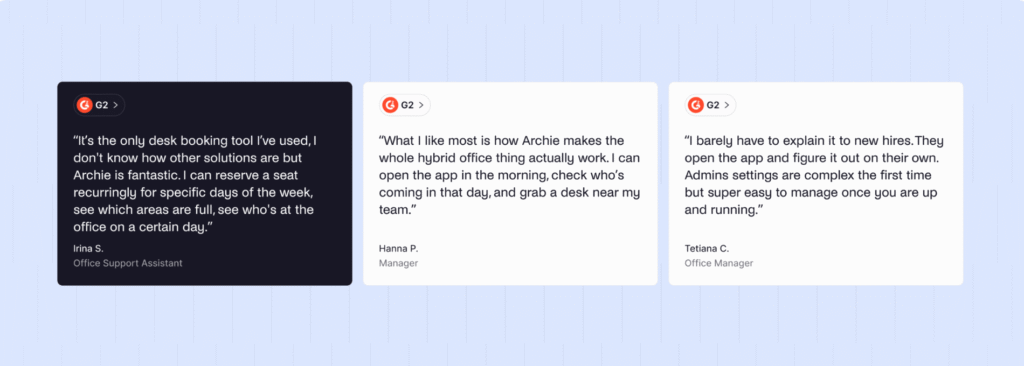
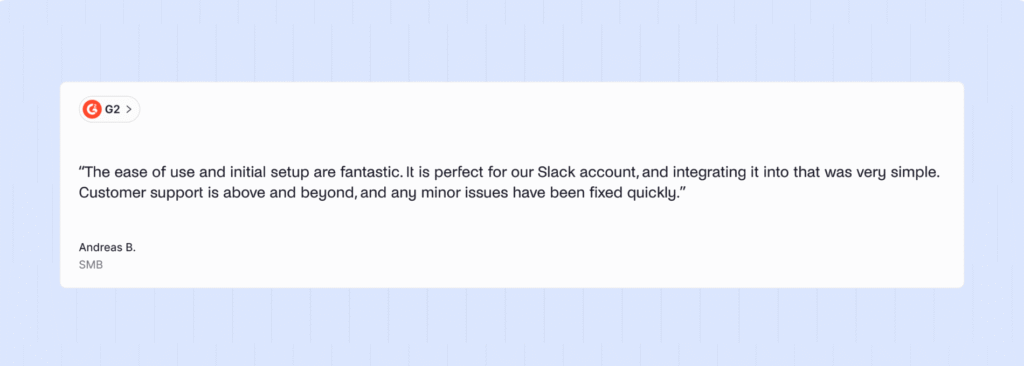
Reviewers consistently point to ease of use and responsive support. Archie holds a 4.9/5 rating on G2, with recurring praise for how easy it is to use, how quickly teams get up and running and how the support team handles issues when something needs fixing.
2. Tactic
Tactic is a workplace platform built around desk and room booking. It’s a modular model workplace management system that lets you build your own package from their visitor management, workplace reservations, and Tessa, its AI assistant. Reviewers consistently rate it well for ease of use and support.
Tactic is best for complex organizations that want a polished, well-supported workplace tool and don’t mind building out a custom package rather than picking off a fixed price list.
What are the key features of Tactic?
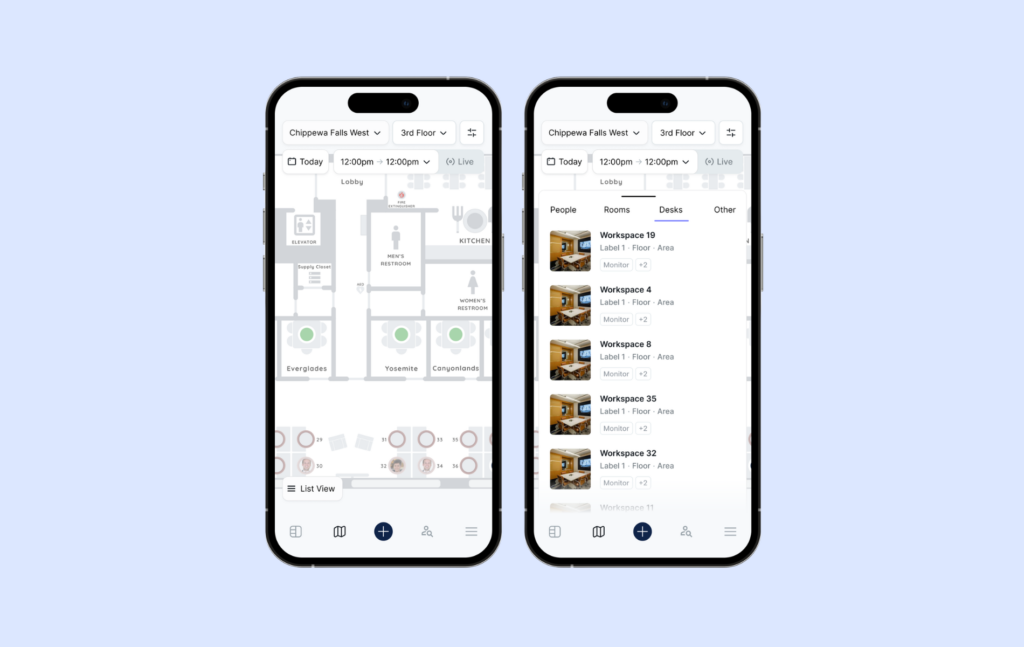
- Desk and room booking with floor plans. A visual booking experience with the calendar sync and check-in basics most platforms in this category offer.
- Tessa AI assistant. Built into higher tiers, aimed at streamlining scheduling and coordination.
- Visitor management, workplace requests, workplace integrations, and SSO sign-in. Available as part of the modular build.
- Workspace visualization and coordination tools. Tactic’s booking coordination is commonly cited in reviews as a standout strength.
How much does Tactic cost?
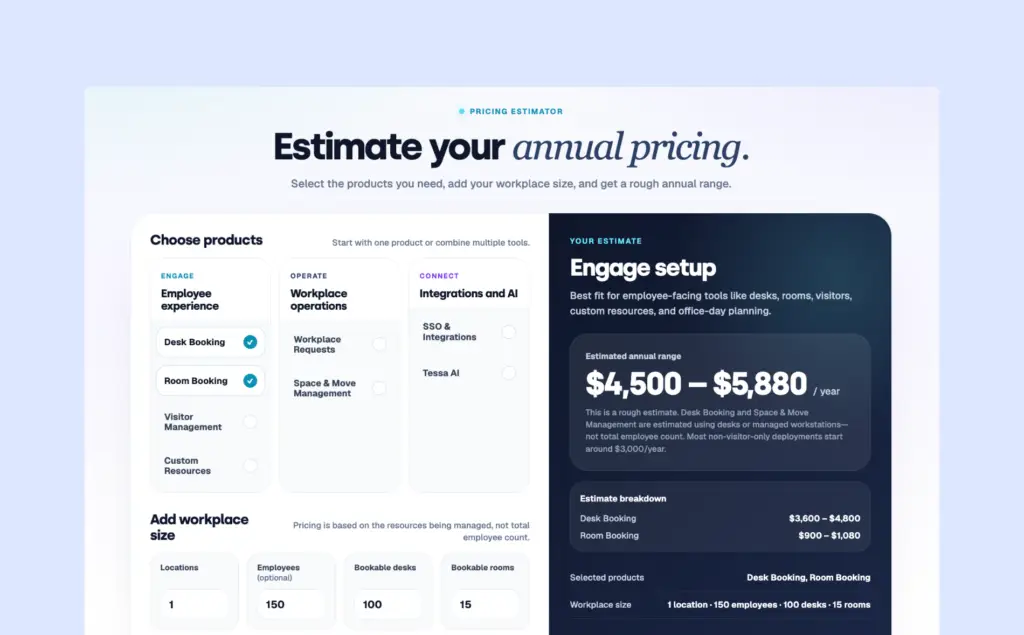
Tactic recently replaced its three fixed, per-resource pricing tiers with a fully modular model. Instead of a flat rate per desk or room, you now build a package by selecting individual products across employee experience, workplace operations, and add-ons like SSO and Tessa AI. Tactic runs this through an interactive pricing estimator on its site rather than publishing rates directly, and typical deployments start around $3,000/year and climb from there depending on which modules and how many resources you need.
That’s a genuinely more complex pricing structure than a flat per-desk rate, and — like Ronspot — it still requires working through a sales-facing tool to land on a real number rather than seeing one upfront.
What are the pros and cons of Tactic?
Pros:
➕ Consistently described as easy to use, with an intuitive, clean interface
➕ Strong customer support, praised across both G2 and Capterra
➕ Solid workspace visualization that makes coordination easier for larger teams
Cons:
➖ New modular pricing model adds complexity to evaluating cost upfront
➖ While the AI is impressive, some users report inaccuracies
➖ Mobile interface described as less polished than desktop
Reviewers on G2 and Capterra are largely positive on day-to-day usability and support. However performance at scale and the newly modular pricing are the more common points of friction, and the main reasons people search for Tactic alternatives.
3. Dibsido
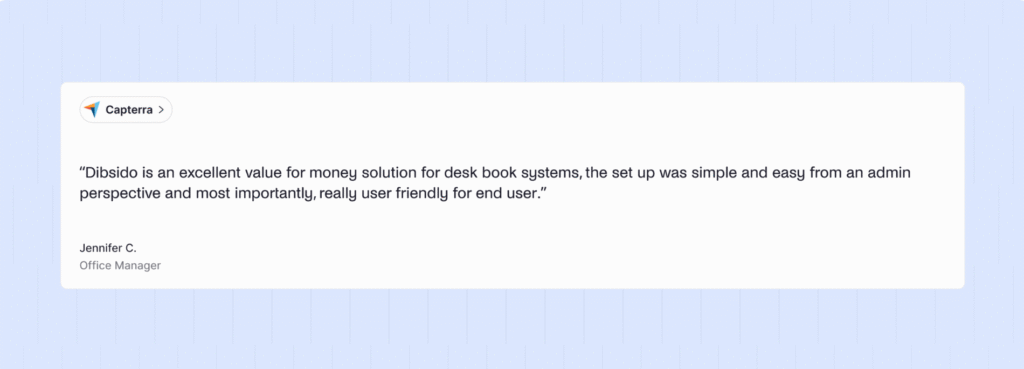
Dibsido is the one alternative on this list that competes with Ronspot on its home turf. Alongside desk booking, it treats parking as a feature with availability management, and carpooling support built in, along with fairness controls like monthly booking limits to stop the same people claiming every spot.
Dibsido is best for smaller or mid-sized teams that want desk booking and parking handled together, without a lot of admin overhead, and without committing to an enterprise sales process to find out the price.
What are the key features of Dibsido?
- Parking reservations with fairness controls. Monthly limits and carpool support address the exact problem Ronspot targets, just with a lighter admin footprint.
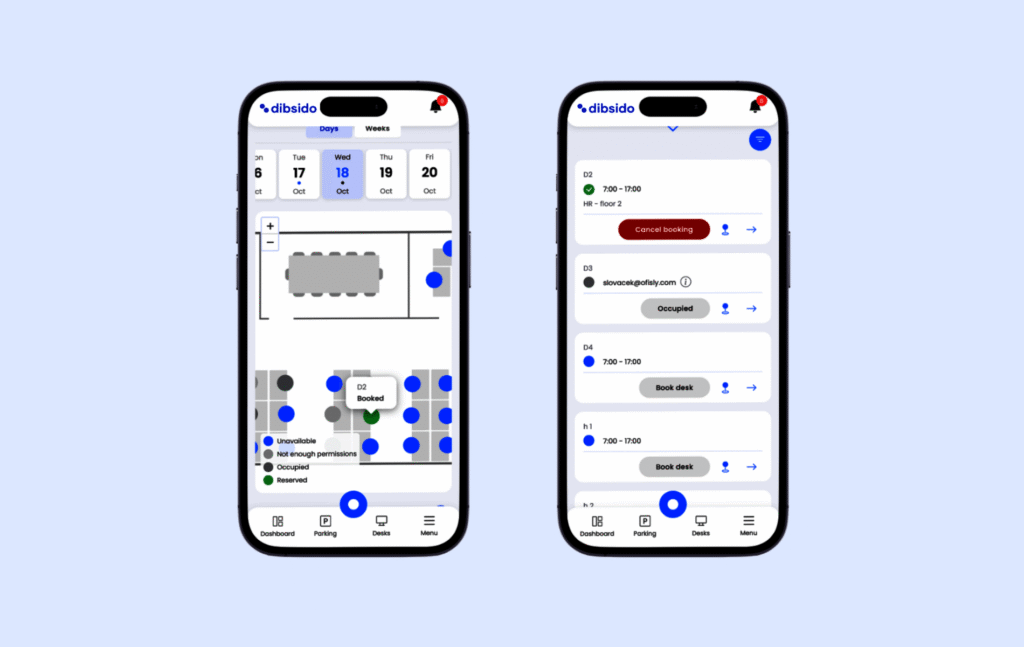
- Easy desk booking and interactive floor maps. A visual, low-friction booking flow that some reviewers describe as quick to learn.
- Auto-cancellation for no-shows. Desks release automatically if someone doesn’t check in.
- Integrates with Slack, Microsoft Teams, Google and Outlook, meeting your team where they are.
How much does Dibsido cost?
Dibsido’s free plan is available for up to 20 users, and includes desk booking, floor plans, and analytics. This is genuinely useful for small teams, and something Ronspot has no equivalent of.
If you’re inerested in only one segment of workplace management, you cna opt for either parking, desk booking, or room booking at a per-space price (starting with $3.00 per desk / month, $4.50 per parking spot / month or $6 per room / month). However, for resource combinations, there are two tiers priced on a per user basis:
- Growth: $1.90 per user/month (billed yearly), unlimited desks, advanced booking rules and reporting.
- Enterprise: custom pricing for 200+ users, with advanced security and custom agreements.
What are the pros and cons of Dibsido?
Pros:
➕ Parking management with fairness controls — a genuine like-for-like alternative to Ronspot’s core use case
➕ Free plan available for small teams
➕ Fast to set up, minimal training needed
Cons:
➖ No visitor management, so offices either need a separate tool (or often seek Dibsido alternatives)
➖ Admin customization is lighter than more complex platforms — detailed policies and permissions may feel limited as you grow
➖ No ANPR or plate-recognition enforcement, same trade-off as Archie on that front
Reviewers consistently point to Dibsido’s simplicity and its parking fairness controls as its strongest features, with the most common caveat being that it’s built for lighter operational needs than a full enterprise workplace platform.
4. Deskbird
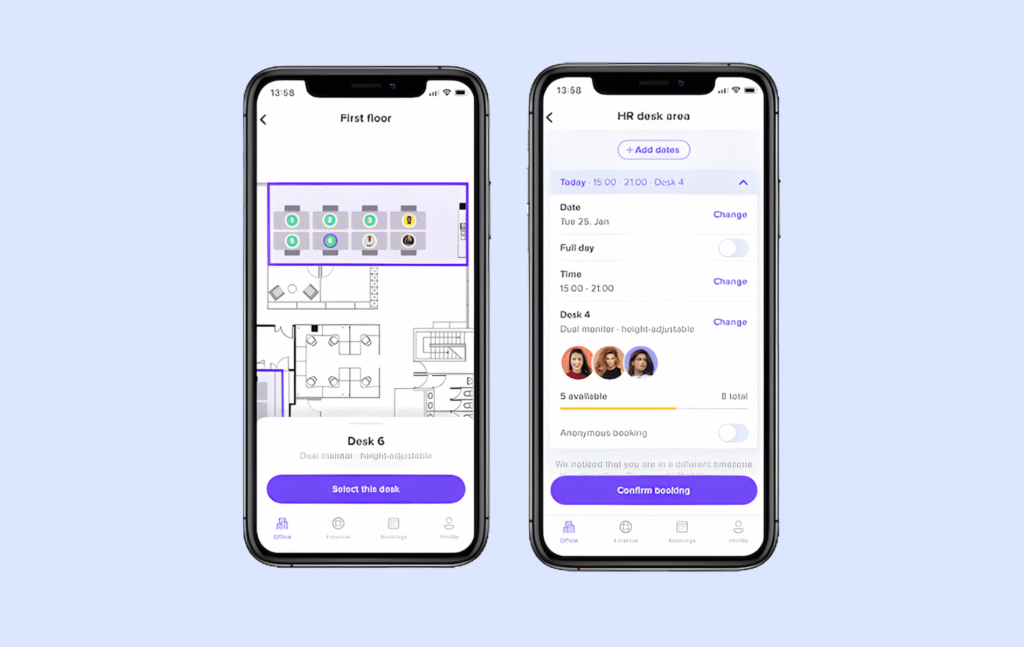
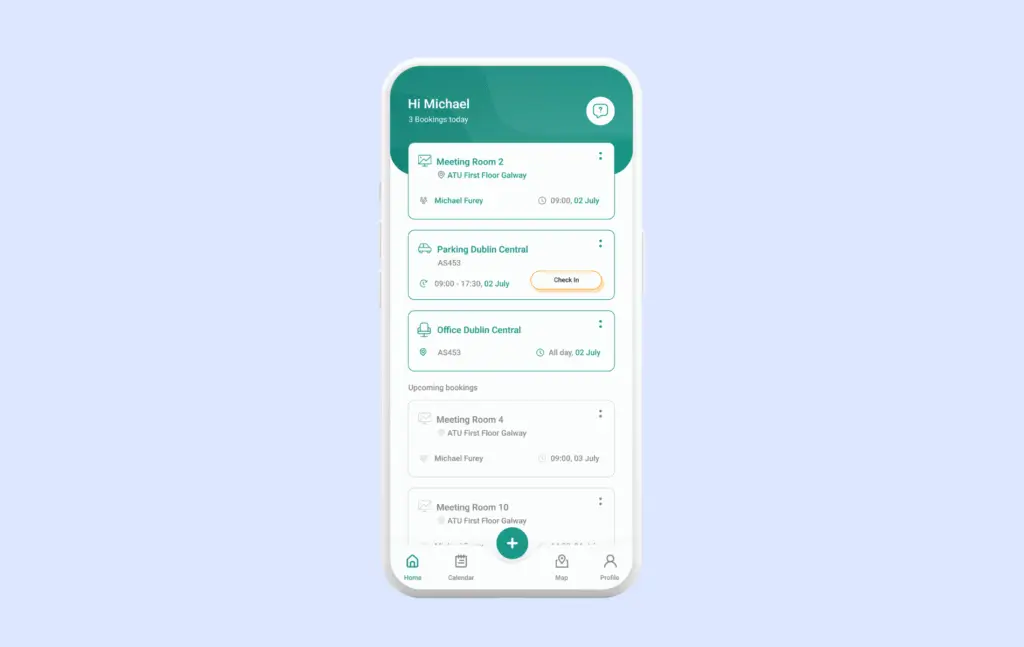
Deskbird is a desk and room booking platform that also lets employees book parking spots directly from an interactive floor plan or the mobile app. Admins can set booking limits, advance notice windows, and check-in requirements to manage availability.
Our Deskbird review shows it can be a good option for teams that want strong Slack, Teams, and Outlook integrations alongside parking and desk booking, and that are comfortable with per-user pricing rather than Archie or Ronspot’s resource-based models.
What are the key features of Deskbird?
- Parking spot booking. Two-click booking from an interactive floor plan, with configurable rules for limits, notice windows, and check-ins — a genuine overlap with Ronspot’s core use case, though without ANPR or automated violation enforcement.
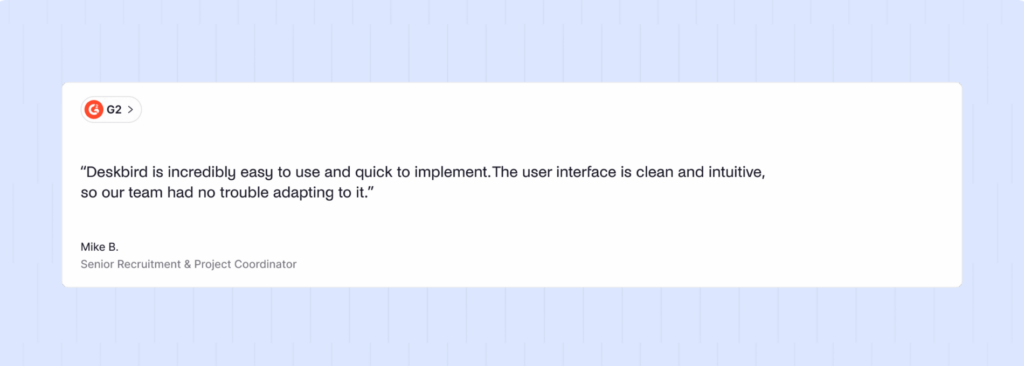
- Fast, real-time booking. Reviewers frequently describe the booking flow as quick and reliable, with real-time availability that prevents double bookings.
- Slack, Teams, and Outlook integrations. Employees can book without leaving the tools they already use — a meaningful gap Ronspot doesn’t cover with Slack.
- User groups by location or role. Similar to Archie and useful for targeting announcements and coordinating team events across offices.
How much does Deskbird cost?
- Starter: free forever, for up to 15 users and 1 office. Includes the same core functions as the Business plan, plus self-serve support.
- Business: $3.75 per user/month (billed annually) — native mobile apps, Microsoft Teams integration, automatic desk booking, interactive floor plan screens, and standard support.
- Professional: $4.75 per user/month (billed annually) — adds custom roles and permissions, advanced access controls, health and safety roles, workplace ticketing, public API access, and premium support.
- Enterprise: custom pricing — dedicated Customer Success and Technical Account Managers, advanced SLAs, custom analytics, and workplace NPS surveys.
Deskbird’s free Starter tier is a recent reintroduction worth flagging, since the platform had previously dropped its free plan entirely.
What are the pros and cons of Deskbird?
Pros:
➕ Books parking spots directly
➕ Fast, few-click booking with real-time availability
➕ Responsive customer support during onboarding and ongoing use
➕ Free Starter plan available for small teams
Cons:
➖ Analytics and reporting are more basic than dedicated workplace analytics tools
➖ Customization for complex floor plans, booking rules, or permissions can feel limited for larger or more complex teams
➖ Per-user pricing climbs quickly for hybrid organizations with large but infrequently in-office headcounts
➖ Some users report syncing delays with Outlook or Google Calendar
Deskbird’s clear design and booking speed is commonly cited in reviews, with the more common criticisms centering on analytics depth and cost scaling for bigger, more irregular hybrid workforces. For larger workplaces, when comparing Archie vs Deskbird, Archie tends to be more cost-effective.
5. Officely
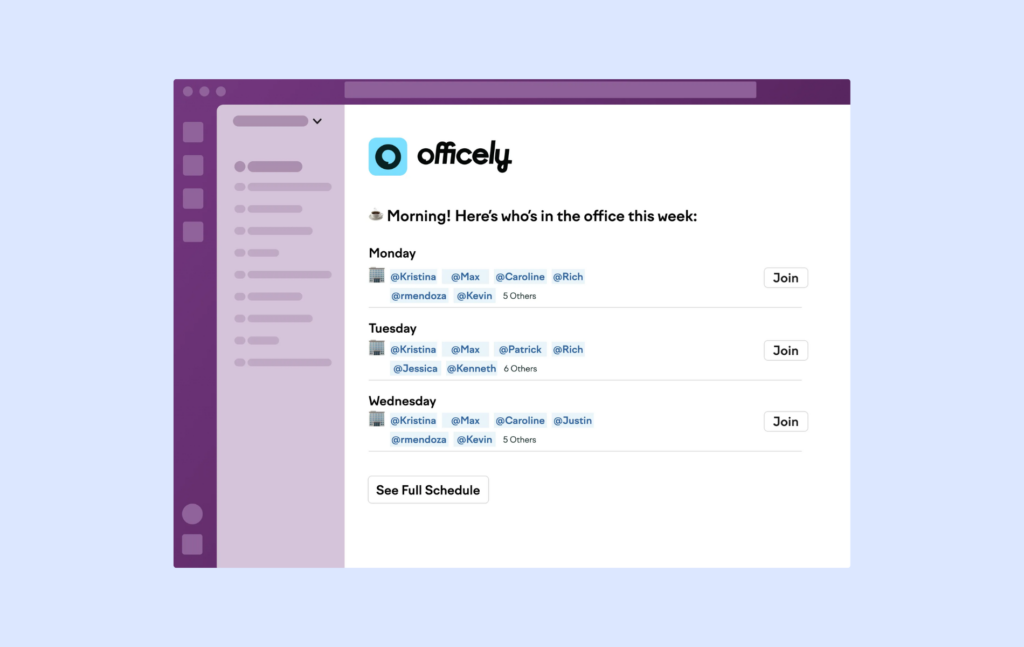
Officely’s whole premise is that people shouldn’t have to open a separate app to book a desk. It lives inside Slack and Microsoft Teams, so booking becomes part of a workflow employees are already in rather than a new habit they need to build.
Officely is best for smaller, Slack-first teams that want dead-simple desk coordination and don’t need much beyond that. This also makes it the most direct contrast to Ronspot on integration philosophy, since Ronspot has no native Slack app at all. If this is your gripe, read on.
What are the key features of Officely?
- Book desks directly in Slack or Teams. No separate app, no extra login — this is the feature Ronspot users switching for Slack-native workflows will care about most.
- Check-ins with auto-release. Unclaimed desks free up automatically.
- Colleague visibility and team booking. See who’s coming in and book on behalf of teammates.
- Office attendance insights. Basic tracking of who’s in and how often.
Officely doesn’t include parking management, interactive floor maps, or visitor management — it’s intentionally lightweight, and that’s the trade-off for how easy it is to adopt.
How much does Officely cost?
- Free: up to 5 users
- Basic: $2.50 per user/month
- Premium: $3.50 per user/month, adds advanced insights and attendance-boosting tools
- Enterprise: custom pricing
What are the pros and cons of Officely?
Pros:
➕ Extremely fast to set up and adopt, particularly for Slack-first teams
➕ Affordable entry point for small teams
➕ Helpful, responsive support during onboarding
Cons:
➖ No parking management
➖ Limited analytics compared to broader workplace platforms
➖ Feature ceiling is low, larger or more complex teams tend to outgrow it
➖ Microsoft Teams version is less capable than the Slack version
Some reviews are positive about ease of adoption, with the recurring caveat that Officely is built to stay simple. If this fits your mold, then Officely is for you. When it comes to Archie vs Officely, you’ll get better analytics, more flexibility, and deeper integrations with the former.
What is Ronspot?
Ronspot is a cloud-based workplace management platform built around desk, meeting room, and parking booking, with parking as its clearest point of differentiation. It’s designed for companies with more employees than available spaces, a problem it addresses through interactive maps, real-time availability, and rule-based allocation.
The platform is used mainly by facilities managers, office administrators, and workplace coordinators, spanning small, midsize, and enterprise organizations. Its core capabilities include:
- Desk, room, and parking booking from an interactive map
- Real-time availability shown up to 90 days in advance
- A credit system and booking-window controls to manage demand fairly
- ANPR-based parking enforcement and violation tracking
- Calendar sync with Google Calendar, Microsoft 365, Outlook, and Teams
- ISO 27001-certified data security, hosted on AWS in Dublin
Ronspot is best known in the market for its parking capability specifically. Reviewers and buyers alike tend to frame it as a parking-and-desk tool first, with meeting rooms as a secondary function. It’s a narrower positioning than an all-in-one workplace platform, but a strong one within that lane.
Why do companies look for Ronspot alternatives?
The short version: teams either need more than parking, or they need clearer pricing, or both.
- Cost concerns at scale. Some reviewers describe the platform as expensive relative to what it delivers, particularly once you’re past the core parking use case.
- No visitor management. Ronspot handles desks, rooms, and parking, but there’s no front-desk or guest check-in capability. Offices with regular client or contractor traffic need a separate tool for that entirely.
- No native Slack integration. Teams that run their internal communication through Slack don’t get a booking experience inside it — everything happens in a separate app or the web portal.
Pricing structure also plays a real role here. A platform with only an enterprise tier assumes every buyer needs enterprise-level support and complexity, which isn’t true for a mid-sized office trying to solve a parking problem without a six-figure contract. Scalability cuts both ways too — teams that outgrow a single office find Ronspot’s multi-site policy tools useful, but smaller teams often feel like they’re paying for capability they don’t need yet.
Switching away from Ronspot tends to make the most sense when parking isn’t your only problem — when you also need visitor check-in, Slack-native booking, or published pricing you can act on without a sales cycle.
How do you choose the right Ronspot alternative?
The right call depends less on feature count and more on how closely a platform’s core strength matches your actual problem. A tool built around parking will out-execute a generalist on parking specifically; a broader workplace platform will out-execute a specialist on everything else.
A few criteria worth working through in order:
- Does it solve your actual top complaint?
- How does it fit with your budget?
- Does it cover what else your office needs?
- How well does it scale down as well as up?
Where these criteria conflict (lower price versus broader functionality, for instance, or a specialist’s depth versus a generalist’s coverage) the honest answer is that it depends on which trade-off costs you more in practice.
A team juggling parking, desks, rooms, and guests may be losing money on an app that leaves gaps when the alternatives list is long.
Which is the best Ronspot alternative for offices who are looking for the best value?
Archie is the best value desk booking tool alternative.
Value isn’t just the lowest sticker price — it’s how much you get covered per dollar, and how much you can trust that price to hold. On both counts, Archie comes out ahead of everything else on this list.
Dibsido and Officely undercut Archie on raw per-seat price, but neither includes visitor management, and Officely doesn’t touch parking at all. Archie also packs in visitor management, deeper analytics, more complex booking rules, and generally a more complete workplace platform.
Why do companies choose Archie as a Ronspot alternative?
Companies moving off Ronspot are usually trying to solve one of two problems: they want a platform that covers more than parking, or they want pricing they can see before they commit to a demo. Archie addresses both directly — published pricing across every tier, and a single platform for desks, rooms, visitors, and parking instead of a tool built around one resource type.
Archie | Ronspot | |
|---|---|---|
Core focus | Full workspace platform (desks, rooms, visitors, parking) | Parking-first, with desk and room booking included |
Parking capability | Bookable resource with rules and restrictions | ANPR-based enforcement and violation tracking |
Visitor management | Add-on | Not offered |
Pricing model | Published, per-desk/per-room, starting at $159/month | Enterprise-only, quote-based |
Slack integration | Native booking in Slack and Teams | Not available |
Usability | 4.9/5 G2 | 4.8/5 Capterra | 4.6/5 (Capterra) |
Ideal customer | Hybrid offices needing desks, rooms, visitors, and parking in one system | Offices where parking enforcement is the primary, dominant problem |
Consolidating desks, rooms, visitors, and parking into one platform means one login, one admin panel, one support relationship, and one invoice instead of several. Including:
- Auto-release for no-shows. Reserved spots that go unclaimed free up automatically, addressing the same wasted-capacity problem Ronspot’s credit system targets.
- Occupancy analytics. Usage patterns across every resource type, including parking, roll up into the same reporting dashboard admins already use for desks and rooms — no separate parking analytics tool required.
- Visitor management alongside parking. For offices managing both employee parking and guest arrivals, Archie handles check-in, host notifications, and guest parking allocation in the same system Ronspot would need a second vendor to cover
How do Archie and Ronspot compare in G2 and Capterra reviews?
Archie | Ronspot | |
|---|---|---|
G2 rating | 4.9/5 | Not independently rated on G2 |
Capterra rating | 4.8/5 | 4.6/5 |
Both platforms score well on support and ease of use — that part of the comparison is close. Where they diverge is scope and pricing transparency: Archie’s reviews lean on breadth across the whole workplace, while Ronspot’s strongest feedback centers specifically on its parking functionality, with cost being the most common point of friction. Review scores are one input, not the whole decision — weigh them alongside whether the platform actually covers what your office needs.
How do you migrate from Ronspot to Archie?
Moving from Ronspot to Archie is a structured process: map what you’re currently managing in Ronspot, plan the transition, migrate the data, and validate before you switch off the old system.
- Audit your current Ronspot setup.
- Set up your floor plans and resources in Archie.
- Connect your calendar and communication tools.
- Roll out and retire Ronspot.
Before fully retiring Ronspot, validate that historical booking data you need for reporting has been exported, that every parking spot and its rules have carried over correctly, and that any enforcement workflows you relied on (like violation notifications) have an equivalent process in place — even if it’s handled differently in Archie.