








- What you’ll learn
- What Dibsido does well and where it may fall short
- How Dibsido’s pricing works
- The best Dibsido alternatives and how they compare
- Why Archie is the best Dibsido alternative
Dibsido sits in a very specific part of the workplace software market. It is not trying to be the biggest platform with dozens of modules or a complex admin setup. Instead, it focuses on one thing: making it very easy to book desks, meeting rooms, and parking.
And in many cases, that is exactly what smaller teams need. You can start with a free plan for up to 20 users, then choose whether you need desk booking, room booking, parking booking, or an all-in-one setup.
But no tool is perfect for everyone.
As teams grow, many companies start looking for more advanced features like visitor management, deeper analytics, more complex booking rules, or a more complete workplace platform. That is usually the point where teams start comparing Dibsido with tools like Archie, Skedda, deskbird, Robin, and YAROOMS. In this guide, I’ll help you do exactly that.
Dibsido software review
Dibsido is a workplace booking tool built around one main idea: make booking desks, rooms, and parking as simple as possible. The platform is designed for fast rollout, fast adoption, and very little training. If your main goal is to get people booking desks or rooms without confusion, Dibsido does that very well.
Where it really stands out, though, is parking. Most workplace tools focus on desks and meeting rooms, and treat parking as a small add-on. Dibsido does the opposite and makes parking a core part of the platform, which makes it especially interesting for offices where parking is limited or hard to manage.
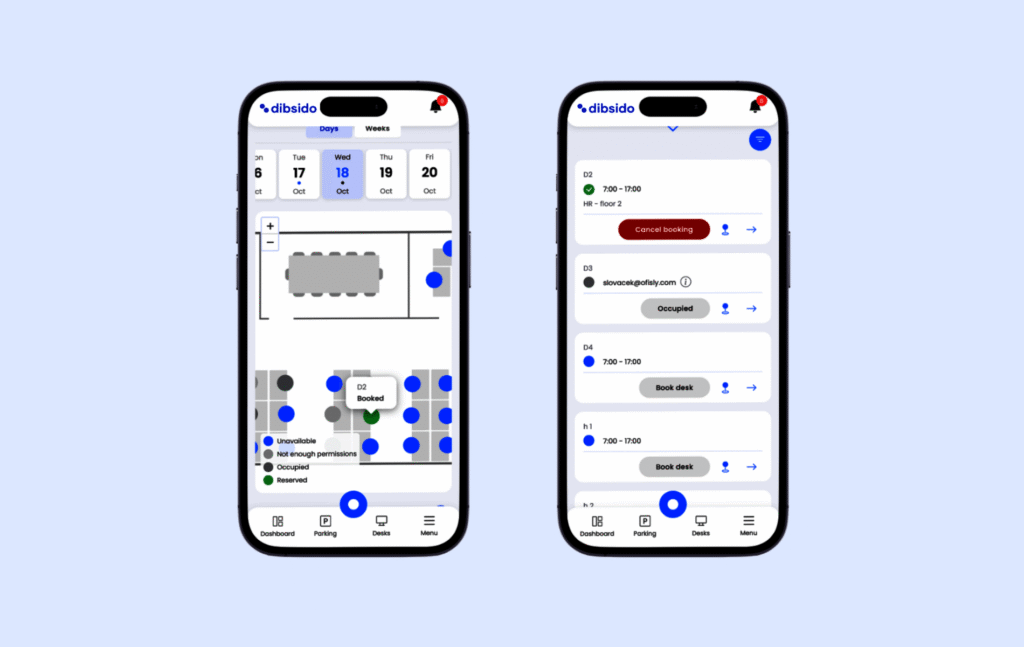
What Dibsido does best
Dibsido works best for teams that want a simple way to manage desks, meeting rooms, and parking in one place, without rolling out a large workplace management system.
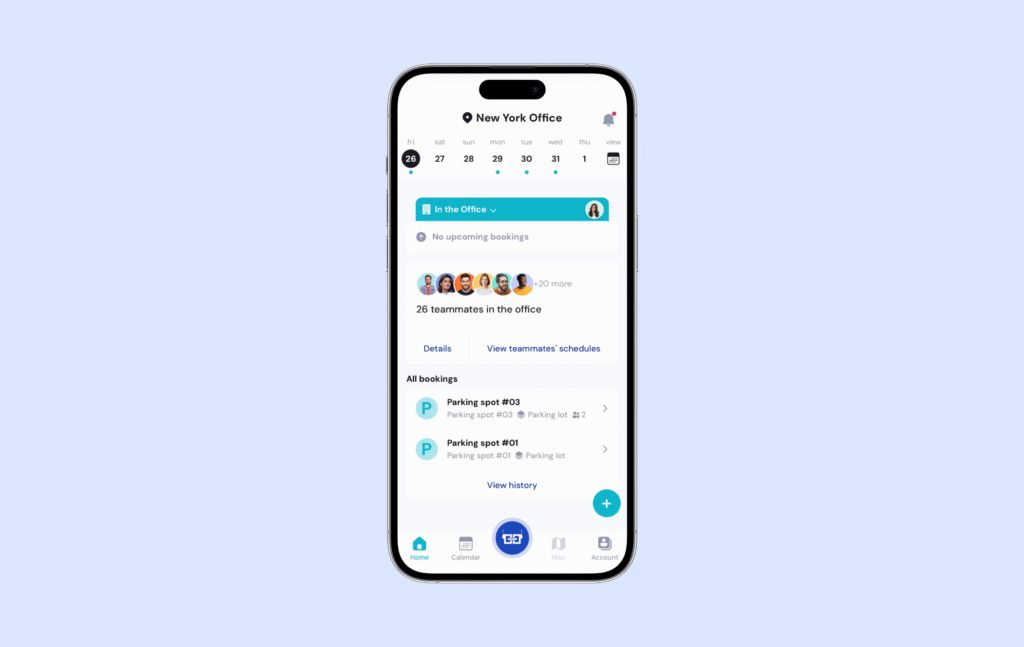
Employees can book desks in seconds, reserve meeting rooms, see the office seating plan on an interactive floor map, and check who is planning to be in the office. The experience is very visual and easy to understand, which helps with adoption.
For hybrid teams, a useful feature is that assigned desks can be released when someone is working remotely, turning them into hot desks for the day. This helps companies use their space more efficiently without fully switching to hot desking.
The system also includes auto-cancellation for no-shows, so if someone books a desk or a room and does not check in, it can be released automatically. That helps reduce wasted space on busy days.
Admins can manage user groups, permissions, and booking access for certain desks, rooms, or areas, and they can view occupancy analytics showing usage trends, peak days, and attendance patterns.
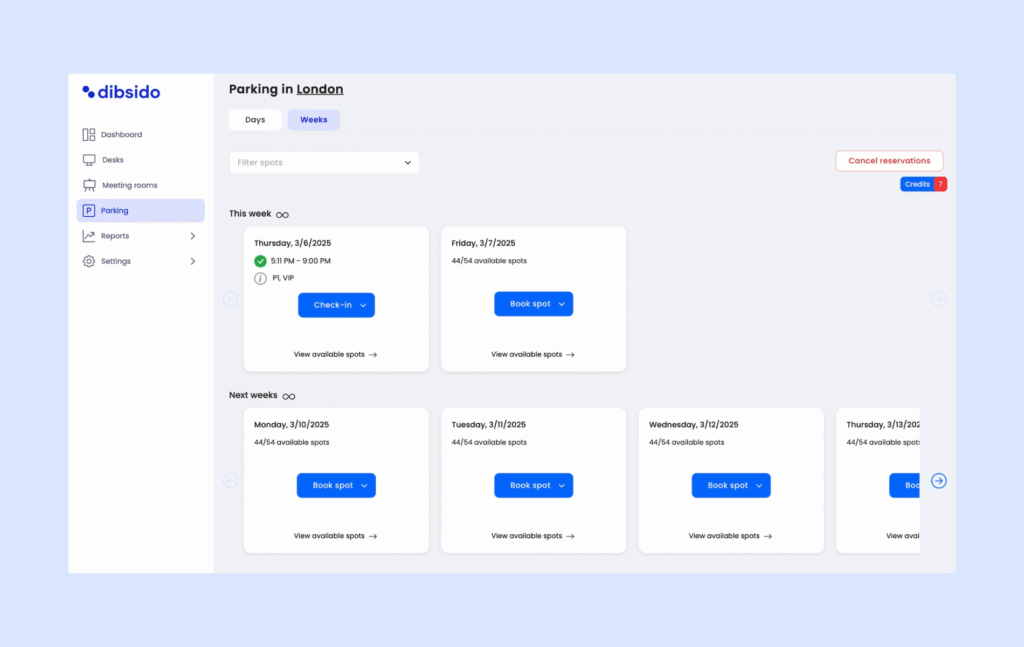
The most unique part of Dibsido is still the parking system. Parking management is built into the platform with fairness controls, like monthly booking limits, so the same people do not take the best parking spots every week. There is also carpool coordination built in, which is useful for teams that share rides or want to reduce the number of cars coming to the office.
If your office has a situation like 150–200 employees and only 40–50 parking spots, this feature can genuinely solve a daily frustration that many room and desk booking tools simply ignore.
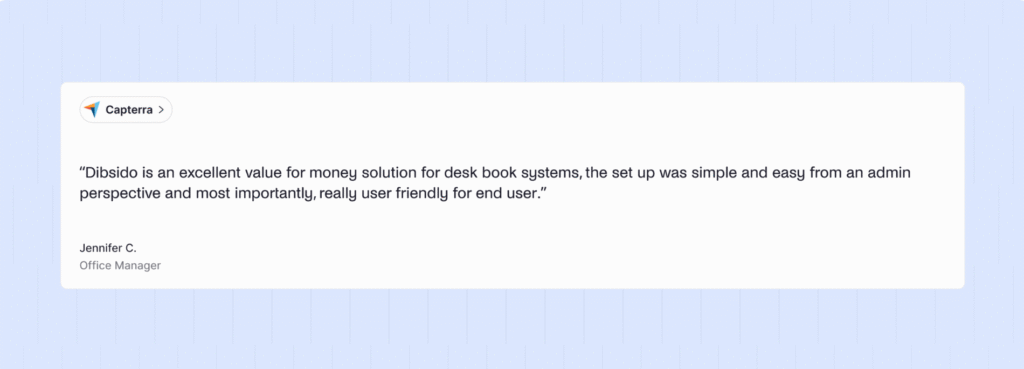
Where it may fall short
The tradeoff for simplicity is that admin customization is more limited than in more advanced workplace platforms. If you need very detailed booking policies, complex approval flows, or deep analytics, Dibsido may feel too lightweight.
It is also not a full visitor management system, so offices with a lot of external visitors, security requirements, or reception workflows will probably need a more complete workplace platform like Archie.
Pricing snapshot
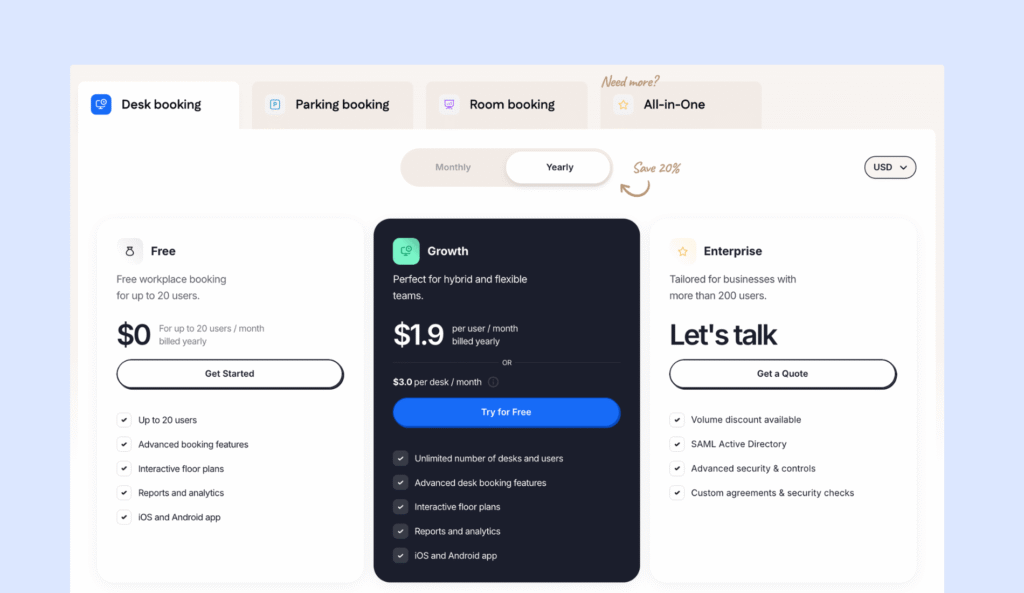
Dibsido offers a 14-day free trial with access to all features, plus a few different pricing paths depending on what you need:
- The Free plan covers up to 20 users, 5 parking spots, and 1 room. It includes interactive floor plans, reports and analytics, advanced booking features, and the mobile app.
- Desk booking pricing: the Growth plan starts at $1.90 per user/month billed yearly, or $3.00 per desk/month.
- Room booking pricing: the Business plan starts at $6.0 per room/month, billed yearly.
- For parking booking, the Professional plan starts at $4.5 per parking spot/month billed yearly.
- The All-in-One plan combines desks, rooms, and parking in one system, and starts at $2.7 per user/month billed yearly.
- For larger companies, Enterprise pricing is custom. This tier is aimed at businesses with more than 200 users and adds things like volume discounts, SAML Active Directory, advanced security controls, and custom agreements.
💡 Note that Dibsido uses a mix of pricing models. Some parts are priced per user, while others may be priced per desk or by other bookable resources. So it is worth checking which model applies to your office before comparing desk booking and room booking costs.
Dibsido also sells several add-ons that can expand the platform beyond desks, rooms, and parking.
Who is it for
Dibsido works especially well for:
- Small and mid-sized hybrid teams: Dibsido is built for hybrid offices where people come into the office on different days and need to reserve desks or meeting rooms ahead of time. The system lets teams book desks, rooms, and parking from one app and see who is coming into the office.
- Offices with limited parking: This is a big one. Dibsido is especially useful for offices where parking is limited and needs to be managed fairly. Many tools focus mostly on desks and rooms, but Dibsido puts a lot of emphasis on parking reservations and visibility.
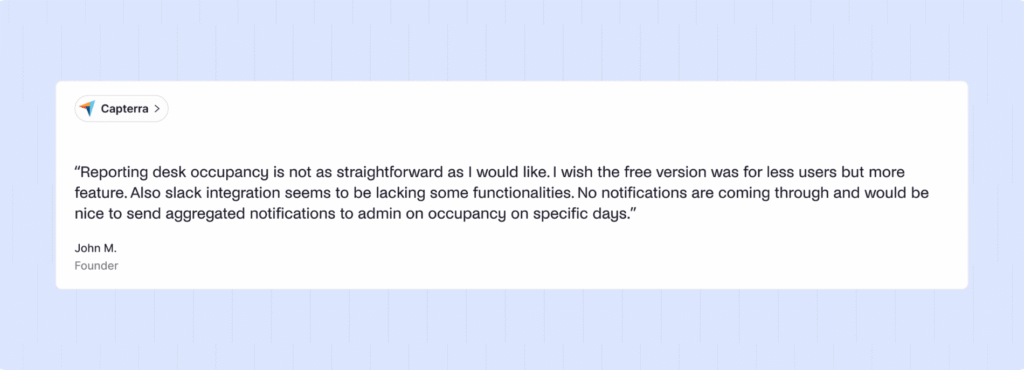
- Companies that want a lightweight, easy-to-use tool, not a huge workplace platform with lots of modules. Users often highlight how clear and user-friendly the system is, and that it removes the chaos from booking desks and parking.
On the other hand, if you need advanced workplace management, visitor workflows, or very complex booking rules, you will likely need a Dibsido alternative.
Top Dibsido alternatives to consider
Tool | Best for | Strengths | Watch-outs | Starting price | G2 rating |
|---|---|---|---|---|---|
Archie | Offices that want desks, rooms, visitors, and more in one platform | Visitor management, maps, strong integrations | More platform depth than some small teams need | From $159/month | 4.9/5 |
Skedda | Teams that need stronger booking rules and space control | Strong rules engine, approvals and permissions | Pricing can rise as spaces increase | From $99/month | 4.8/5 |
deskbird | Hybrid teams that want more than a simple booking tool | Hybrid team management | Per-user pricing can add up | From $3.75/user/month | 4.5/5 |
Robin | Enterprise teams focused on workplace strategy | Strong analytics, planning, enterprise workplace tools | No public pricing, higher cost | Custom quote | 4.5/5 |
YAROOMS | Teams that want a fuller workplace platform | Full-featured suite, strong Microsoft integrations | Broader and pricier than simple tools | From $99/month | 4.3/5 |
#1 Archie
🏆 Best for: offices that want desks, rooms, and visitor management in one platform
Archie is a workplace management platform that covers desk booking, meeting room booking, and visitor management in one system.
Compared to Dibsido, Archie is a much broader platform. Dibsido focuses mainly on booking desks, rooms, and parking. Archie also includes visitor check-ins, notifications, analytics, and integrations.
Key strengths
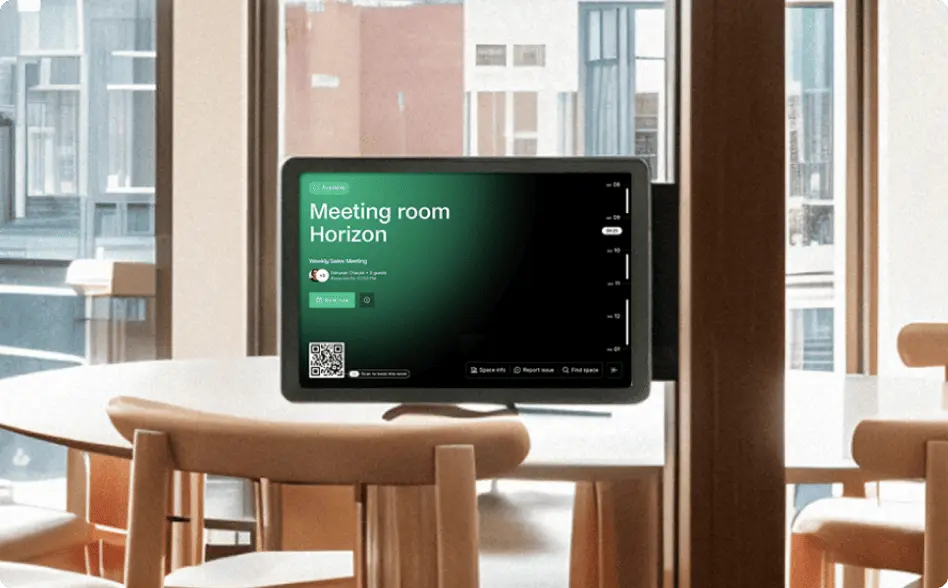
Archie is especially useful for teams that want to manage desks, meeting rooms, and visitors in one platform. That makes it a better fit for offices that regularly welcome guests, clients, or deliveries and need more than just an internal booking tool.
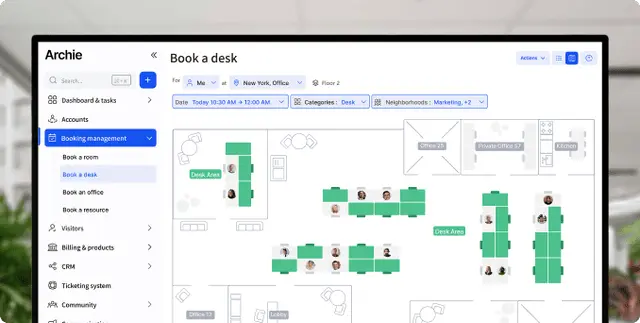
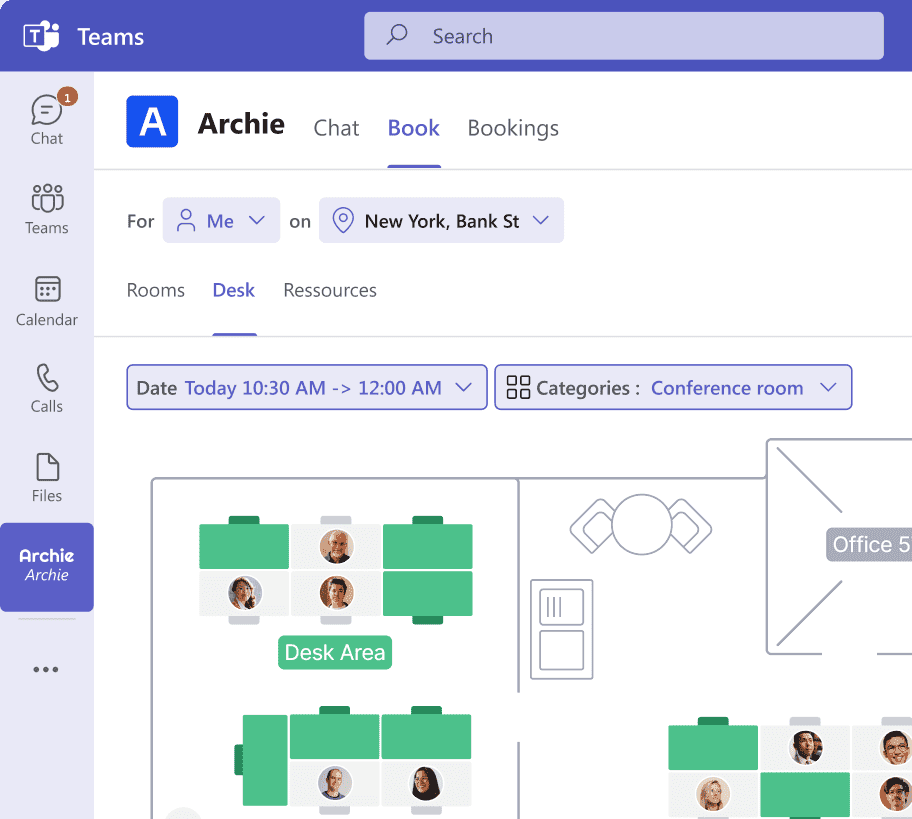
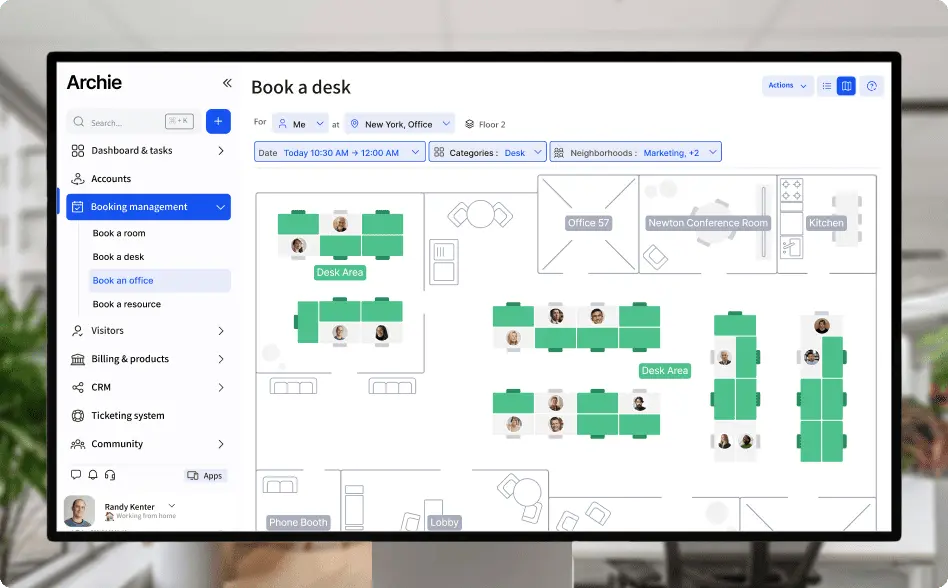
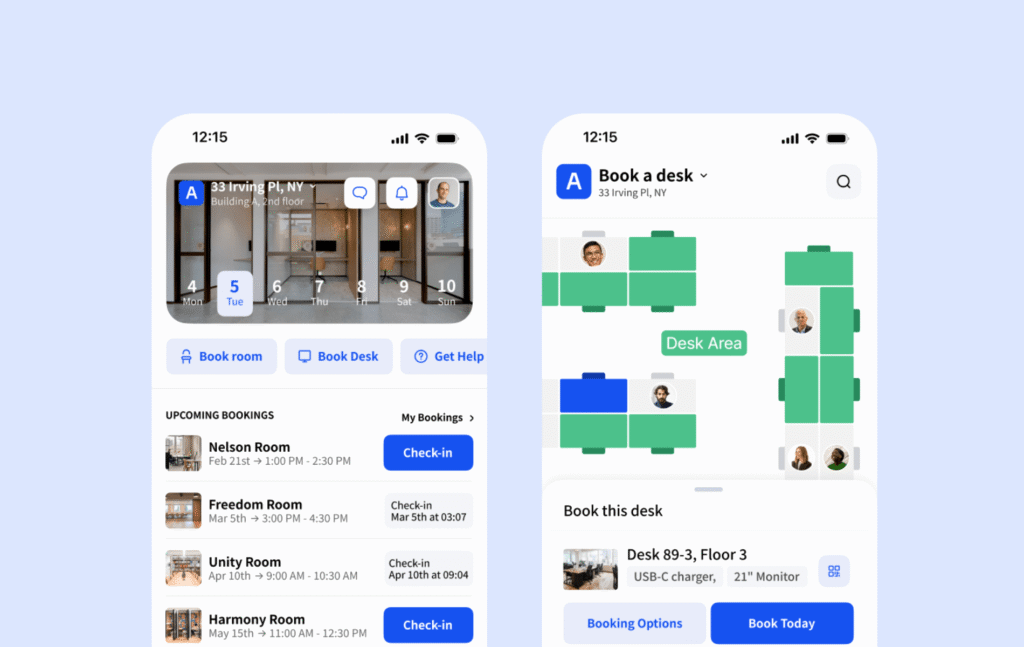
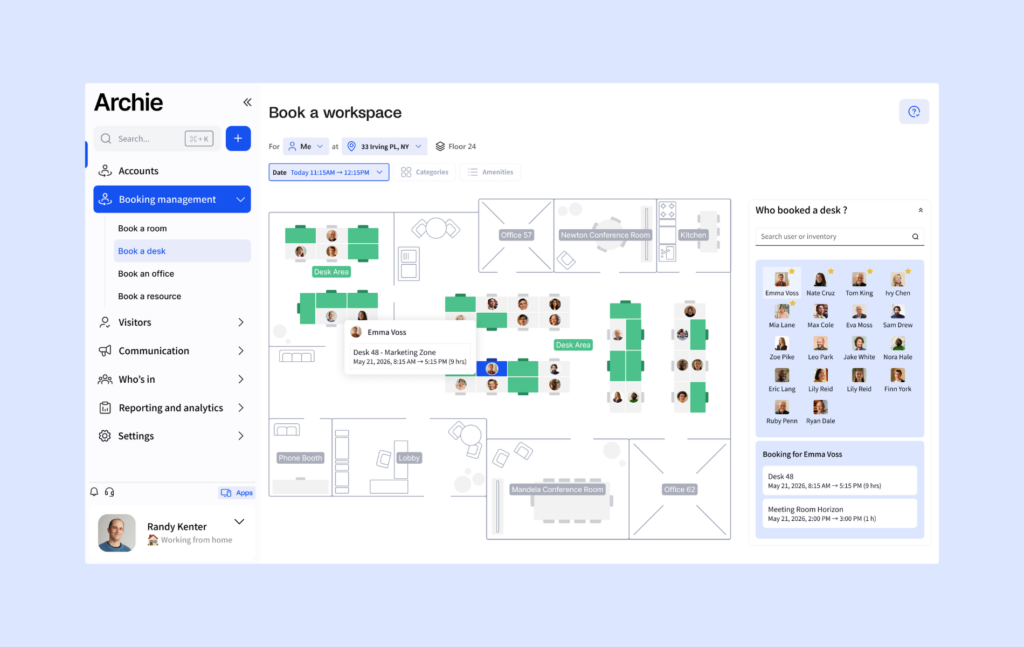
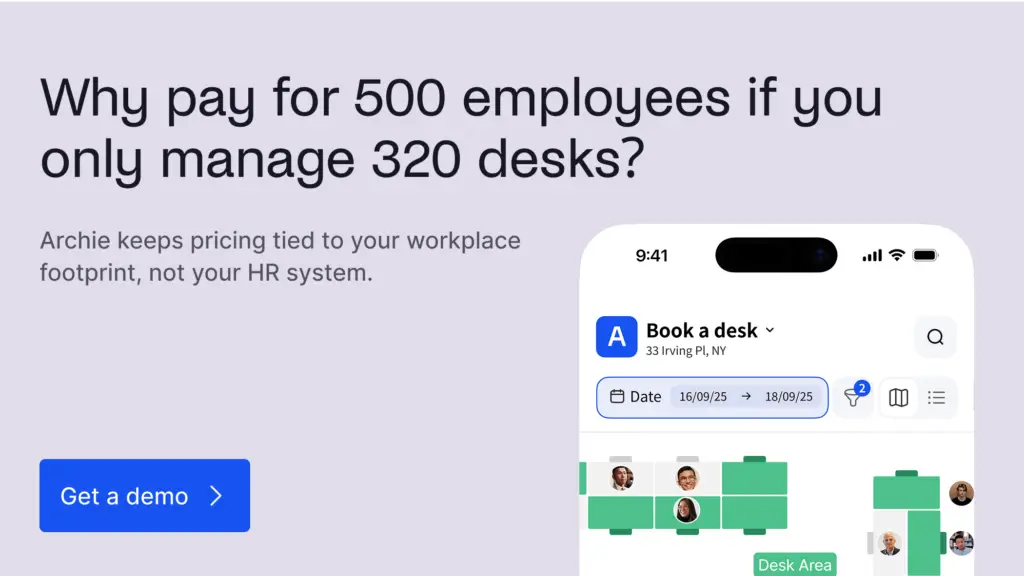
Archie is also strong on the employee experience. People can share when they are working from home or in the office, book desks and rooms quickly, and see where teammates are sitting on interactive office maps.
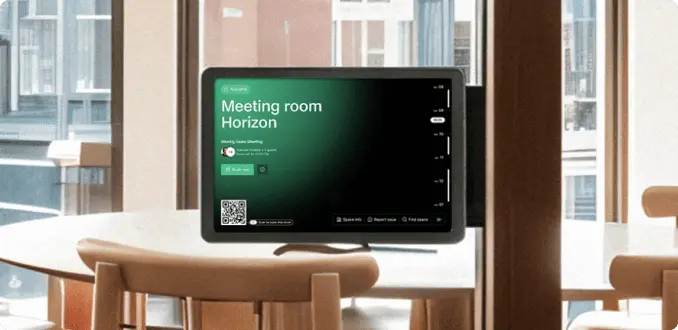
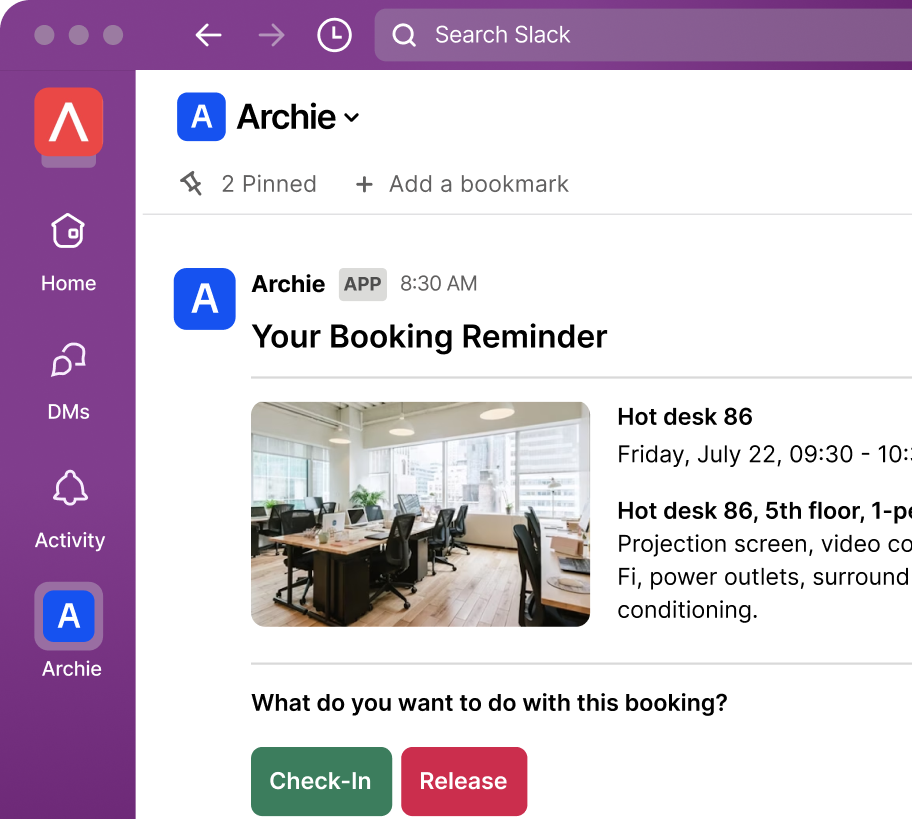
Another advantage is flexibility. Archie works across phone, browser, Slack, and Microsoft Teams, and it supports QR check-ins, reminders, and access control integrations.
It also stands out for its strong user feedback, with a large number of reviews and consistently high scores across major software review platforms. That gives it extra credibility compared with tools that have a smaller review base or less consistent ratings.
What is Archie's pricing?
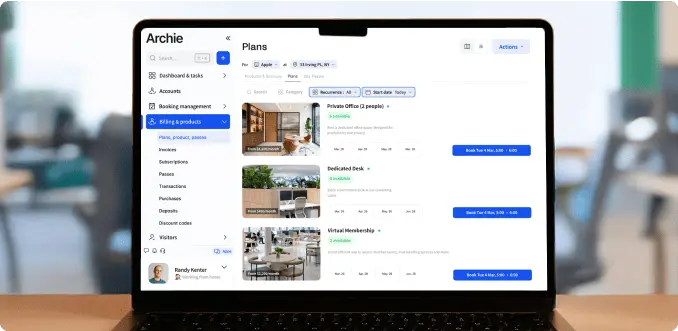
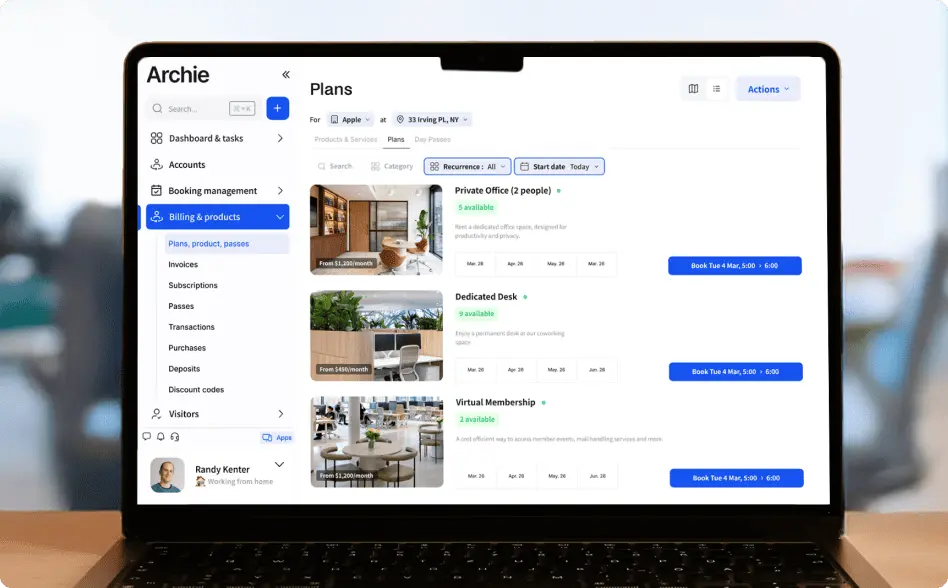
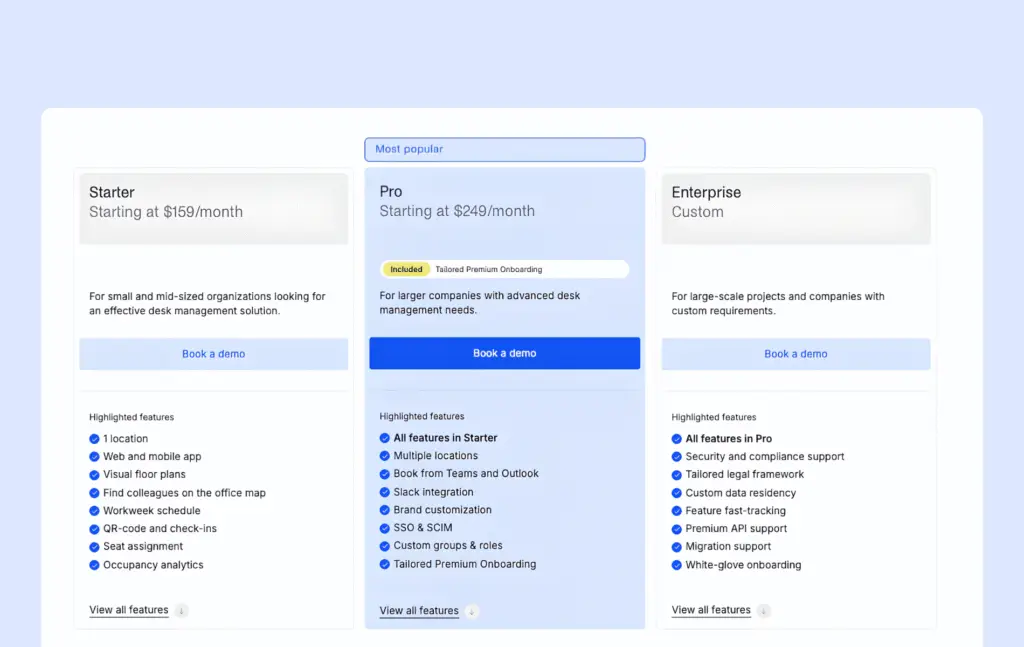
Archie’s pricing is structured a little differently from Dibsido – you are priced per desk (and per room if you add meetig room booking) The Starter plan is a minimum of $159 monthly, the Pro plan has a $249 monthly minimum. The visitor management system is priced per location per month.
Why choose it over Dibsido?
Archie is the better fit if you want a more complete workplace platform, especially if visitor management is important. Many companies reach a point where they want one system for desks, rooms, visitors, and office analytics, and that is where Archie usually makes more sense than a lightweight booking tool.
But, because Archie is a broader platform, it may feel like more system than very small teams need. If you only want basic desk booking and parking, Dibsido will usually be simpler and cheaper to start with.
#2 Skedda
🏆 Best for: teams that need strong booking rules, permissions, and structured space management
Skedda is a workplace booking platform that focuses on managing spaces through rules and permissions. It supports desk booking, meeting room booking, and other bookable spaces, and it is often used by offices, universities, labs, studios, and shared work environments.
Compared with Dibsido, Skedda is less focused on simplicity and more focused on control.
Key strengths
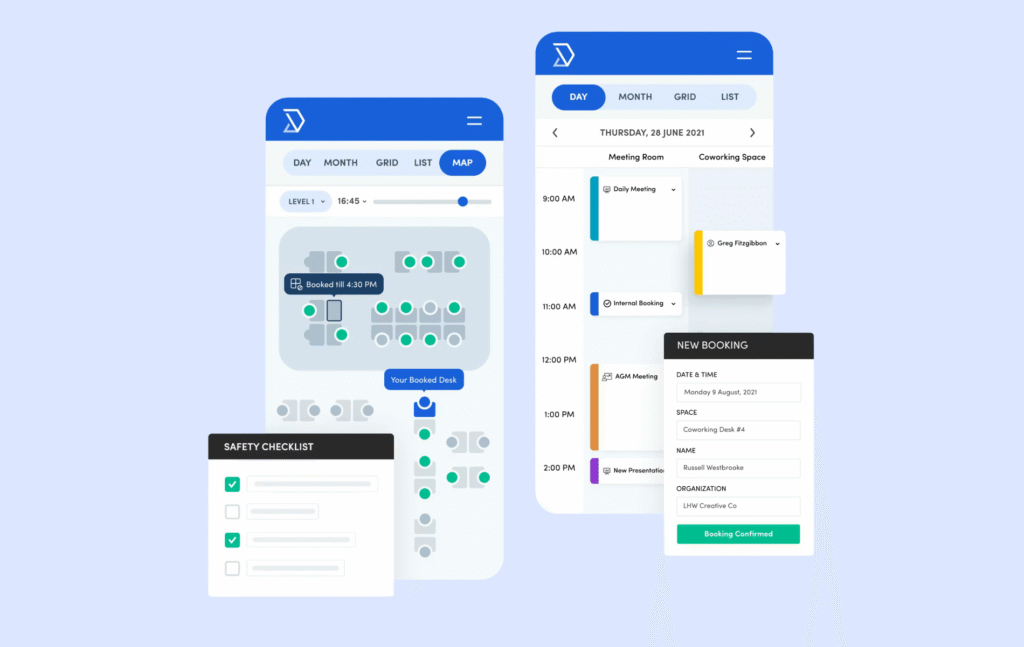
Skedda’s biggest strength is its rules and permissions system. You can create detailed booking policies based on user groups, time limits, booking windows, approvals, buffers between bookings, and more.
Another major difference is that Skedda uses space-based pricing, not per-user pricing. That means you pay based on how many desks, rooms, or spaces you manage, not how many employees you have. For some companies, this makes costs more predictable. There’s a downside to its desk & room booking pricing model, though:
Pricing snapshot
Skedda charges based on the number of spaces you manage, not the number of users. That sounds simple at first, but the pricing can add up faster than you might expect. Its plans start at:
- $99/month for up to 15 spaces
- $149/month for up to 20 spaces
- $199/month for up to 25 spaces
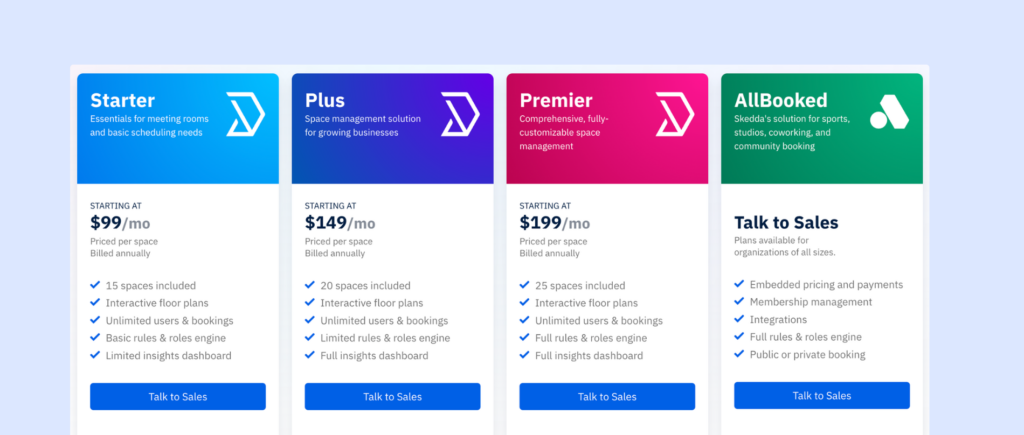
The tricky part is that every bookable resource counts as a space. Desks, meeting rooms, lockers, and parking spots all count toward your limit.
So, let’s say you have 10 desks and 5 meeting rooms. You are already at the limit of the first plan. Add a few parking spots or lockers, and you could move into a higher tier pretty quickly.
Another thing to watch is that Skedda’s lower-priced plans are fairly limited. If you want features like assigned desks, custom branding, required check-ins, or more advanced reporting, you may need to move up to a more expensive plan.
That said, all Skedda plans include unlimited users. So if you have a large team sharing fewer desks, the pricing can still work out well.
Why choose it over Dibsido?
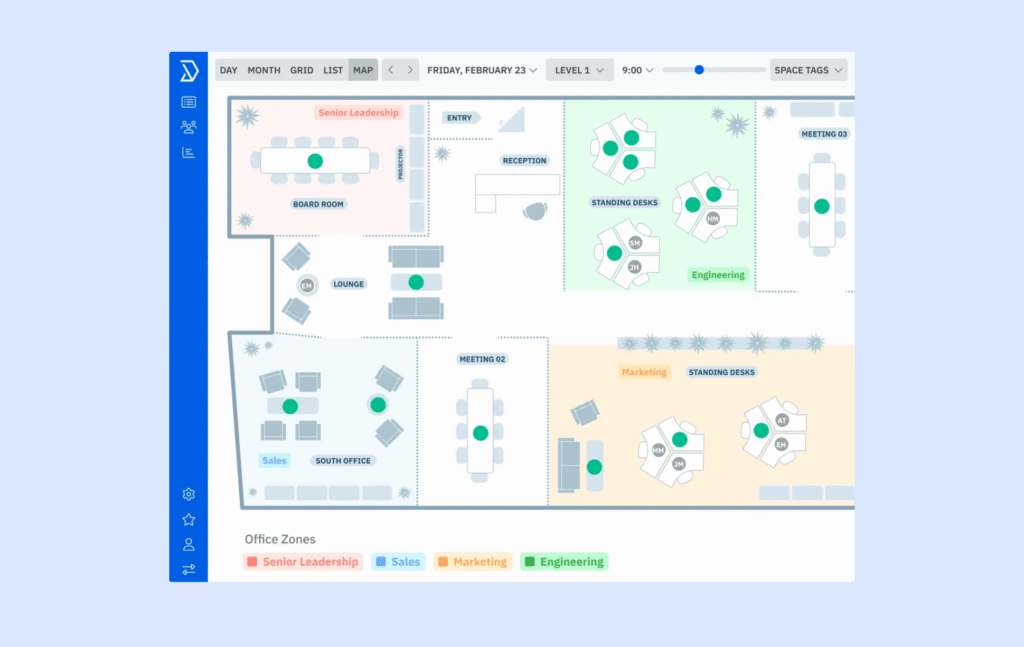
Choose Skedda over Dibsido if booking rules and control are more important than simplicity. Dibsido is great when you want something easy and quick to roll out, especially if you care about parking. Skedda is better when you need more structure, like different access rules for different teams, approval-based bookings, time limits and booking windows, or detailed space permissions.
But, because Skedda is more focused on rules and space management, it can feel less lightweight than Dibsido. It is not difficult to use, but it is more of an operational tool than a simple booking app. It is also not primarily a visitor management system, so if front-desk workflows and visitor check-ins are important, you may need another tool alongside it or a more complete Skedda alternative.
#3 deskbird
🏆 Best for: hybrid teams that want more features and integrations than a lightweight booking tool
deskbird is a workplace management platform designed for hybrid offices.
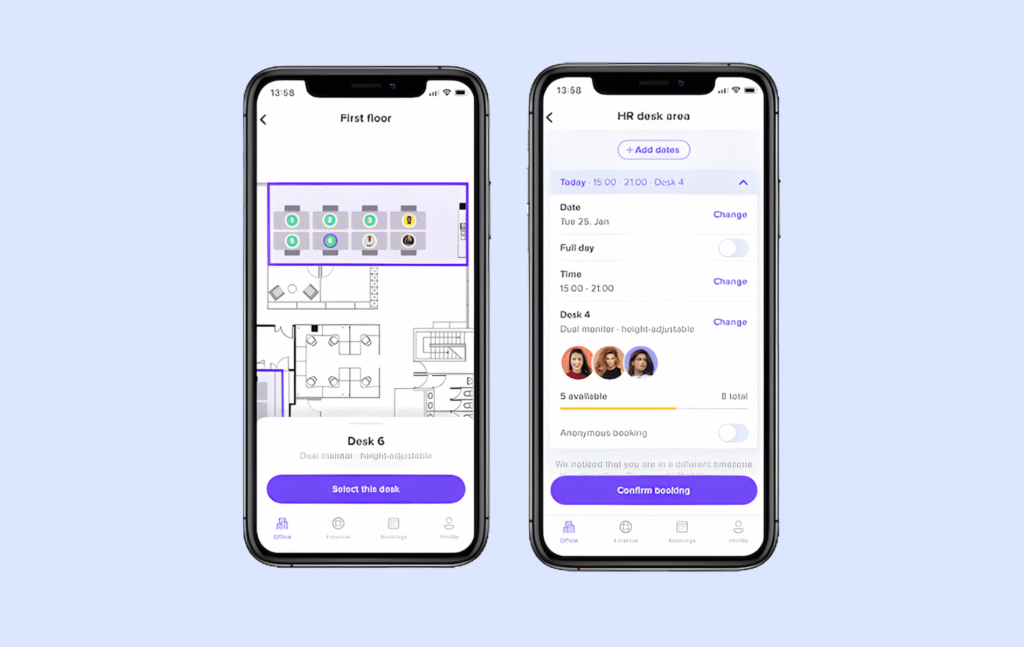
Dibsido focuses mainly on desks, rooms, and parking booking with a simple setup. deskbird adds more layers around hybrid work, like office attendance planning, analytics, integrations, and visitor management. So it sits somewhere between a lightweight booking tool and a full workplace platform.
Key strengths
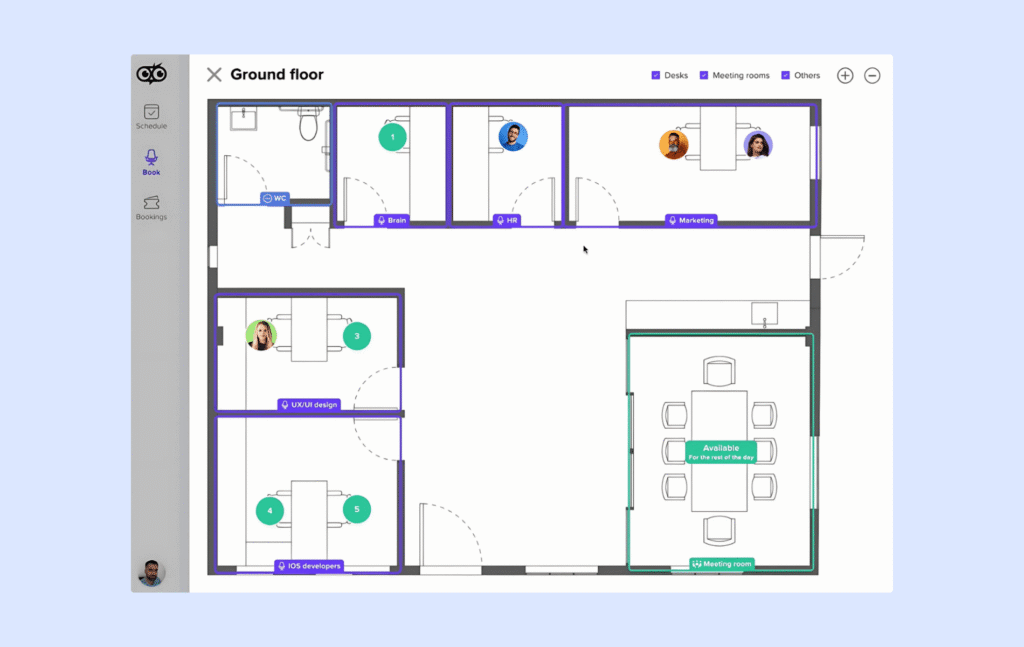
deskbird’s biggest strength is that it combines desk booking, room booking, parking, visitor management, and hybrid work planning in one platform.
It also has strong integrations, especially with Microsoft 365, Slack, and Google Calendar, which makes it easier for employees to book desks and rooms from tools they already use.
So overall, deskbird is more focused on hybrid work management and workplace analytics, while Dibsido is more focused on simple booking and parking management.
Pricing snapshot
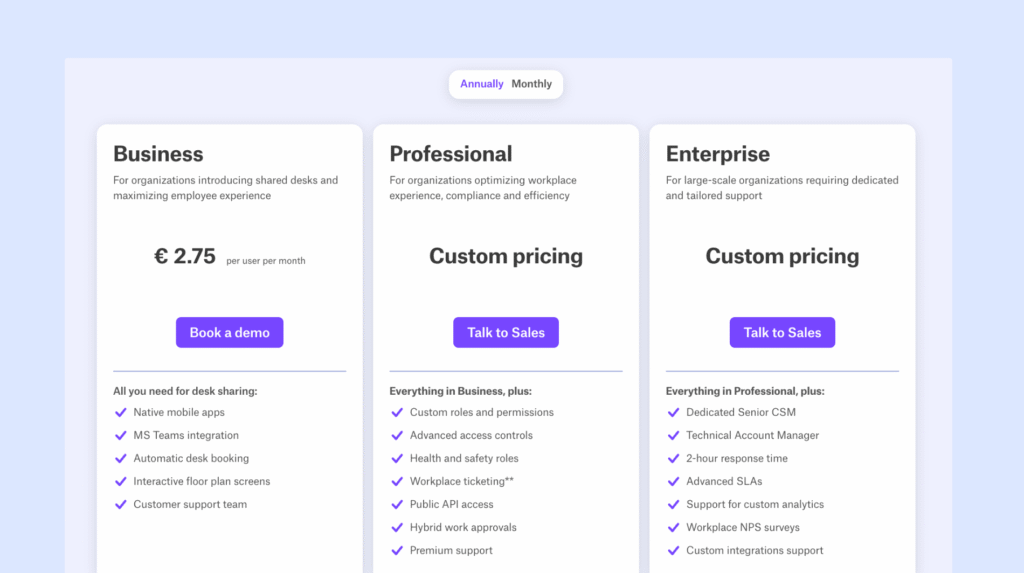
Until recently, deskbird offered a free Starter plan with a limited number of users. Now, it uses per-user pricing with the following plans:
- The Business plan starts at €2.75 (~$3.75) per user/month (annual billing) and includes core features like desk booking, mobile apps, floor plans, and Microsoft Teams integration.
- The Professional and Enterprise plans are custom-priced, adding more advanced controls, integrations, and support.
Pricing usually includes desks, rooms, and hybrid work features, and visitor management is available as an add-on.
Because it is priced per user, deskbird can become more expensive as the company grows, especially if many employees share a smaller number of desks.
Why choose it over Dibsido?
Choose deskbird over Dibsido if you want more than just booking: think hybrid work planning, office attendance tracking, or stronger analytics.
The main downside is the per-user pricing, which can become expensive if you have a lot of employees but not that many desks (which is usually the case in hybrid offices). It is also a broader platform than Dibsido, so if you only want simple booking and parking, it may feel like more system than you actually need. Here’s how it compares to other deskbird alternatives.
#4 Robin
🏆 Best for: enterprise companies that want workplace analytics and office optimization tools
Robin is a workplace management platform for companies that want to manage desks, meeting rooms, visitors, and office reservations in one system.
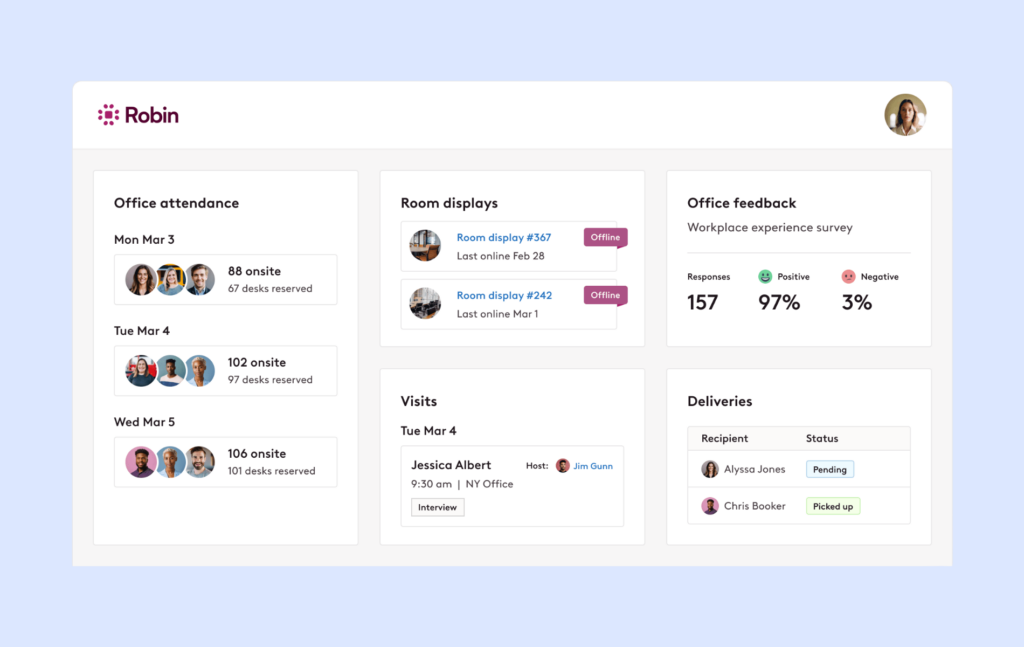
It includes the core features you would expect, like desk booking, room scheduling, visitor management, and office maps. But the main thing that makes Robin different is its focus on data. It is built to help companies understand how their office is being used, how often people come in, which spaces are popular, and where there may be wasted space.
Key strengths
Robin’s biggest strength is its analytics. The platform gives companies data on occupancy, usage trends, and space utilization, which can help them decide how much space they need and how to organize it better.
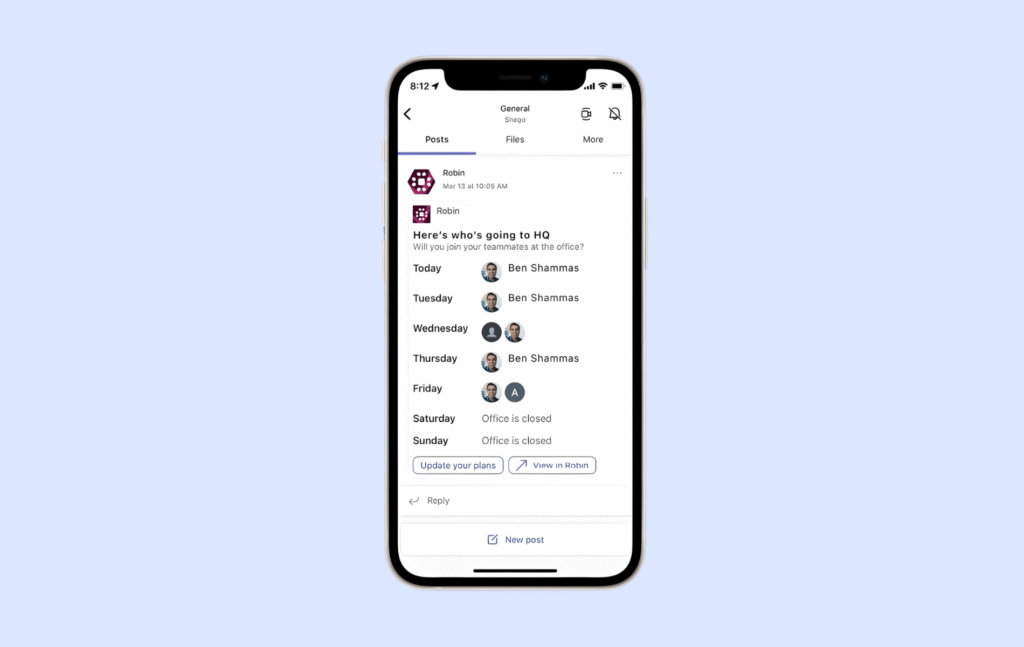
It also includes desk booking and meeting room scheduling, interactive office maps and wayfinding, hybrid work scheduling and attendance planning, and various integrations with Microsoft 365, Google Workspace, Slack, and Zoom.
They do come at a price, though.
Pricing snapshot
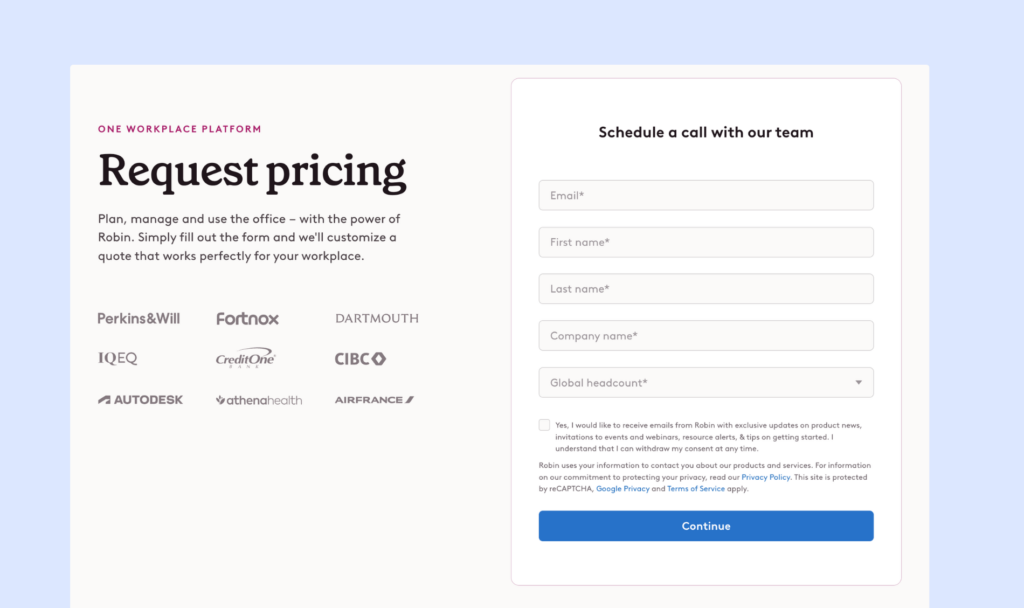
Robin does not offer simple self-serve pricing on its website. Companies need to contact the sales team for a custom quote, and pricing usually depends on company size and setup.
That usually makes Robin a better fit for mid-sized and enterprise companies, not smaller teams looking for a quick and low-cost tool.
Why choose it over Dibsido?
Choose Robin over Dibsido if your company cares a lot about office data, workplace analytics, and long-term space planning. Dibsido is the better fit if you mainly want simple desk, room, and parking booking with a fast rollout.
That said, Robin is usually more expensive and more complex than most Robin alternatives. Because pricing is quote-based, it is also harder to compare costs quickly.
#5 YAROOMS
🏆 Best for: teams that want a more complete workplace platform
YAROOMS is a workplace management platform for companies that includes desk booking, meeting room booking, visitor management, and workplace analytics.
Dibsido is easier to think of as a simple booking tool for desks, rooms, and parking. YAROOMS is closer to a full workplace system that helps companies manage bookings, visitors, and office operations in one place.
Key strengths
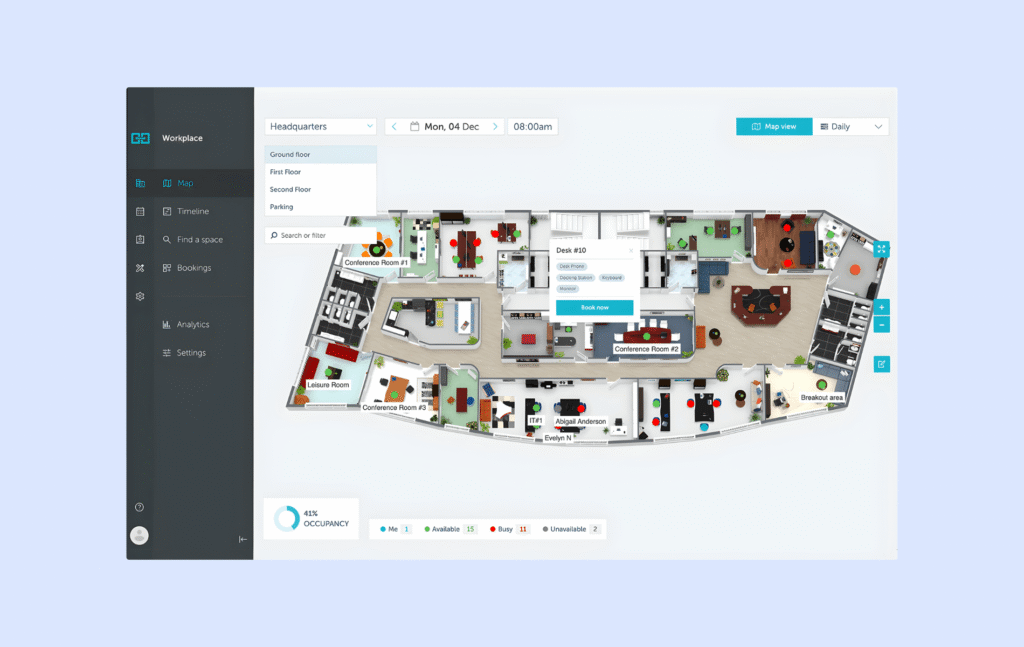
YAROOMS’ biggest strength is that it combines a lot of workplace features in one platform. It also has strong Microsoft integrations, including Microsoft Teams, Outlook, Microsoft 365, and Azure AD. This makes it a good fit for companies that already work heavily in the Microsoft ecosystem.
Another strong point is visitor management. YAROOMS includes features like pre-registration, visitor kiosk or mobile check-in, host notifications, badge printing, visitor photos, document signing, and digital visitor logs. So it is much more than just a booking tool.
Pricing snapshot
YAROOMS uses tiered monthly pricing, and the cost goes up based on how many users you have:
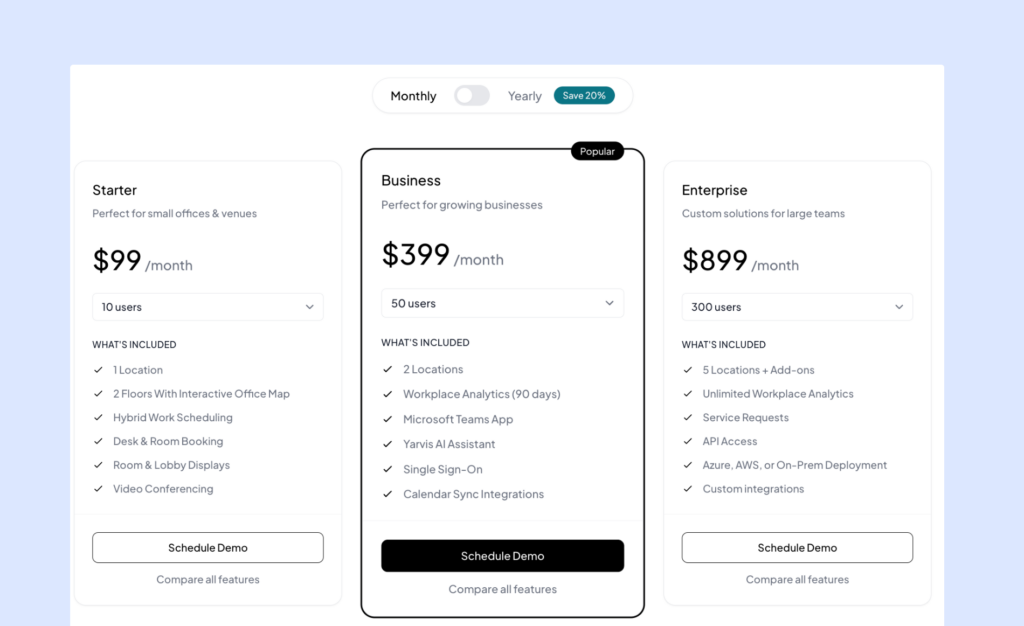
- The Starter plan starts at $99/month for up to 10 users and $199/month for up to 20 users. This plan is best if you only need the basics, like desk booking and meeting room booking, and you are managing one office.
- The Business plan supports up to two locations and adds more advanced features, including better analytics and access to the Yarvis AI assistant. Pricing starts at $399/month for up to 50 users, $499/month for up to 100 users, and $699/month for up to 200 users.
- The Enterprise plan is built for larger organizations with more complex needs. Pricing starts at $899/month for up to 300 users, with custom pricing for larger deployments.
Visitor management costs $99 per location/month. That can be helpful if only one office needs visitor tools, but it also means the total cost can rise if you need that feature across multiple locations.
Compared with Dibsido, YAROOMS starts at a higher monthly price and is clearly built as a broader workplace platform, not just a simple booking tool.
Why choose it over Dibsido?
Put simply, Dibsido is simpler and more focused, while YAROOMS is broader and more full-featured. Because YAROOMS includes more features, though, it can feel like more system than a small team really needs. It also usually starts at a higher price than Dibsido’s free plan and lower-cost paid plans.
So if your main goal is just to get desk, room, and parking booking up and running quickly, Dibsido will usually be the simpler option. But if you want a platform that also covers visitors and broader workplace management, YAROOMS is the stronger choice.
Which Dibsido alternative is best?
Dibsido is easy to like because it stays focused. It keeps desk and room booking simple, and its parking features are still the most distinctive part of the product.
But once your needs go beyond simple booking, there are several strong alternatives. Archie, Skedda, deskbird, Robin, and YAROOMS each go further in different ways, whether that means visitor management, stronger rules, better analytics, or a more complete workplace setup. I strongly believe that Archie stands out, though.
Why Archie is the best Dibsido alternative
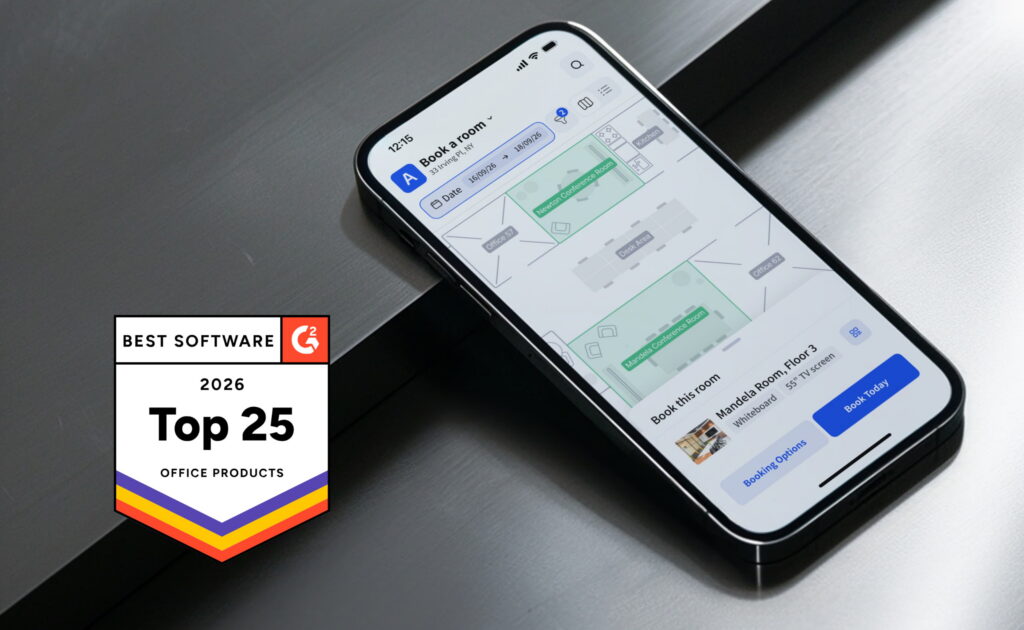
One of Archie’s biggest strengths is that it brings more of the office experience into one platform, and users definitely agree. Employees can share when they are working from home or in the office, book desks and meeting rooms in seconds, and see where teammates are sitting on interactive office maps. That makes it easier to plan office days, coordinate team time, and make better use of space.
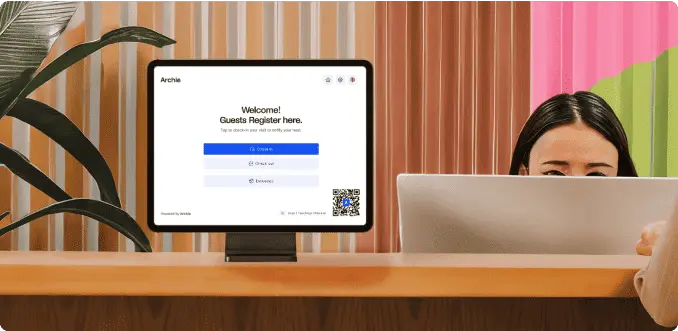
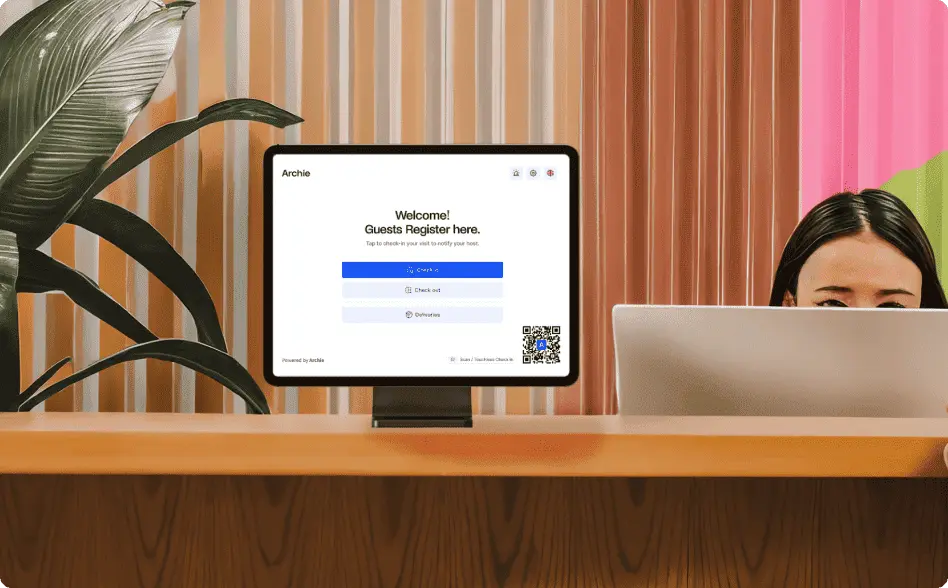
Archie also goes further on the visitor side. If your office regularly has guests, deliveries, or front-desk workflows to manage, Archie gives you tools like visitor check-in, host notifications, badge printing, and digital forms. That is a big difference from Dibsido, which is more focused on internal bookings.
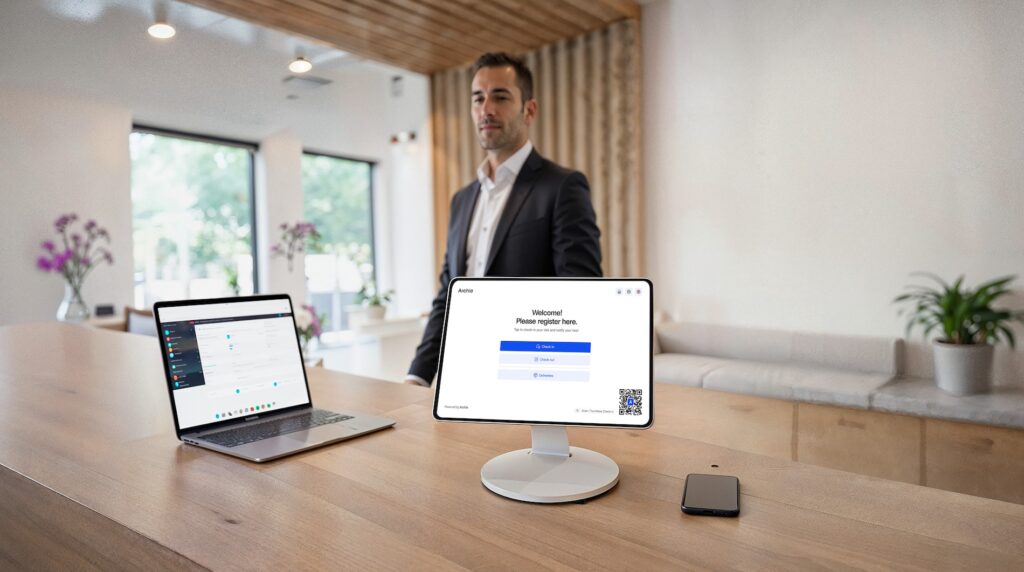
Another advantage is flexibility. Archie works across phone, browser, Slack, and Microsoft Teams, and it also supports check-ins, reminders, QR codes, and access control integrations. So it is not just about booking a desk. It helps companies manage how people actually use the office each day.

The main reason to choose Archie over Dibsido is simple: Archie gives you more room to grow. Dibsido is great for lightweight booking, especially if parking is a big need. But Archie is the stronger choice if you want a more complete workplace platform that can support desks, rooms, visitors, analytics, and office coordination in one place.
Quick head-to-heads
- Archie vs Skedda: Skedda is strong on rules and permissions, but its pricing can rise quickly because every desk, room, locker, or parking spot counts as a space. Archie’s pricing is tied to desks and rooms, which can feel easier to follow as your office grows.
- Archie vs deskbird: deskbird is a strong option for hybrid teams and has a modern feel, but it is usually priced per user. Archie’s pricing is based on desks and rooms instead, which can be a better fit for offices where many employees share a smaller number of spaces. Archie also goes further into visitor management and broader workplace operations, while deskbird feels more focused on hybrid planning and booking.
- Archie vs Robin: Robin is built more for large enterprises and puts a bigger focus on workplace analytics, employee experience, and office planning. Archie is usually easier to roll out, easier to use, and has clearer, more affordable pricing.
- Archie vs YAROOMS: YAROOMS can work well for very small teams, especially with its entry-level pricing. Archie often makes more sense for mid-sized offices because pricing is based on bookable resources rather than total employee count, which can be easier to manage in hybrid setups.
See it yourself.
- Key sources