


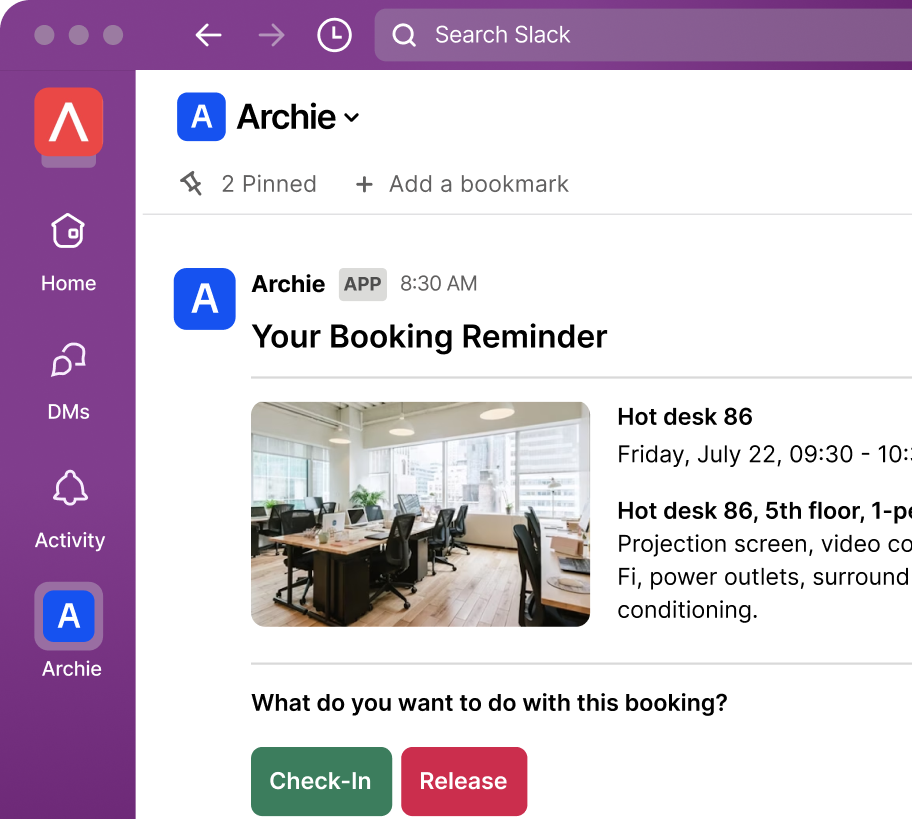





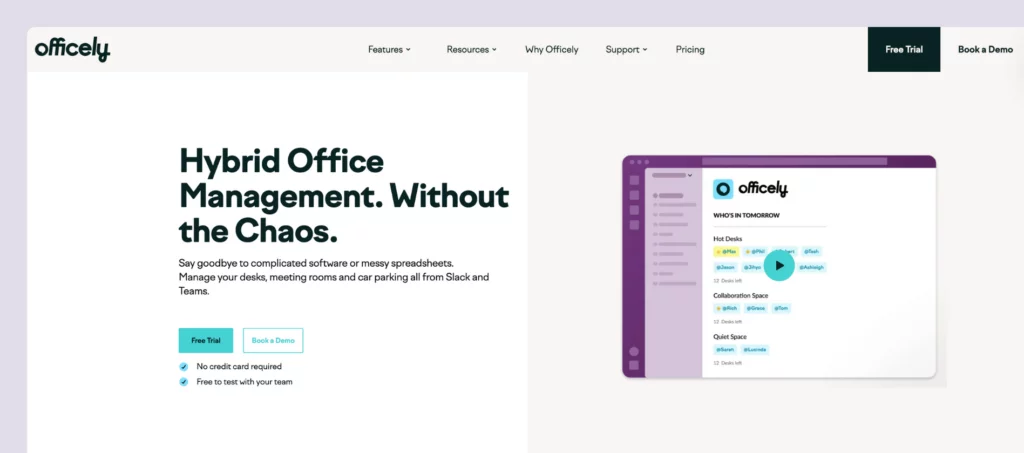
Officely launched with a clever premise: instead of creating another standalone app, build desk booking directly into Slack and Microsoft Teams, where teams already work. This simplicity-first approach has made it popular with smaller teams who value ease of adoption.
But there’s a catch. When everything lives inside Slack or Teams, you usually get fewer features. So is Officely’s simplicity a smart choice, or does it feel limiting once you grow?
In this review, we’ll cover what Officely does well, where it falls short, and when it makes sense to look at Officely alternatives.
💡 TL;DR:
Officely is best for small teams (especially those using Slack) that want super simple desk booking with low effort setup, starting at $2.50 per user per month. That said, the platform lacks visitor management and has limited analytics, and the Microsoft Teams version is significantly less functional than the version for Slack. If you need a fuller workplace tool with visitor tracking, interactive floor plans, and deeper analytics, a more complete Officely alternative like Archie may be a better fit.
Officely vs alternatives
What is Officely?
Officely launched with a simple goal in mind: create desk booking software that works where your teams already work. So, instead of creating a standalone app, the founders built Officely as a Slack and Microsoft Teams “integration” that turns popular communication tools into workplace management apps.
Because of its simplicity, Officely is popular with smaller teams and companies that want the essentials of workplace management without in-depth features such as visitor management or interactive floor plans. The platform focuses purely on making hybrid work feel effortless within the familiar Slack/Teams interface.
Key features of Officely
- Desk booking: Hot desking with neighborhoods and amenity filters.
- Meeting room reservations: Schedule conference rooms without leaving your chat tools.
- Office coordination: See who’s coming in each day before you leave home.
- Parking management: Reserve parking spots in advance ($15/space/month).
- Check-in reminders: Automated prompts to confirm attendance.
- Office chat: Coordinate lunches, after-work drinks, and team events.
- Automated booking: Set up recurring desk reservations.
- Guest invitations: Allow visitors to book spaces (Slack only).
- Analytics: Track booking habits, attendance trends, and space utilization.
- Vacation status: Display out-of-office indicators.
Officely pricing
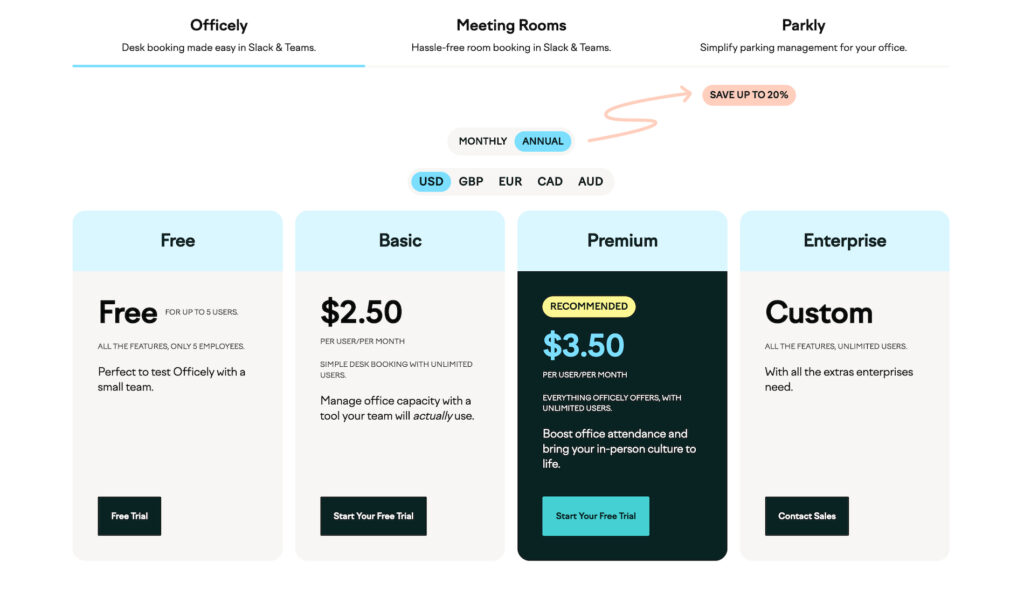
Officely desk booking starts at $2.50 per user per month (when billed annually), plus $12 per meeting space/per month with annual billing.
In particular, the desk booking plans are:
- Free: All features for up to 5 users
- Basic: $2.50 per user per month
- Premium: $3.50 per user per month
- Enterprise: Custom pricing
The Basic plan has most of the essential features, while Free and Premium have all the features Officely offers, like attendance broadcasts and statuses, as well as coordination features. The free plan has a cap of 5 users, while Premium allows for unlimited users.
What’s great about Officely (reviews)
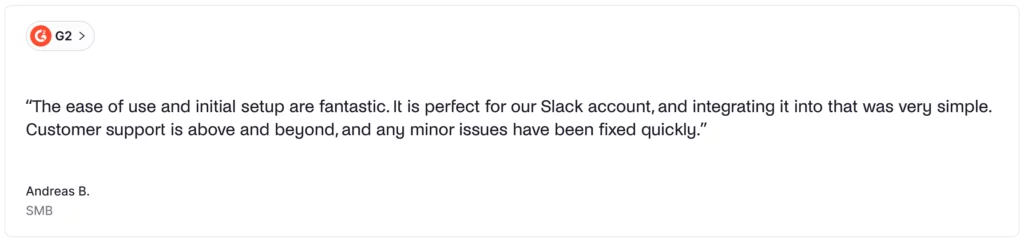
🟢 Very easy to set up and use: The way Officely was built makes it really easy to set up and get started, according to many reviews. As one small business owner noted: “The ease of use and initial setup are fantastic. It is perfect for our Slack account, and integrating it into that was very simple. Customer support is above and beyond, and any minor issues have been fixed quickly. The added features of the meeting rooms were particularly beneficial to us, as we use the products daily”.
🟢 Excellent customer support: Many of Officely’s recent reviews have praised its customer support for being really helpful and responsive. One reviewer in particular said: “Most importantly, the support from Krissie and Max makes this an amazing app and experience”.
🟢 Great for tracking attendance: One of the features that often gets highlighted in reviews is the attendance tracking. For instance, one user praised the tracking attendance features as it helps them with: “Keeping track of attendance and having visibility on the working location of everyone”.
What could be improved
🔴 Limited status customization: A couple of reviews noted that employees can only use the basic statuses, and there isn’t much customization available for these. In particular, one reviewer said: “Cannot tweak or modify the statuses, one can only use the default ones”.
🔴 Limited features: One note amongst a few reviews is that there are some feature limitations. While it isn’t a dealbreaker, users would prefer some more advanced features from Officely. For instance, one customer said: “It has some limitations in terms of what is possible and concerning navigation, but nothing major once you get the hang of it”.
🔴 Microsoft Teams limitations: While the Slack version of Officely has all the features available, if you’re using Microsoft Teams, you won’t be able to access everything. Some of these features include office chat, calendar integrations, and check-ins.
💡 Bottom line: Officely is perfect for small to mid-sized teams that use Slack and want dead-simple desk booking without learning a new platform. If you primarily use Microsoft Teams, need advanced visitor management, or require comprehensive analytics, Officely’s limited feature set might not meet your needs.
Luckily, there are several strong Officely alternatives to consider.
What’s the best alternative to Officely?
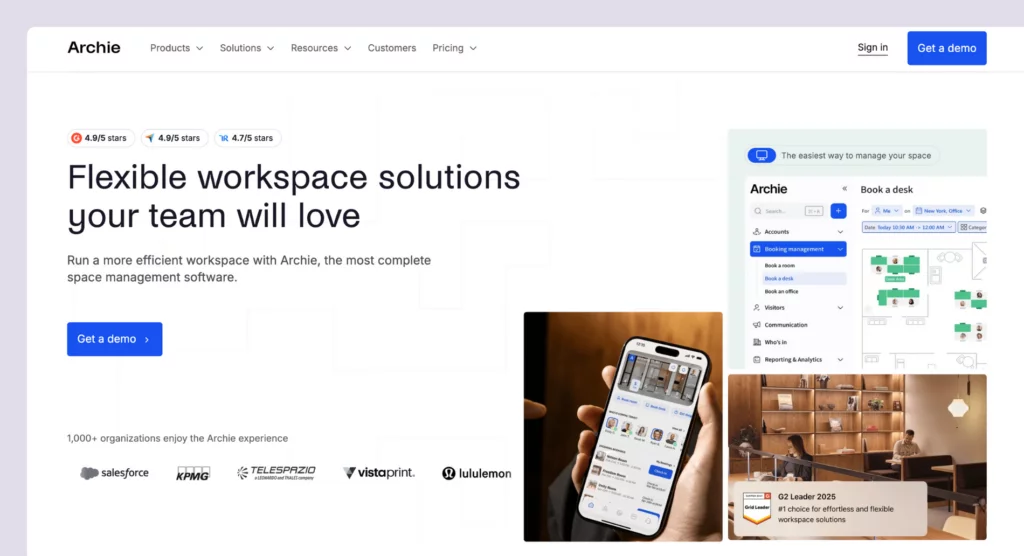
For teams that have outgrown Officely’s simplicity, Archie is the best alternative. While Archie doesn’t live directly inside Slack and Teams like Officely does, but it does have native integrations with Microsoft 365 Suite and Slack. Apart from that, the platform also offers comprehensive workplace features that Officely lacks, including visitor management, interactive floor plans, and advanced analytics.
With Archie, you get a complete workplace platform starting at $159/month with full functionality across both Microsoft and Slack integrations. Because of its resource-based pricing, teams with shared desks often find Archie more cost-effective than scaling Officely’s per-user model.
Officely alternative #1: Archie
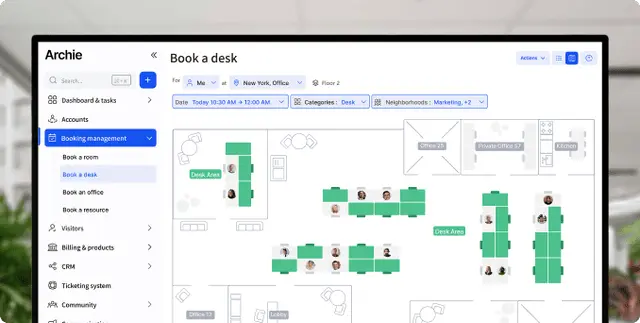
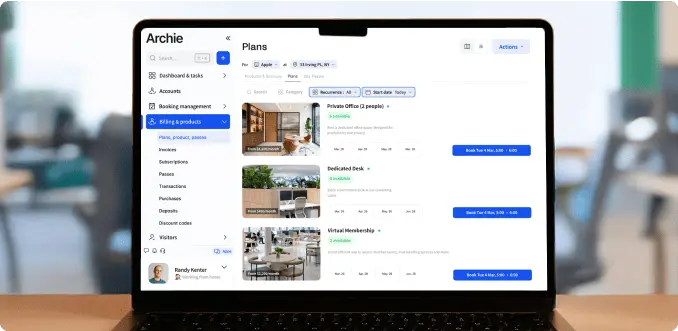
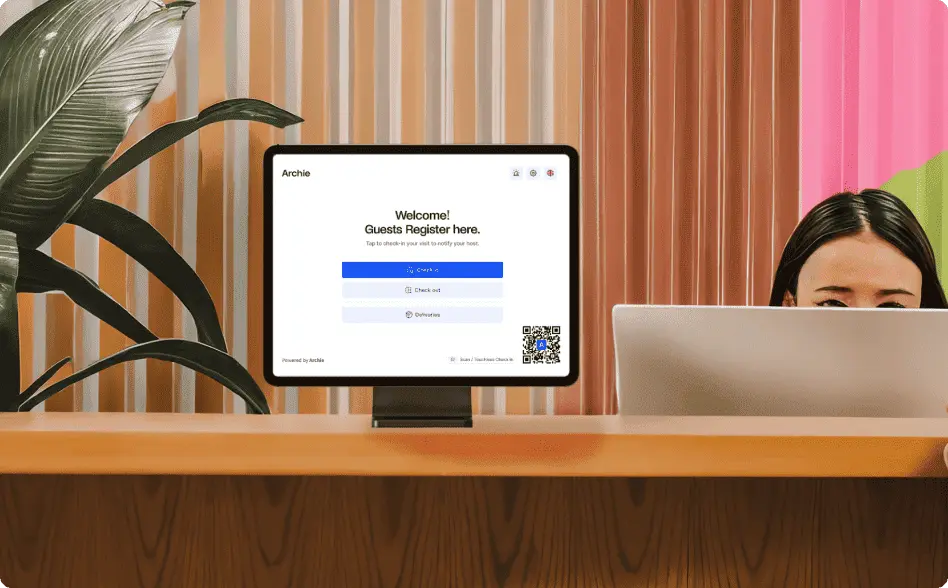
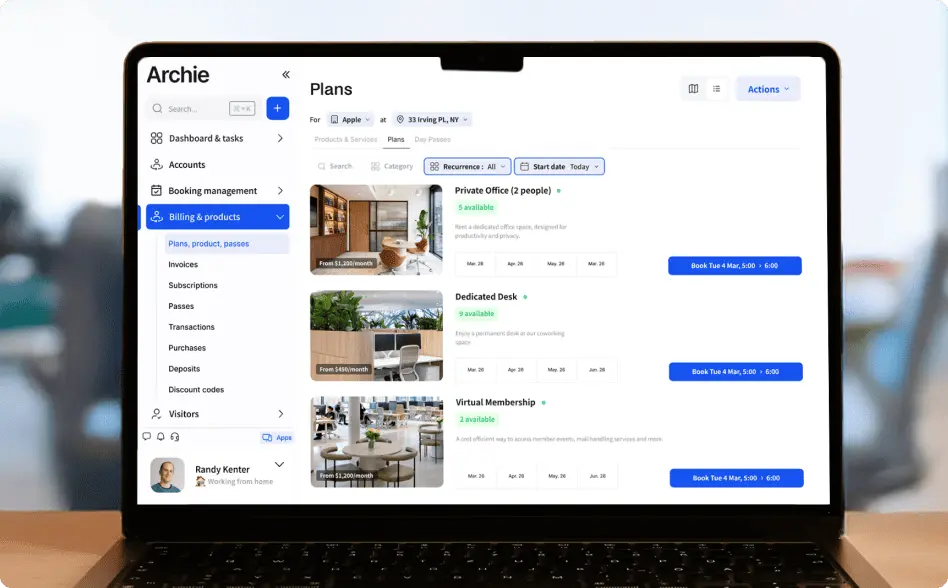
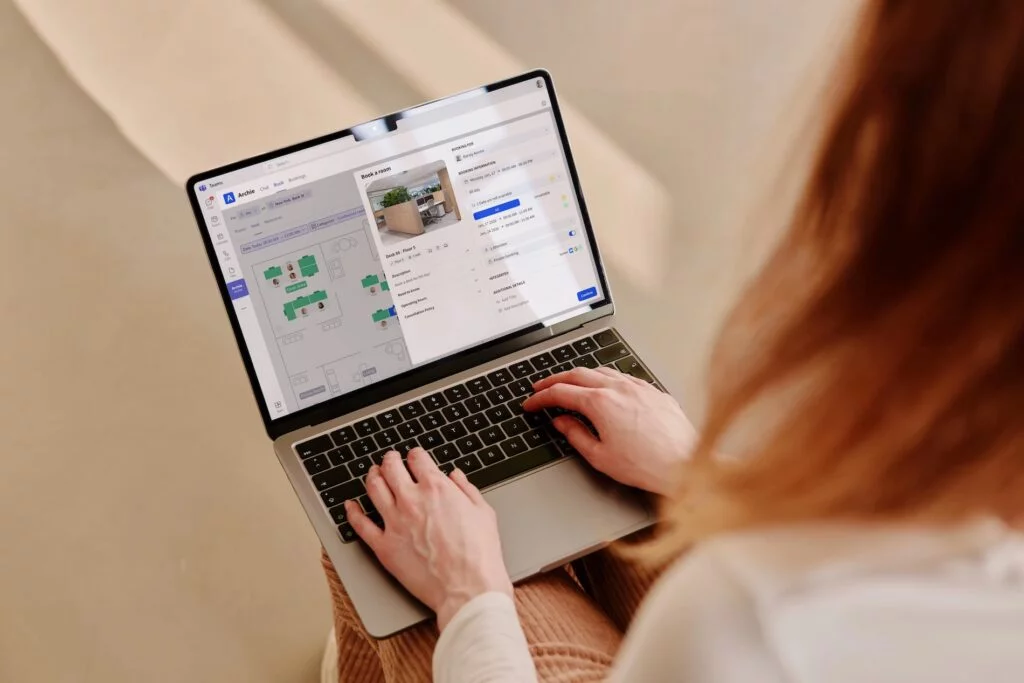
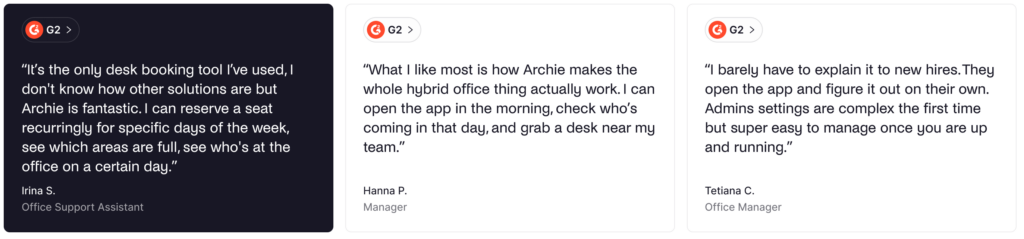
Archie is a smart workspace technology platform and a strong alternative to Officely. It brings key office tools into one place, like desk booking, meeting room scheduling, and visitor management. It also connects well with Slack and Microsoft 365, so just like Officely, bookings and updates fit into the tools your team already uses. And with resource-based pricing, you pay for the desks and rooms you manage, not the number of employees.
What you get with Archie
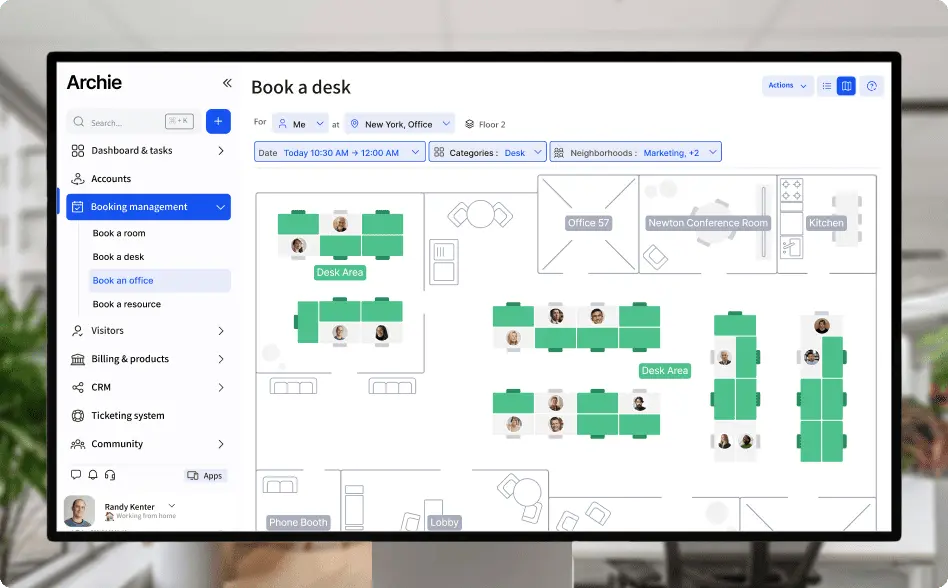
- Desk booking: Hot desking with interactive floor plans, assigned desks, and customizable zones.
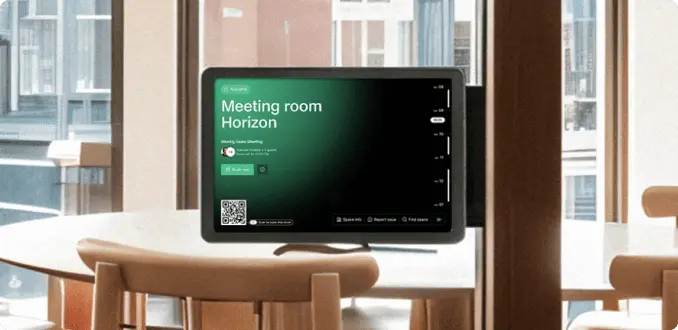
- Meeting room scheduling: Book rooms with calendar sync and real-time availability.
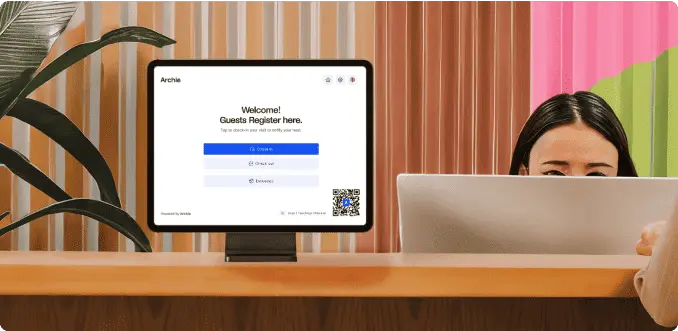
- Visitor management: Pre-registration, QR code check-ins, kiosk app, badge printing, and host notifications.
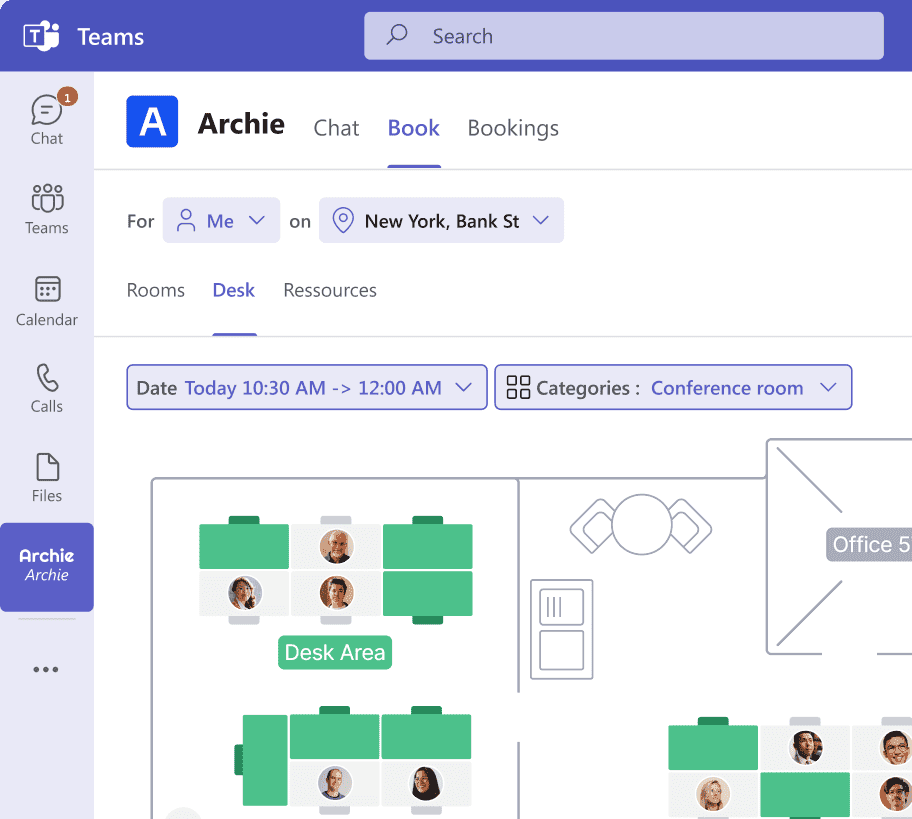
- Advanced Slack/Teams integrations: Get booking reminders and updates in Slack or Teams, notify hosts when visitors arrive, and keep office schedules in sync with your workflows.
- Neighborhood zoning: Create team-specific zones for collaboration while maintaining workspace flexibility.
- Interactive floor plans: Visual office maps showing who’s in and where they’re sitting.
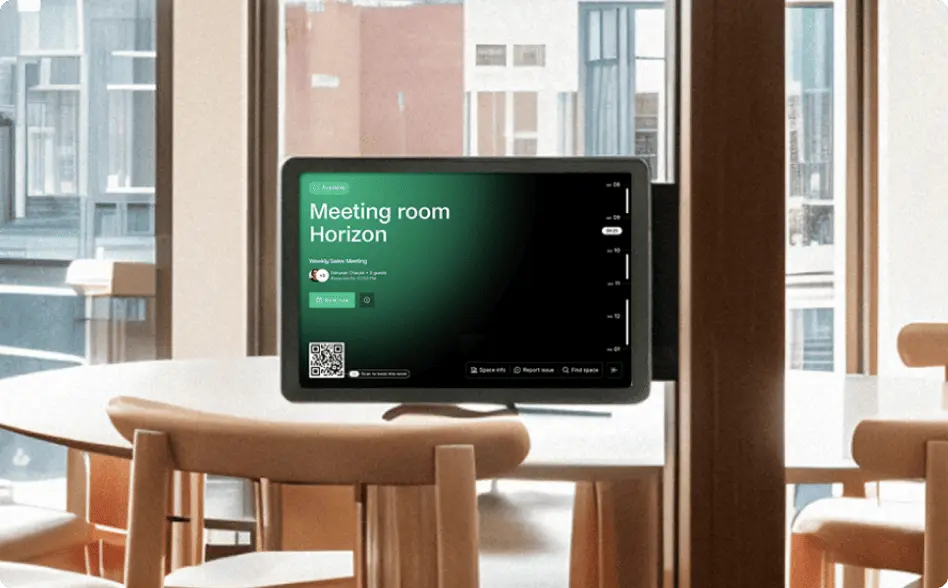
- Archie apps: Use Archie on mobile, desktop, or shared office screens like desk booking kiosks and room displays.
- Employee lookup: See when teammates are coming to the office for better coordination.
- Workplace analytics: Occupancy tracking, space usage reports, and workplace insights.
How much does Archie cost?
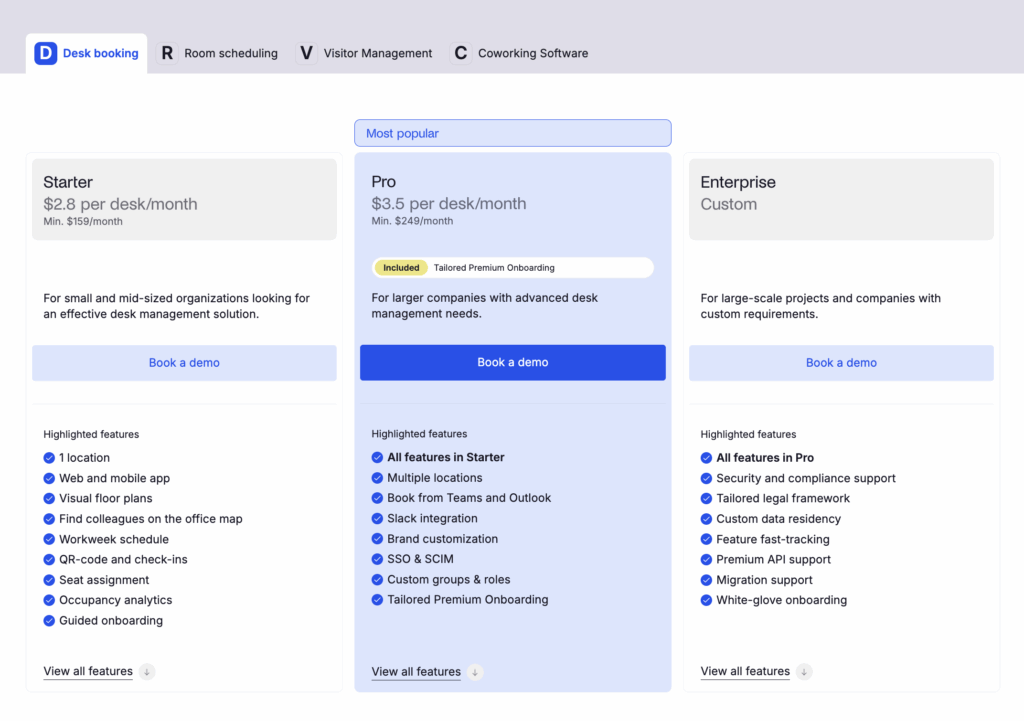
Archie uses resource-based pricing, so you pay for the desks and rooms you manage, not per employee.
- Starter: $2.80 per desk/month and $8 per room/month (minimum $159/month)
- Pro: $3.50 per desk/month and $12 per room/month (minimum $249/month), the plan adds multi-location support, booking from Teams and Outlook, Slack integration, brand customization, SSO and SCIM, custom groups and roles, and tailored premium onboarding.
Visitor management is an add-on module priced separately.
Who’s Archie best for?
Archie is a great fit for mid-sized and larger offices that want enterprise-level features at a fair price, without the heavy setup and complexity you see in bigger platforms. Unlike Officely’s per-user pricing, Archie uses resource-based pricing, so it’s often more cost-effective for hybrid teams with more employees than desks.
And if you need more advanced tools that Officely doesn’t offer, like SSO and SCIM, access control integrations, API access, and deeper analytics, Archie includes them at a strong value.
Archie limitations
For very small teams, Archie can feel like more than you need, both in features and price. In those cases, Officely may be a better fit, especially for offices with fewer than five employees, since it can be free.
Officely can also be faster to roll out because it works inside Slack and Teams, so there’s less for employees to learn. That said, Archie is still easy to set up, and it offers a smooth booking experience plus a helpful support team during onboarding.
Officely alternative #2: deskbird
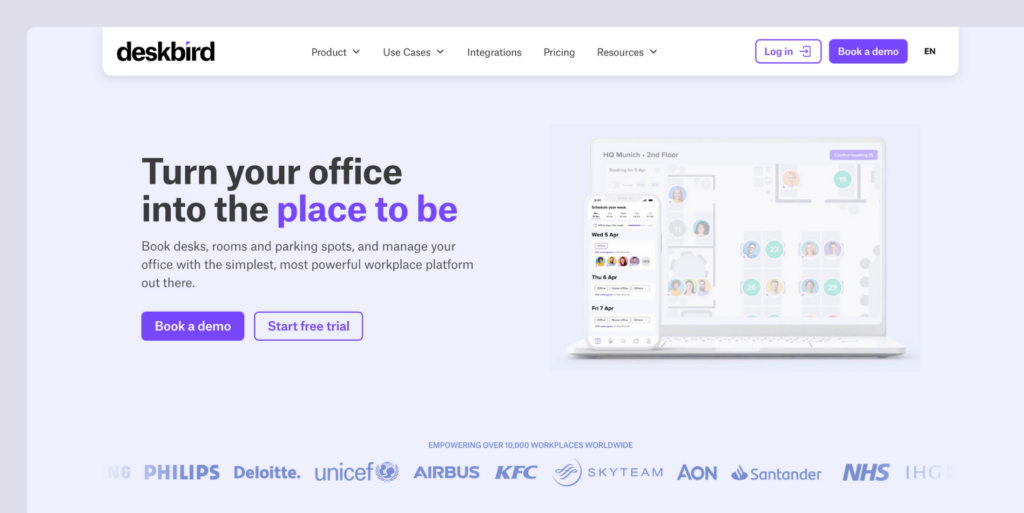
Similar to Officely, deskbird helps people book desks and rooms and plan their office days more easily. It’s growing quickly, and after raising $23 million in funding, it’s putting more effort into AI features and expanding what the platform can do.
What you get with deskbird
- Desk booking: Hot desking with filters for things like amenities and sitting near teammates.
- Room scheduling: Book meeting rooms with Outlook and Google Calendar sync.
- Visitor management: Pre-register guests, self check-in, and notify hosts when visitors arrive.
- Hybrid scheduling: Plan in-office days and support hybrid work policies.
- Mobile app: iOS and Android apps for booking on the go.
- Interactive floor plans: Visual maps that show availability in real time.
- AI recommendations: Smart suggestions for desks and meeting times.
- 200+ integrations: Works with Teams, Outlook, Slack, Google Workspace, BambooHR, and more.
How much does deskbird cost?
deskbird uses per-user pricing and offers one free plan plus three paid tiers (prices shown are when billed annually):
- Starter: Free for up to 15 users and 1 office
- Business: From $3.75 per user/month
- Professional: From $4.75 per user/month
- Enterprise: Custom pricing (quote-based)
Because it’s priced per user, costs usually rise as your headcount grows, even if your number of desks and rooms stays the same.

Who’s deskbird best for?
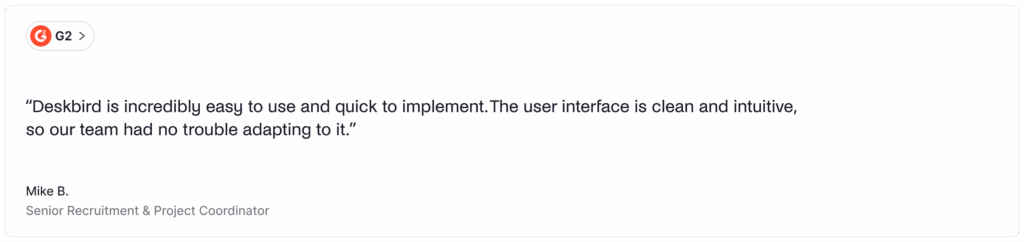
deskbird is a good fit for companies that want an easy-to-use workplace platform with strong analytics and lots of integrations. It can work for teams of different sizes, since it offers a free plan and competitive per-user pricing, similar to Officely. The difference is that deskbird’s free plan covers up to 15 users, while Officely’s free version is limited to 5.
deskbird also includes AI features you won’t get with Officely. If you want deeper analytics, more integrations, and a tool that’s simple for employees to learn, deskbird is a strong choice.
deskbird limitations
Even though deskbird’s pricing can look competitive, it may still feel expensive for smaller teams. Some reviewers say the main downside is the pricing model, especially if you’re trying to keep costs low.
Compared to some deskbird alternatives, it can also feel a bit limited when it comes to customization. A few users mention it’s not always easy to change settings to match how their office works.
If all you need is simple desk booking, deskbird may be more feature-rich than necessary. And for mid-sized teams that mainly want basic bookings, Officely can be the more affordable option at $2.50 per user.
Officely alternative #3: Kadence
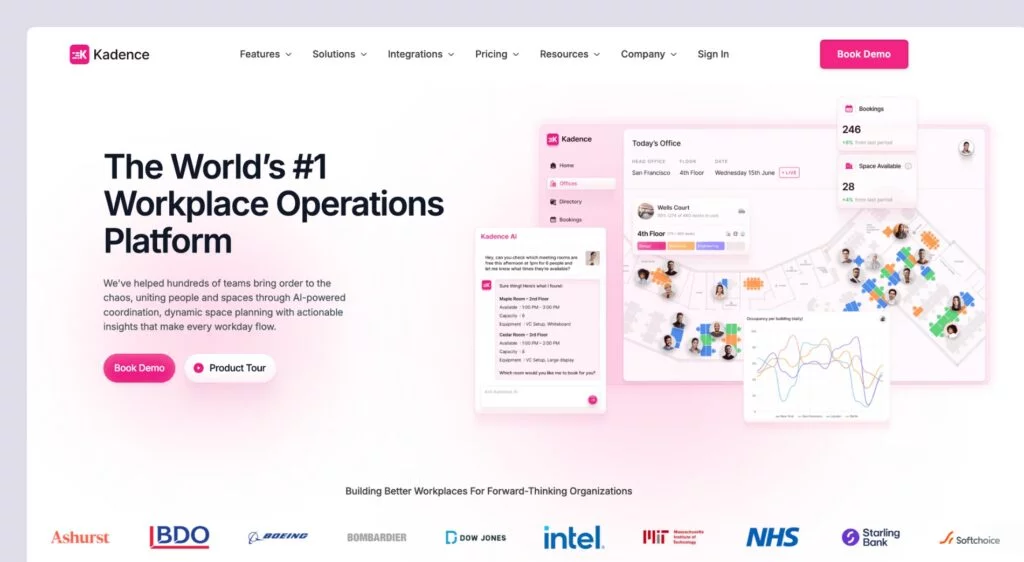
Kadence is a newer workplace management platform with built-in AI features. It’s used by over 10,000 teams across 40+ countries and is often chosen by larger companies that want advanced tools and have the budget to support them.
What you get with Kadence
- Interactive floor plans: Real-time office maps that show desk and room availability, plus where coworkers are sitting.
- Desk and meeting room booking: Book hot desks and meeting rooms with calendar integrations.
- Software integrations: Including Slack and Microsoft 365.
- Kadence AI: Get AI suggestions to book spaces for teams in bulk and notify employees when teammates are in the office.
- Visitor management: Register and track guests coming into the office.
- Mobile and desktop apps: Book from the web or mobile apps.
- Analytics and insights: Track occupancy, space usage, and booking trends.
- Event management: Plan workplace events and send staff updates and reminders.
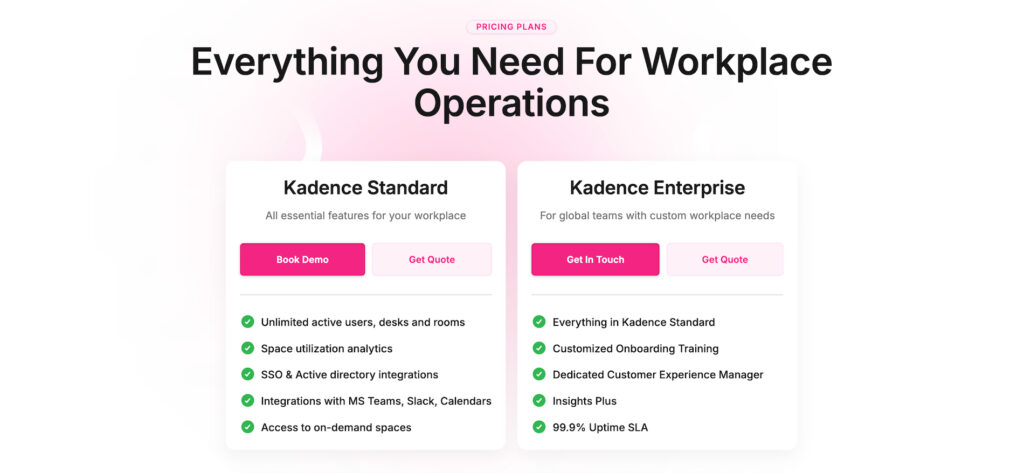
How much does Kadence cost?
Kadence uses custom, quote-based pricing. Based on past research, plans previously started at around $4 per user per month and included visitor management. For the most accurate and up-to-date pricing, you’ll need to contact their sales team for a quote.
Who’s Kadence best for?
Kadence is a good fit for companies managing hybrid teams that want simple, visual desk booking with AI support. Its interactive floor plans and AI features make it easy for employees to see where teammates are sitting and plan their in-office days together.
Kadence limitations
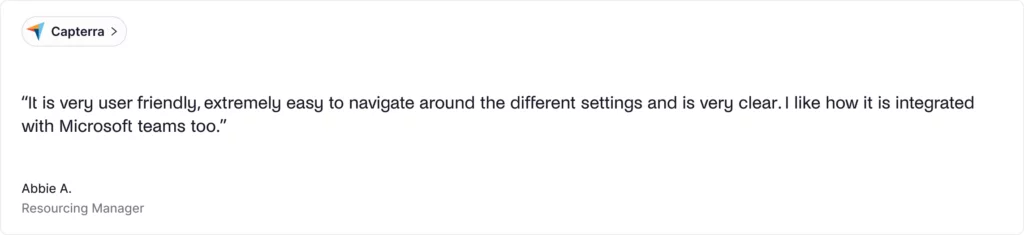
Because Kadence doesn’t publicly share its pricing, teams might choose more transparent options, like Officely. Also, some users appreciate the functionality but note it can be “a little bit costly for smaller group but will be helpful in the long run.” The platform also occasionally experiences booking glitches when too many employees book at the same time.
A quick thing to note: a lot of Kadence’s reviews are not very recent, so it can be hard to tell how the tool is working for teams today. If you want clear pricing upfront or you rely on fresh user feedback, Kadence might not be the best choice.
Officely alternative #4: Tactic
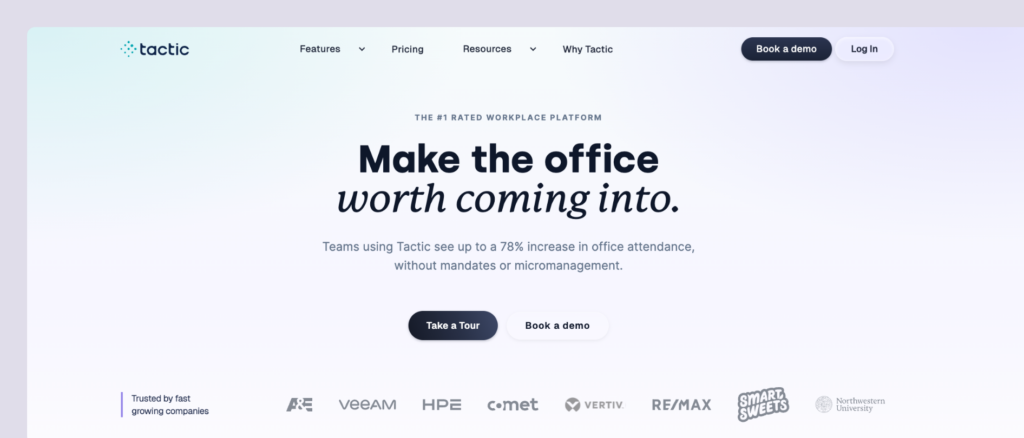
Tactic started as a hybrid workplace tool focused on improving the overall “workplace experience.” It brings together everything offices need, like desks, rooms, visitors, and requests, through separate modules. More recently, it added Tessa AI, an assistant that helps employees find and book spaces.
What you get with Tactic
- Desk booking: Hot desking, assigned desks, and neighborhood zones with visual office seating plans.
- Meeting room reservations: Book rooms with two-way calendar sync.
- Tessa AI: Book desks and rooms and report issues through chat.
- Visitor management: Guest check-in, badge printing, and security tracking.
- Workplace requests: Submit requests for things like catering, AV, and workspace setup.
- Space management: Track busy days, department usage, and booking trends.
- Team coordination: See who’s in the office and book near teammates.
- Office insights: Analytics for occupancy and space optimization.
- Software integrations: Including Slack and Microsoft 365.
How much does Tactic cost?
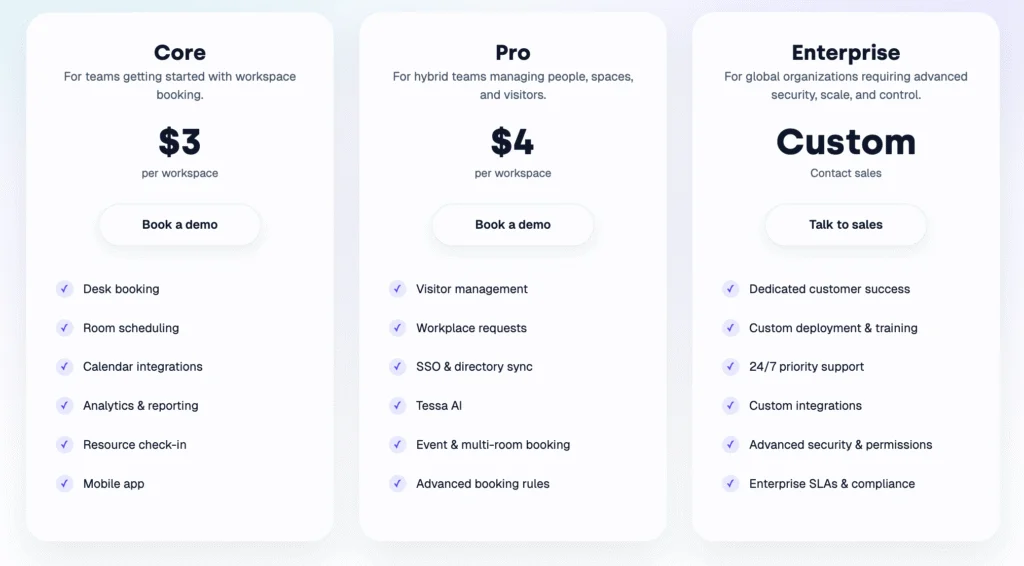
Tactic pricing is based on the number of workspaces you manage:
- Core ($3 per workspace) covers the essentials for desk and room booking.
- Pro ($4 per workspace) adds visitor management, workplace requests, SSO and directory sync, Tessa AI, and more advanced booking controls.
- Enterprise is custom priced for global teams that need stronger security, custom integrations, dedicated support, and SLAs.
Who’s Tactic best for?
Tactic is best for mid-sized and larger companies that want full desk and room booking, strong AI features (Tessa AI), and hands-on setup. Their onboarding team builds your office maps and handles the rollout for you, which can be a big help for busy workplace and operations teams.
Tactic limitations
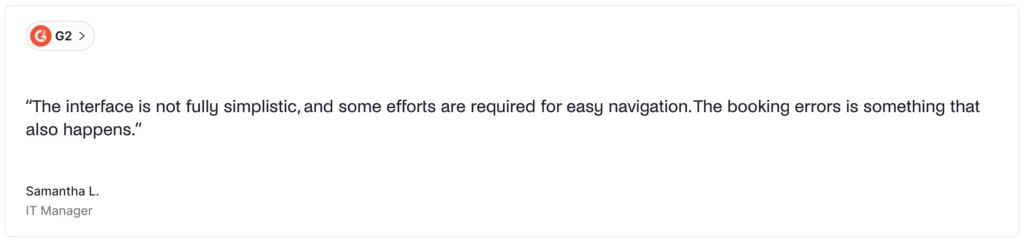
A few users mention occasional glitches. Some say availability isn’t always accurate, which can lead to misbookings, and that parts of the mobile experience feel a bit clunky compared to the desktop version.
Officely alternative #5: YAROOMS
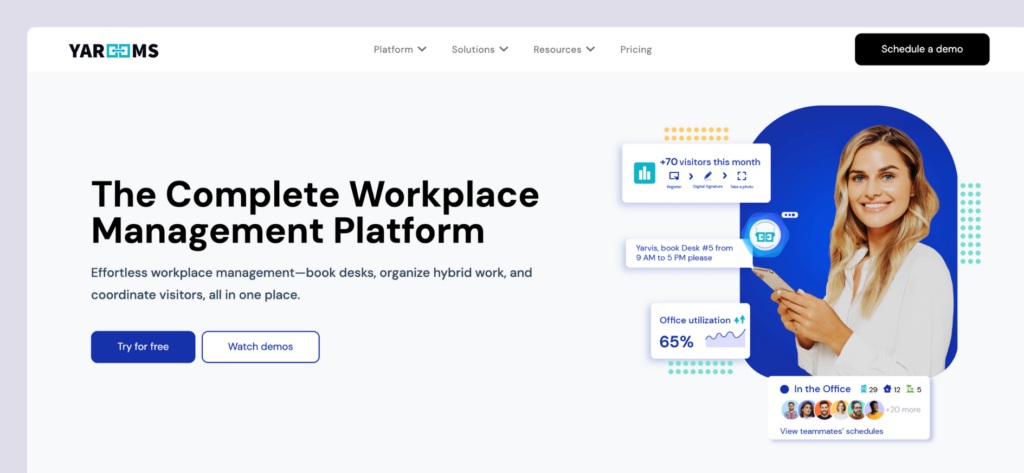
YAROOMS started in Romania in 2010 as a simple meeting room booking tool. Over time, it added more features and grew into a full workplace management platform. Today, it offers a wide range of tools to help companies run modern offices.
What you get with YAROOMS
- Desk booking: Reserve hot desks using visual floor plans.
- Meeting room scheduling: Book conference rooms with calendar integration.
- Hybrid work planning: Manage office attendance and hybrid schedules.
- Software integrations: Including Slack and Microsoft 365.
- Visitor management: Guest registration and check-in.
Digital signage: Wayfinding displays to help people find their way around the office. - Yarvis AI assistant: AI-powered booking and workplace insights (Business plan and above).
How much does YAROOMS cost?
YAROOMS offers three main plans:
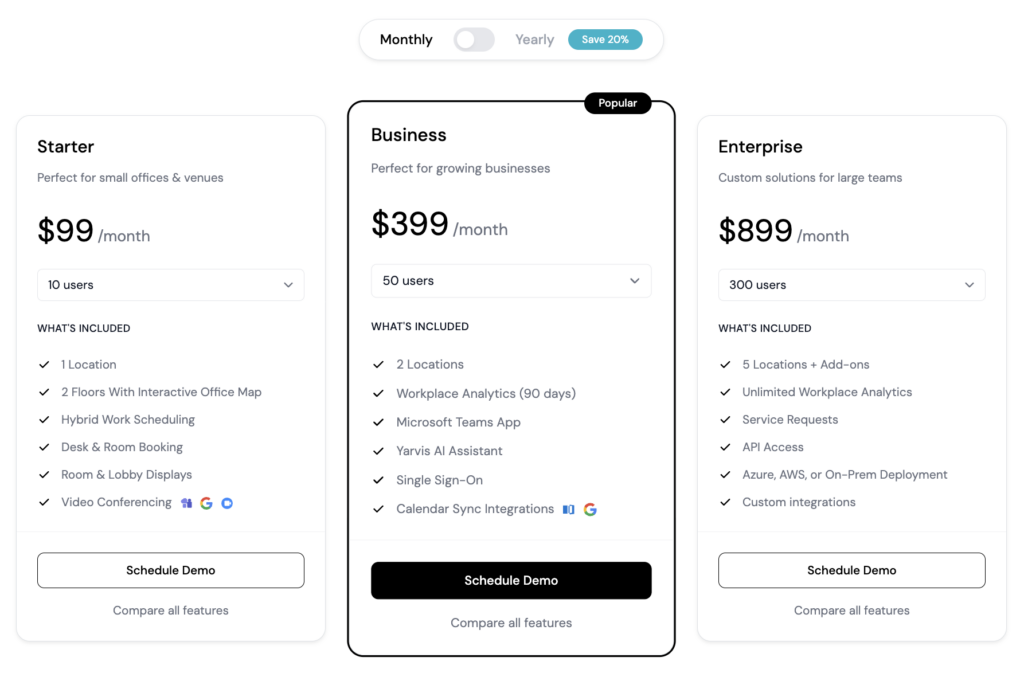
- Starter: $99/month for up to 10 users, or $199/month for up to 20 users. Includes basic desk and room booking for one location.
- Business: $399/month for up to 50 users, $499/month for up to 100 users, or $699/month for up to 200 users. Supports up to 2 locations and adds stronger analytics plus the Yarvis AI assistant.
- Enterprise: $899/month for up to 300 users, with custom pricing above that. Supports unlimited locations, full workplace analytics, and custom integrations.
Visitor management is an optional add-on that costs $99 per month, per location, so you can enable it only where you need it.
Who’s YAROOMS best for?
YAROOMS is a good fit for small to mid-sized companies and growing teams that want simple desk and room booking with strong Microsoft Teams integration. Its tiered pricing makes it easy to start small and scale up, while still offering AI features you usually see in more expensive tools.
If you want an easy workplace tool with flexible plans and solid Teams support, YAROOMS is a well-balanced option.
YAROOMS limitations
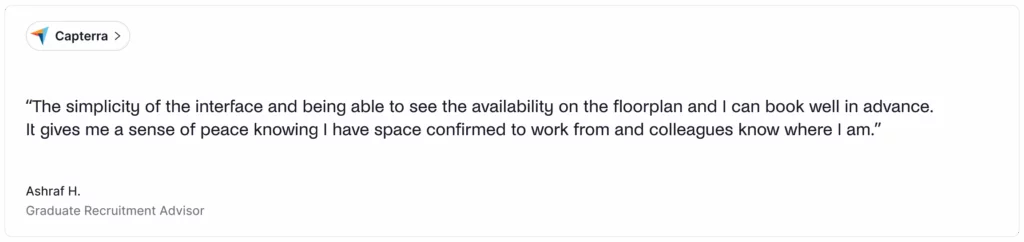
YAROOMS pricing can work well at first, but it can get expensive for mid-sized teams because it’s based on how many employees you have, not how many desks and rooms you manage. And for very small teams, it may feel like more features than you really need, which is where a simpler tool like Officely can be a better fit.
The mobile experience is also mixed. Older versions of the iOS app didn’t include everything, and the map view wasn’t always smooth. YAROOMS has made updates, but some users still say a few tasks are easier to do on desktop than on mobile.
Other alternatives to Officely
- Robin: An enterprise platform for larger teams (500+ employees) that adds employee experience tools like surveys and satisfaction tracking on top of workplace management.
- Skedda: An office scheduling tool focused on flexible booking rules and space analytics, ideal if your main goal is smart desk and room scheduling.
- Eden: A workplace platform with modular pricing for desks, rooms, and visitors.
Which Officely alternative should you choose?
There are several solid Officely alternatives to consider. To choose the best one for your office, think about:
✅ Pricing model. Choose between per-user pricing (Kadence, deskbird) or resource-based pricing (Archie, Tactic). Resource-based is usually more cost-effective for larger hybrid teams that have more employees than desks.
✅ Pricing transparency. Check whether pricing is publicly available. Archie shows clear rates ($2.80/desk, $8/room), while Kadence requires custom quotes.
✅ AI features. Decide if AI-powered booking is essential. Kadence AI, Tessa AI, deskbird’s AI recommendations, and YAROOMS’ Yarvis all offer AI features.
✅ Team size and scale. Consider your current team size and the extent of your scaling. There are plenty of solutions for both mid-sized (Archie), large (Tactic), and smaller (deskbird) teams.
Why Archie is usually the best alternative
- Transparent, resource-based pricing: Clear rates (from $2.80 per desk and $8 per room, with a $159/month minimum) make it easy to budget from the start.
- Fast deployment: Most teams can get live in days.
- Recent reviews you can trust: Archie is rated 4.9/5 on G2 and Capterra, with steady, up-to-date feedback.
- Cost-effective for office teams: Because pricing is based on desks and rooms (not users), it often works out cheaper when you have more employees than desks, which is common in offices nowadays.

Quick head-to-heads
- Archie vs Officely: Both offer great workplace management features, but Archie starts at $159/month with comprehensive features (office reservations, analytics, floor plans) vs Officely’s $2.50-$4/user for basic desk booking.
- Archie vs deskbird: Archie uses resource-based pricing vs deskbird’s per-user model ($3.75-$4.75/user). Both are comprehensive, but Archie includes all features in standard plans while deskbird uses tiered pricing.
- Archie vs Kadence: Both offer comprehensive workplace management, but Archie provides transparent, resource-based pricing, while Kadence offers custom quotes.
- Archie vs Tactic: Both handle workplace management well, but Archie costs less.
- Archie vs YAROOMS: YAROOMS’ structure works well for very small teams (10 users at $99/month), while Archie’s resource-based pricing works better with mid-sized offices.
Sources
- Competitor feature & pricing pages
- Demo videos
- G2 & Capterra profiles
- Archie’s product research

Alexios Georgakopoulos
Archie’s Content Writer, coffee fiend, and resident Gen Zer who hates working in offices but loves writing about them. When he is not deep in hybrid work and coworking topics, he is obsessing over a new hobby that will probably last about a day.