








- What you’ll learn
- How to market a coworking space with a solid strategy
- Which marketing channels are worth investing in, and which can wait
- Different marketing ideas for coworking spaces
- Real-life coworking space marketing examples
- The most common coworking marketing mistakes and how to avoid them
Building a successful coworking space takes more than offering great desks, fast Wi-Fi, and free coffee. If people don’t know your space exists (or don’t have a reason to visit), it can be difficult to grow your community.
The good news is that you don’t need a huge marketing budget or a team of marketers to attract new members. What you do need is a clear coworking space strategy.
What is a coworking space marketing strategy?
A coworking space marketing strategy is a plan for attracting new members, turning them into customers, and encouraging them to stay and recommend your space to others.
Think of your marketing strategy as a system, not a series of one-off campaigns. Every Google review, social media post, community event, and partnership should help move people one step closer to becoming loyal members.
Why is coworking space marketing important?
Before looking up marketing ideas for coworking spaces, choosing channels, and launching campaigns, it’s worth understanding what makes coworking marketing unique.
A coworking membership isn’t an impulse purchase. People don’t usually see an ad, click “Buy now,” and commit to paying every month. Instead, they spend time comparing different spaces, reading reviews, browsing photos, checking prices, and often booking a tour or trial day before making a decision.
On top of that, coworking spaces serve a very local audience. Most of your future members live or work nearby, so your marketing should focus on reaching people in your city or neighborhood rather than trying to build a global audience.
Community also plays a much bigger role than in many other industries. People aren’t just looking for a desk with fast Wi-Fi. They’re looking for a place where they can work comfortably, meet like-minded people, grow their business, or simply enjoy coming to work each day. That’s why showing your community through events, member stories, and real-life experiences is often more effective than talking about office furniture or coworking space amenities alone.
Trust is another major factor. Since memberships usually involve an ongoing monthly commitment, potential members want to feel confident before joining. They’ll often look for Google reviews, testimonials, photos, social media activity, and signs that your space is active and welcoming.
Finally, remember that coworking marketing doesn’t stop once someone becomes a member. Because memberships generate recurring revenue, keeping existing members happy is just as valuable as finding new ones. Happy members renew their memberships, recommend your space to friends and colleagues, leave positive reviews, and often become your most effective marketing channel.
- Quick tip
Instead of thinking about coworking space marketing as a way to simply fill empty desks, think of it as building a steady pipeline: People discover your space → learn more about it → visit → become members → recommend it to others.
How to build a marketing strategy for coworking spaces
Research consistently shows that coworking growth rarely comes from a single marketing channel. Instead, successful spaces combine high-intent channels like Google Search, Google Business Profile, and local SEO with trust-building activities such as referrals, community-building events, reviews, and partnerships.
The goal isn’t to do everything at once, but to build a coworking space marketing system that helps people discover your space, trust it, visit it, become members, and eventually recommend it to others.
Here’s how to build that system to properly market a coworking space.
Step 1: Know who you're marketing to
One of the biggest marketing mistakes new coworking spaces make is trying to attract everyone.
Freelancers, startups, remote employees, creative professionals, consultants, and established businesses all have different needs. While your space might welcome all of them, your marketing will be much more effective if you know who you’re primarily trying to reach.
Start by asking yourself a few simple questions:
- Who are most of our current members?
- Which membership plans are the most profitable?
- What types of businesses fit our community best?
- Who is most likely to renew their membership long-term?
The answers will help you build a clearer coworking space marketing strategy and decide where to spend your time and budget.
Audience | What they're looking for | Best marketing channels |
|---|---|---|
Freelancers | Flexible workspace, community | Google, Instagram, local communities |
Startups | Networking, growth, flexibility | LinkedIn, events, referrals |
Remote employees | Workspace close to home | Google, Maps, local SEO |
Small businesses | Private offices, meeting rooms | Google, partnerships, referrals |
Freelancers
Freelancers often look for an affordable, inspiring place to work and opportunities to meet other professionals. They usually discover coworking spaces through Google searches, social media, recommendations, and local communities.
Marketing channels that often work well include:
- Google Business Profile and local SEO
- Instagram and Facebook
- Local online communities and newsletters
- Community events and workshops
Startups
Startups often need more than just a desk. They’re looking for networking opportunities, meeting rooms, flexibility, and a community of founders and growing businesses.
To reach them, focus on:
- Startup events and pitch nights
- Partnerships with incubators and accelerators
- Referral programs
- Founder success stories and case studies
Remote (and hybrid) employees
Coworking is no longer just for freelancers. As hybrid work becomes more common, many companies are choosing flexible workspaces instead of signing long office leases. In fact, coworking market research shows that 59% of companies planning to expand their workspace prefer flexible office space over traditional offices, and corporate teams already make up 27.6% of the coworking market.
Many hybrid employees are looking for a professional place to work closer to home a few days a week, rather than commuting into the city every day. Because of that, they often start their search on Google using terms like “coworking space near me”, “day pass near me”, or “meeting room near me.”
To reach this audience, focus on making your space easy to find in local search results. The most effective marketing channels are usually:
- Google Business Profile
- Local SEO
- Google Maps
- Google Ads targeting local searches
Small businesses
Small businesses often need private offices, dedicated desks, or flexible meeting space as they grow. Because memberships tend to be larger and longer-term, these customers can have a high lifetime value.
Good ways to reach them include:
- Google Search
- Local business networking groups
- Partnerships with accountants, business consultants, and chambers of commerce
- Referrals from existing members
- Quick tip
Trying to speak to everyone usually means connecting with no one in particular. Choose one or two audiences that best fit your space and build your marketing around them. As your occupancy grows, you can gradually expand your messaging and explore additional acquisition channels.
Step 2: Build a marketing funnel that brings in members
Not every marketing activity has the same goal. A common mistake is expecting every Instagram post, Google Ad, or networking event to generate new memberships immediately. In reality, people usually go through several stages before joining a coworking space.
Understanding this journey helps you build a coworking space marketing strategy where every channel has a purpose:
Funnel stage | Goal | Examples |
|---|---|---|
Awareness | Help people discover your space | Google Business Profile, local SEO, marketplaces, social media, events, partnerships, signage |
Consideration | Build trust and answer questions | Website, reviews, testimonials, photos, pricing, FAQs |
Conversion | Turn interest into memberships | Tours, trial days, online booking, follow-up emails |
Advocacy | Encourage members to promote your space | Referrals, reviews, community events, social sharing |
Stage 1: Awareness
This is where people discover your coworking space for the first time. They might be searching for a workspace nearby, walking past your building, attending one of your events, or hearing about your space through a friend or local business.
Your goal at this stage is simple: make sure your coworking space is easy to find wherever potential members are looking.
For most coworking spaces, the most effective awareness channels include:
- Google Business Profile
- Local SEO
- Coworking aggregators & marketplaces
- Google Ads
- Social media
- Community events
- Local partnerships
- Outdoor signage and posters
Because coworking is a local business, marketing for coworking spaces should focus on building visibility within your city or neighborhood rather than trying to reach everyone.
The good news is that you don’t need to compete with the biggest brands. In the US, the five largest coworking operators account for just 23% of locations, while 77% are independent, regional, or boutique spaces. That means local operators can still stand out by building a strong reputation, creating genuine community connections, and becoming the go-to workspace in their area.
Stage 2: Consideration
Once someone discovers your space, they’ll usually do a little research before getting in touch. This is often where potential members decide whether your coworking space feels trustworthy, welcoming, and worth visiting.
Ask yourself:
- Does your website clearly explain what you offer?
- Can visitors easily see your pricing and membership options?
- Are there recent photos of your space?
- Do you have positive Google reviews?
- Is it easy to find answers to common questions?
The goal isn’t to convince people with clever marketing copy. It’s to remove uncertainty and make it easy for them to imagine working in your space. At this stage, the most important assets are:
- A modern, mobile-friendly website
- High-quality photos
- Google reviews and testimonials
- Clear pricing
- Frequently asked questions
- Member stories and social proof
Stage 3: Conversion
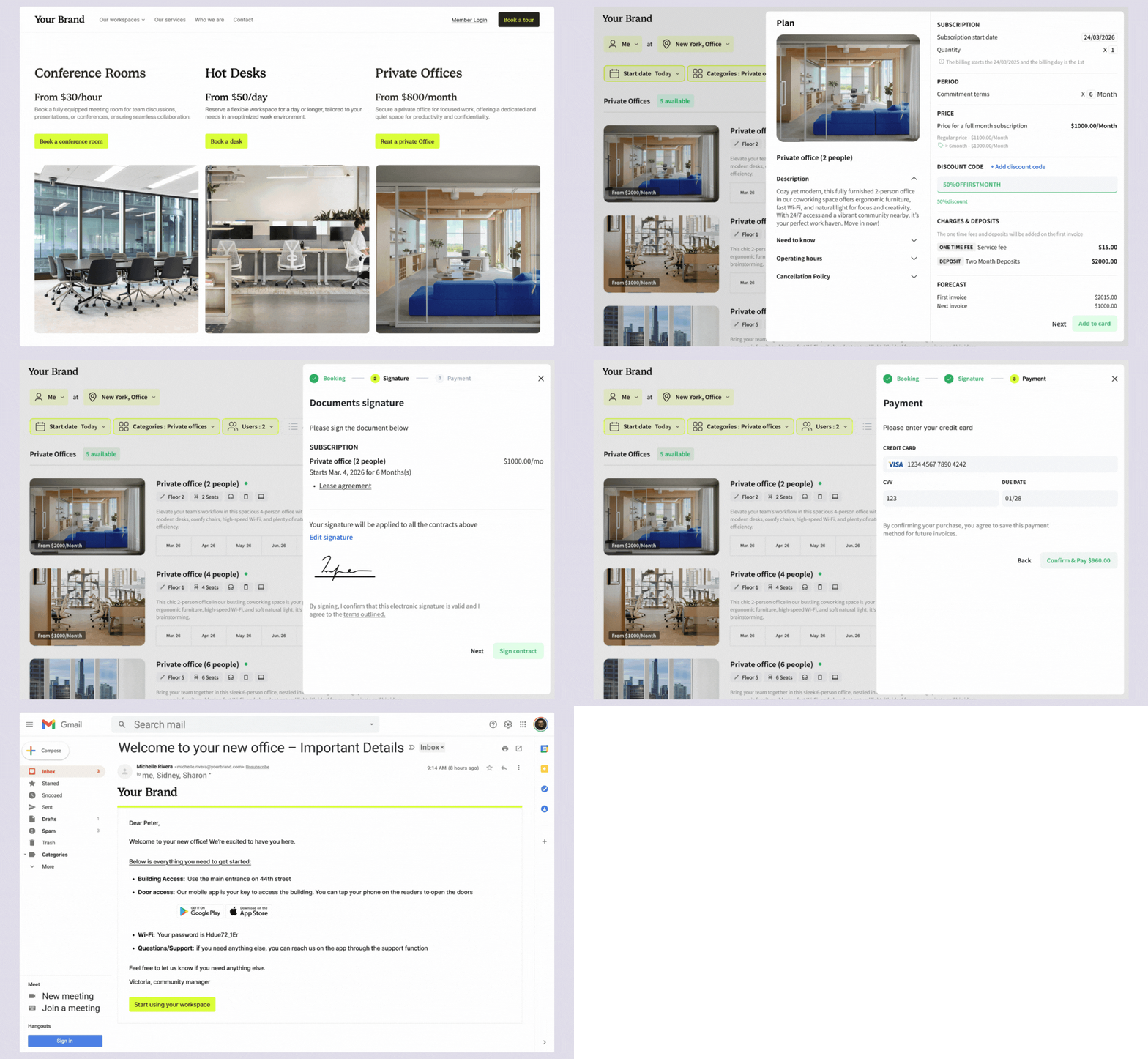
Once someone decides they’re interested, the next step should feel effortless. This is where many coworking spaces accidentally lose potential members by making the process too complicated.
Instead of asking people to fill out long forms or wait days for a response, make it as easy as possible to experience your space. Effective conversion tools include:
- Free trial days
- Space tours
- Online booking
- Fast responses to inquiries
- Follow-up emails after tours or events
In fact, operator surveys consistently rank tours, email follow-up, and member referrals among the most effective ways to convert inquiries into paying members.
Stage 4: Advocacy
Happy members often become the best marketing channel for coworking spaces. They recommend your space to colleagues, bring friends to events, leave Google reviews, share photos on social media, and introduce new members through referrals.
This type of word-of-mouth marketing is often more effective than paid advertising because it comes from people your future members already trust. Some of the best ways to encourage advocacy include:
- Referral programs
- Asking for Google reviews after positive experiences
- Building an active community
- Hosting memorable events
- Sharing member stories on social media
Basically, people trust recommendations from people they know. That’s why referrals are often one of the best ways for coworking spaces to attract new members.
Step 3: Choose the right marketing channels
Once you understand your audience and how people become members, it’s time to decide where to focus your marketing efforts.
One of the biggest mistakes coworking operators make is trying to be everywhere at once. They post on every social media platform, run Google Ads, organize events, write blog posts, launch referral campaigns, and send newsletters — all at the same time.
For most spaces, that’s simply not sustainable. Instead of trying to do everything, choose three to five marketing channels that best fit your audience, location, and budget, then invest in them consistently.
For example, a new coworking space might focus on:
- Google Business Profile and local SEO
- Community events
- Referral marketing
- Partnerships with local businesses
- One social media platform
As your occupancy grows and your marketing capacity increases, you can always expand into additional channels.
Step 4: Measure what works
While metrics like social media engagement can tell you whether people enjoy your content, they don’t necessarily tell you whether your marketing is generating tours, trial days, or new memberships.
Instead, focus on the metrics and coworking space KPIs that directly support your business goals.

Website traffic
Your coworking space website is often where people learn more about your space after discovering you through Google, social media, or referrals.
Keep an eye on:
- Overall website traffic
- Where visitors are coming from (Google, social media, referrals, direct traffic, etc.)
- Which pages receive the most visits
- How many visitors book a tour or trial day
This helps you understand which marketing channels are actually bringing potential members to your website.
Tours and trial days
For many coworking spaces, booking a tour or a free trial day is the first real step toward becoming a member.
Track:
- Number of tours booked
- Trial days completed
- Tour-to-membership conversion rate
- Trial day-to-membership conversion rate
If lots of people visit your space but very few join, it may be worth reviewing your pricing, member onboarding experience, or sales process.
Memberships
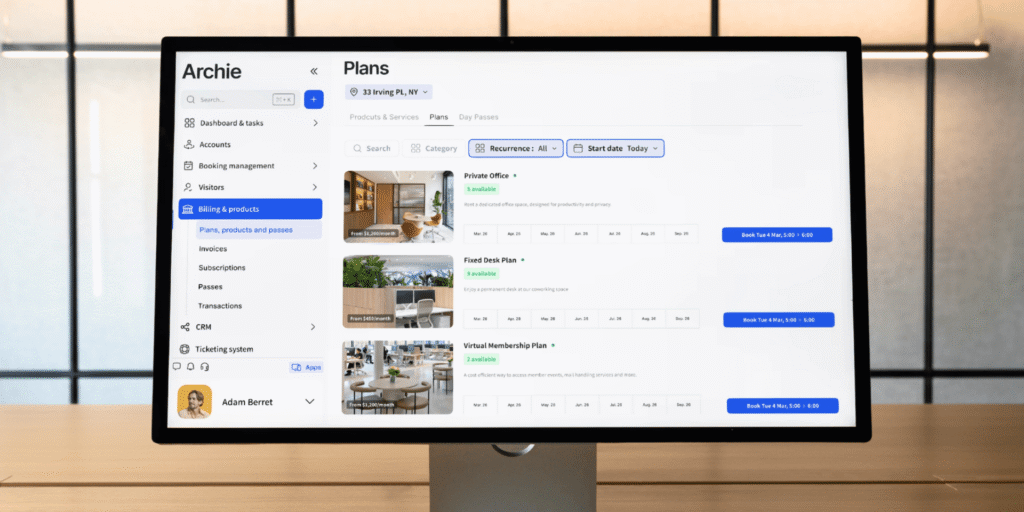
Ultimately, your marketing should generate sustainable membership growth. Measure:
- New memberships each month
- Memberships by acquisition channel
- Membership type (hot desk, dedicated desk, private office, day pass, etc.)
Knowing where your members come from helps you invest more in the channels that consistently deliver results.
Referrals
Happy members are often your best marketing channel. Keep track of:
- How many new members were referred
- Which referral sources perform best
- Referral program participation
If referrals represent a growing share of new memberships, it’s a sign that your member experience is working just as well as your marketing.
Customer Acquisition Cost (CAC)
Customer Acquisition Cost (CAC) tells you how much you spend, on average, to acquire a new member.
Calculate it by dividing your marketing and sales costs by the number of new members acquired during the same period.
Tracking CAC over time helps you understand whether your marketing is becoming more efficient.
Occupancy
At the end of the day, occupancy is one of the most important indicators of whether your coworking space marketing strategy is working.
Growing occupancy means your marketing, sales, and member experience are working together successfully.
If occupancy remains flat despite increased marketing activity, it may be time to review which channels you’re investing in and whether they’re reaching the right audience.
What are some of the most effective digital marketing channels for coworking spaces?
The most effective digital marketing strategies for coworking spaces, based on based on conversations with coworking space operators, industry surveys, and market research, are:
Website & local SEO for coworking spaces
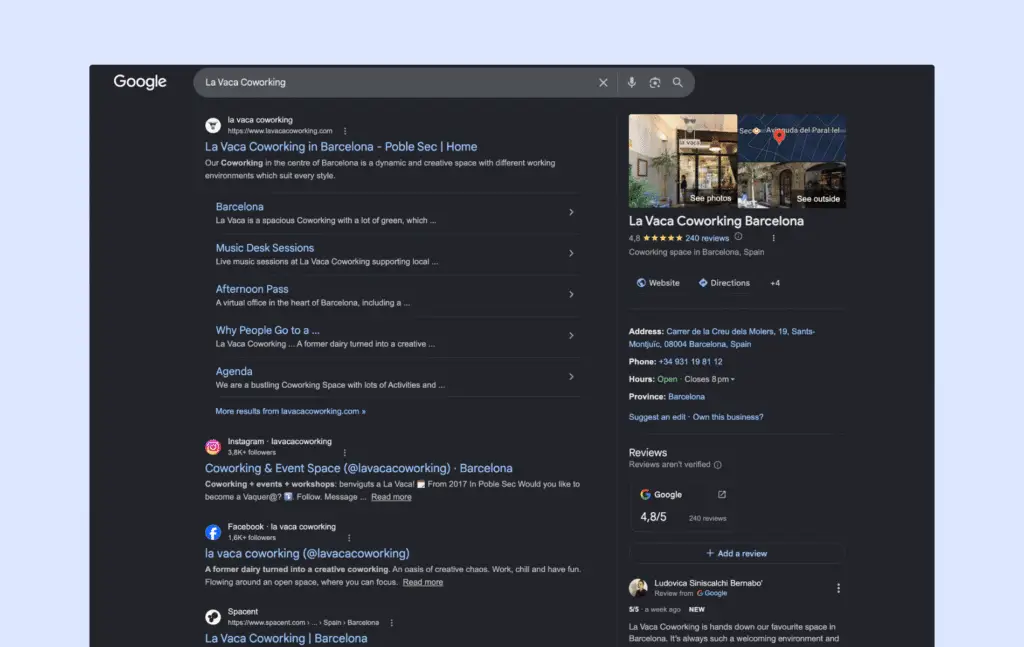
For most coworking spaces, Google Business Profile, local SEO, and coworking aggregators should be the foundation. People looking for a workspace usually start by searching for terms like “coworking space near me” or “meeting room in [city]”, or browsing coworking platforms such as LiquidSpace, Peerspace, Coworker, Deskpass, Instant Offices, or Flexspace.
- Quick tip
Make sure to keep your Google Business Profile and marketplace listings up to date with accurate information; recent photos, pricing, amenities, and positive reviews help more people discover your space and compare it with nearby alternatives.
Once someone finds you, your website does the heavy lifting. This is where people compare prices, browse photos, read reviews, and decide whether your coworking space is right for them. Make sure your website is fast, easy to navigate, mobile-friendly, and includes clear pricing, high-quality photos, testimonials, and an easy way to book a tour or trial day.
Content marketing is another great long-term strategy. Writing helpful blog articles, local guides, FAQs, or member success stories can improve your search rankings while answering the questions potential members are already asking. Instead of only writing about your coworking space, create content that helps freelancers, startups, remote workers, and local businesses solve real problems.
Social media for coworking spaces
Social media is best used to show your community rather than sell memberships. Share photos from events, introduce members, post behind-the-scenes updates, and celebrate what’s happening in your space. People are much more interested in seeing the people and atmosphere than another photo of empty desks.
Email marketing for coworking spaces
Email marketing is often overlooked, but it can be one of your most valuable marketing tools. Not everyone who books a tour or attends an event is ready to become a member straight away. A simple monthly newsletter with community updates, upcoming events, helpful articles, and special offers helps keep your coworking space top of mind until they’re ready to join.
Paid ads for coworking spaces
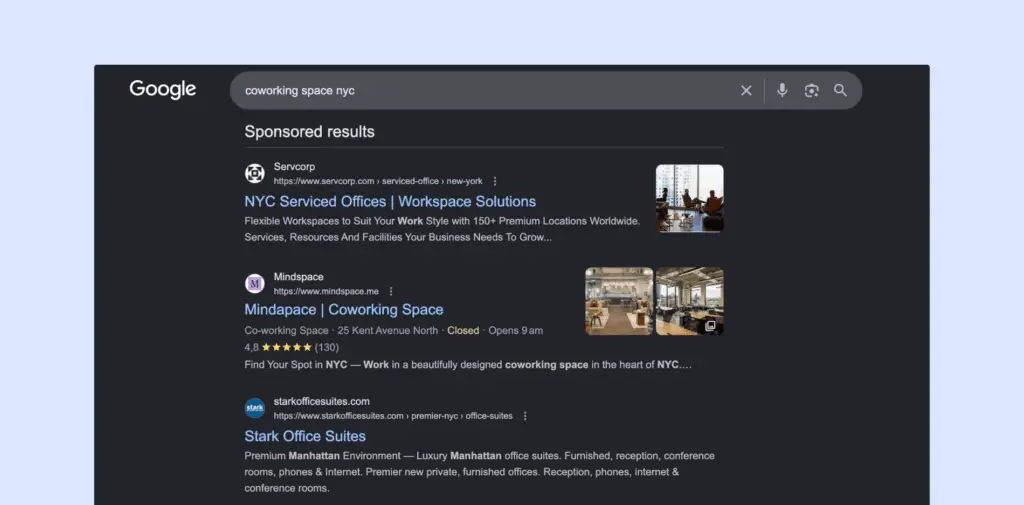
If you want to generate leads more quickly, Google Ads and paid analytics for search-based marketing can help you reach people who are actively searching for coworking spaces in your area. Use a keyword tool to find specific keywords related to your location, workspace types, and amenities, such as “coworking space in Austin,” “meeting room near me,” or “private office Chicago.” Keep your campaigns focused on the areas you serve, and use negative keyword lists to avoid paying for irrelevant clicks. This helps you reach more qualified prospects while making the most of your advertising budget.
Social media ads can also work well for promoting events, free trial days, or retargeting people who have already visited your website.
The good news is, you don’t need to create different content for every marketing channel. One member success story can become a blog article, a LinkedIn post, an Instagram carousel, a newsletter feature, and a Google Business Profile update. Repurposing your best content saves time while keeping your marketing consistent.
Coworking space marketing ideas
Here are some simple coworking space marketing ideas to try:
- Host a free coworking day to let potential members experience your space before committing to a membership.
- Share member success stories on your website, newsletter, and social media to show the people behind your community.
- Partner with local businesses to offer member discounts or co-host events that introduce your space to new audiences.
- Create helpful local content, such as guides to the best lunch spots, coffee shops, or networking events near your coworking space.
- Ask for Google reviews after tours, trial days, or successful events while the experience is still fresh.
- Publish behind-the-scenes content showing everyday life in your space, from community lunches to workspace improvements.
- Offer referral rewards that thank both the existing member and the new member for joining.
- Run workshops or networking events that are open to both members and non-members.
- List your space on coworking marketplaces such as Coworker, Deskpass, or LiquidSpace to reach people actively searching for flexible workspaces.
- Make booking as simple as possible by letting people reserve a tour, meeting room, or trial day directly from your website.
- Start a monthly newsletter with community news, upcoming events, workspace updates, and useful resources for remote workers.
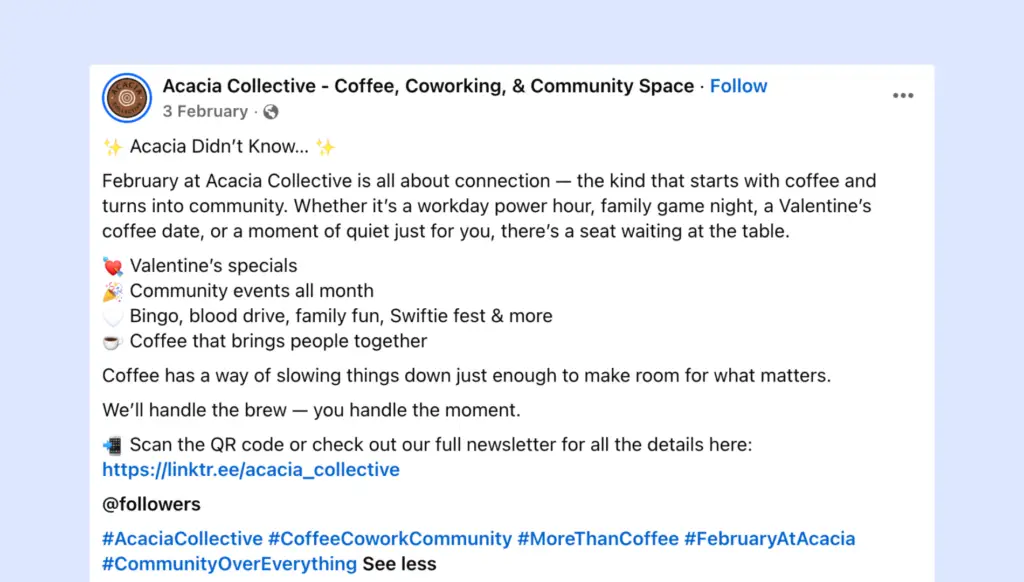
Example coworking space marketing plan
A coworking space marketing plan doesn’t require a huge budget or a full-time marketing team. What matters more than extremely creative marketing ideas for coworking spaces is consistency.
Instead of trying to do everything at once, build a simple routine that helps you stay visible, engage your community, and continuously attract new members. Here’s an example of what that might look like:
Every week
Keep your marketing active with a few small but consistent tasks:
- Publish one social media post or short video.
- Respond to new Google reviews and social media messages.
- Update your Google Business Profile if you have new photos, events, or announcements to share.
- Follow up with people who booked a tour, attended an event, or requested information.
Every month
Set aside time for activities that help your space stay visible and grow your local community.
- Host or participate in one community event.
- Publish one helpful blog article or local guide.
- Reach out to a local business or organization about a potential partnership.
- Send a newsletter with upcoming events, workspace updates, and member news.
- Review your Google Business Profile and website to make sure information is still accurate and up to date.
Every quarter
Take a step back and evaluate what’s working.
- Review your website and booking experience.
- Refresh photos of your space if needed.
- Run or promote your referral program.
- Review your marketing KPIs, such as website traffic, tours, trial days, referrals, new memberships, and occupancy.
- Decide which marketing channels deserve more attention, and which ones aren’t delivering results.
Remember, this is only an example. Your routine will depend on the size of your team, your budget, and your goals.
The important part is building a marketing system that you can maintain over time. A few consistent actions every week and month will usually have a much bigger impact than a burst of marketing activity followed by weeks of silence.
Coworking space marketing examples
Looking for more inspiration? Here are a few examples of how coworking spaces use different marketing strategies to attract new members.
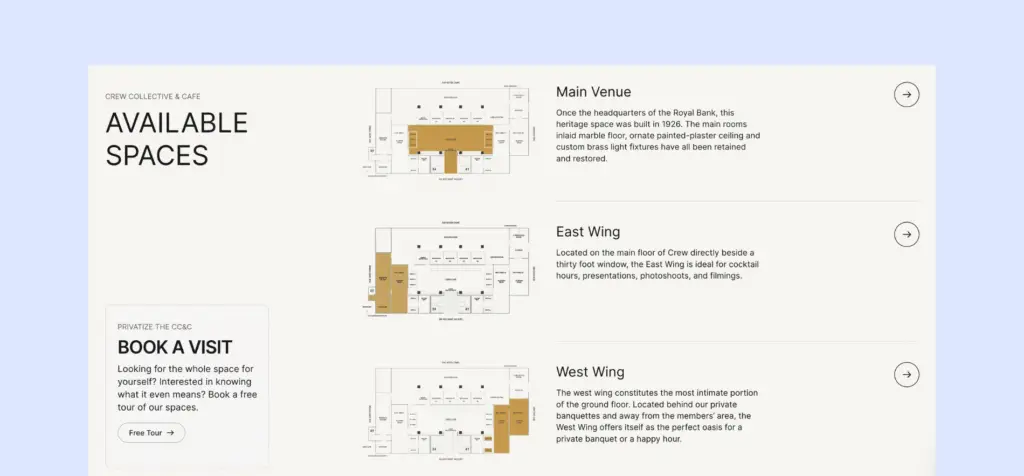
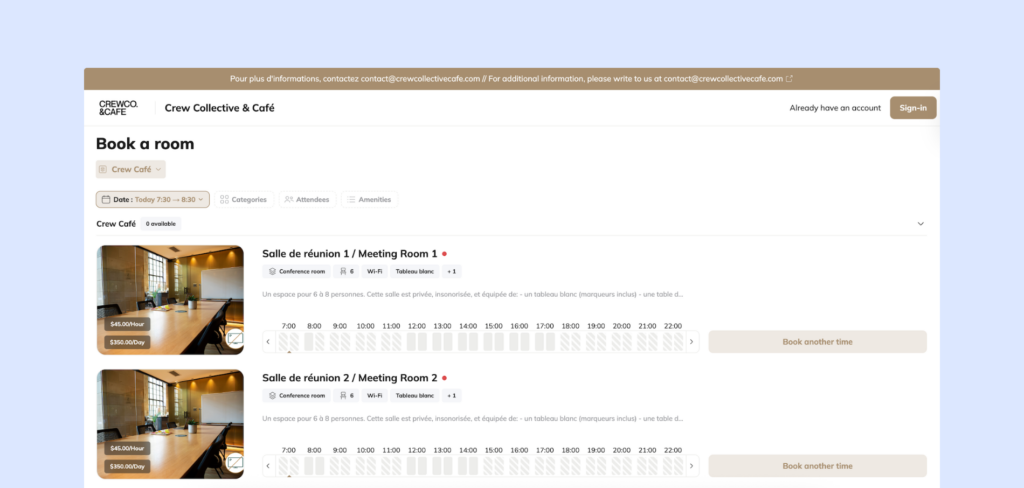
Crew Collective & Café: Making booking simple
Crew Collective makes it easy for visitors to schedule tours, browse meeting rooms, and book them online directly from its website. Instead of requiring visitors to submit lengthy inquiry forms, the booking process is straightforward and user-friendly.
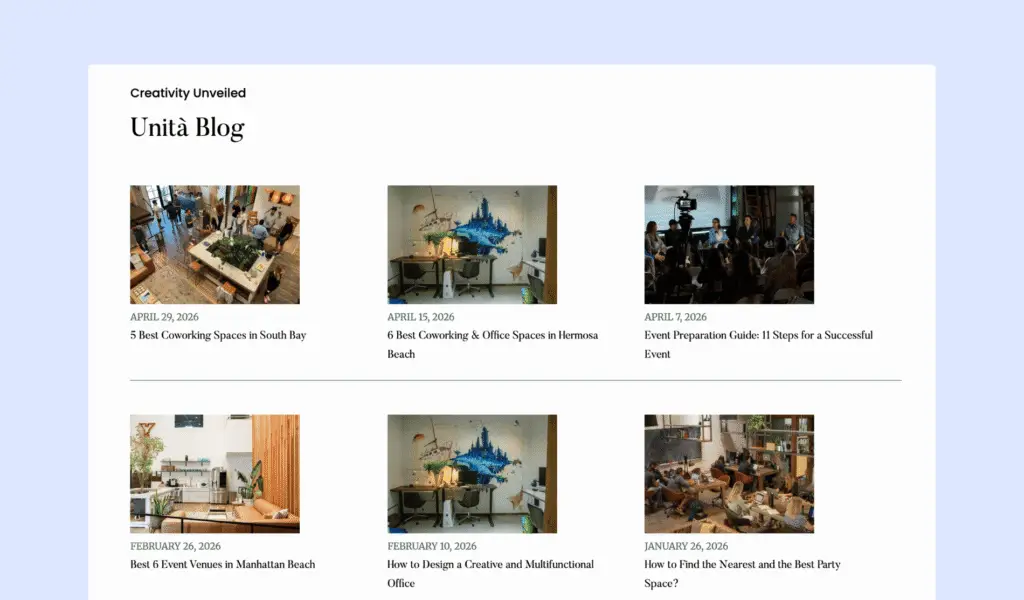
Unità Club: Building authority through content
Unità Club uses its blog to publish articles about entrepreneurship, remote work, productivity, community, and the future of work. Instead of writing only about its coworking space, it creates content that answers questions its ideal members are already searching for.
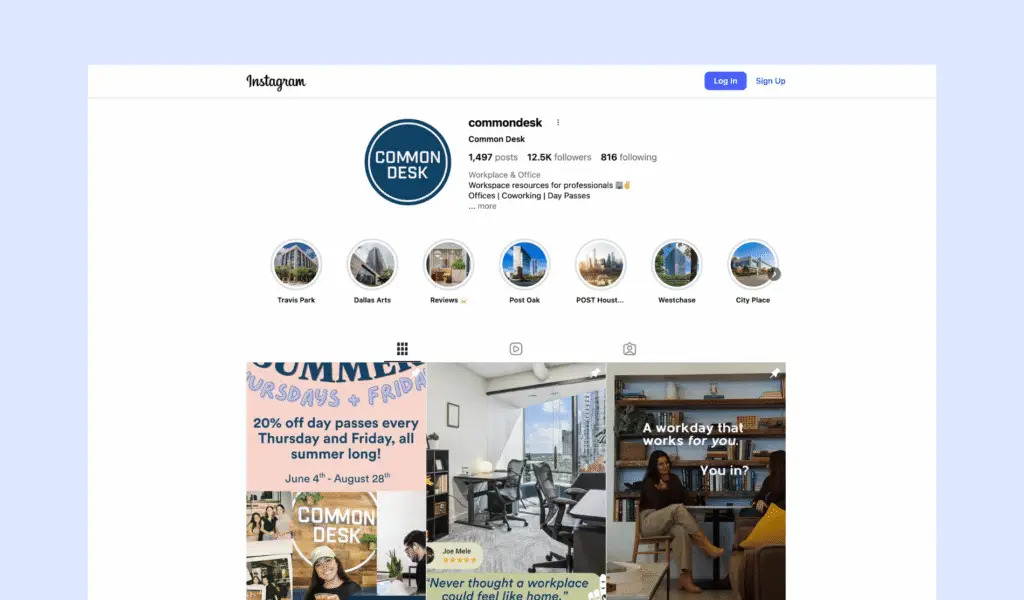
Common Desk: Showing everyday life in your space
Common Desk has built a strong social media presence by sharing authentic photos and videos of everyday life across its locations. Rather than focusing only on offices and desks, its Instagram features members, community events, partnerships, and behind-the-scenes moments.
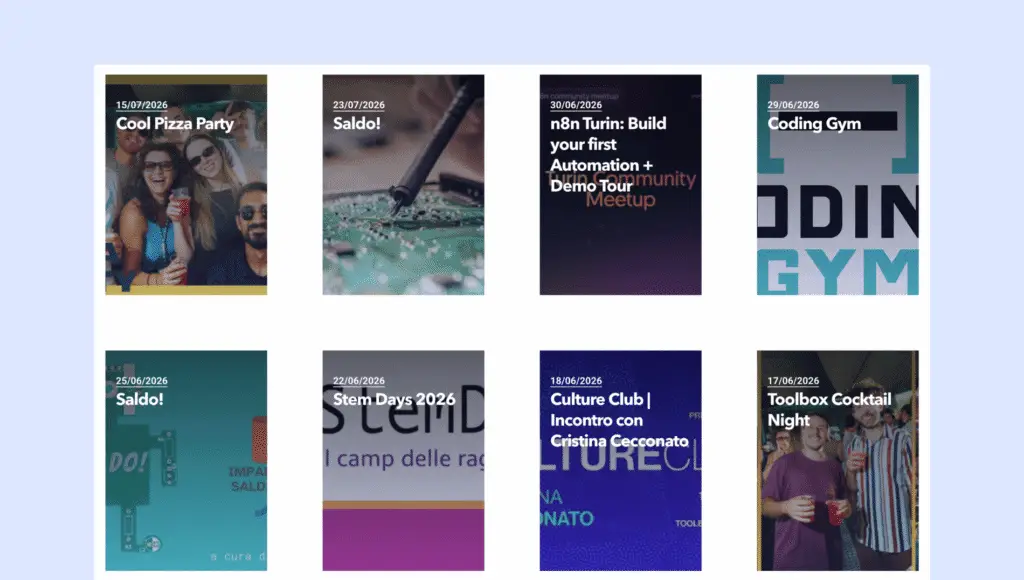
Toolbox Torino: Building your marketing around community events
Toolbox Torino regularly hosts community events, but instead of repeating the same networking night every month, the team experiments with new formats and encourages members to take part. Guests help prepare food, mix drinks, present their projects, and connect with one another.
What are the most common coworking space marketing mistakes?
The most common coworking space marketing mistakes are definitely:
- Ignoring your Google Business Profile. An outdated profile with old photos, missing opening hours, or unanswered reviews can discourage people before they even visit your website. Keep your profile updated and treat it as an extension of your front door.
- Forgetting to show your space. If your website and social media are filled with stock images or outdated photos, potential members can’t picture what your community is really like. Show real people, real workspaces, and real moments from everyday life in your space.
- Selling desks instead of community. Desks, meeting rooms, and fast Wi-Fi are important, but they’re rarely the reason someone chooses one coworking space over another. What often makes the difference is the atmosphere, the people, the events, and the sense of belonging your space creates.
- Assuming events automatically create members. Hosting events is a great way to bring people through the door, but an event on its own won’t fill your space. They introduce new people to your community, encourage conversations, generate trial bookings, and create reasons for attendees to come back. Without follow-up, even a well-attended event can become a missed opportunity.
- Making it difficult to book a tour or trial day. Long forms, slow response times, or unclear booking processes can easily turn interested visitors away.
Still, marketing doesn’t stop once someone discovers your coworking space. The real challenge is turning that interest into tours, trial days, memberships, and long-term community members.
That’s where Archie Coworking can help.
How can Archie support your coworking space marketing strategy?
While coworking software is designed to help you manage your coworking space, it can also support your marketing efforts.
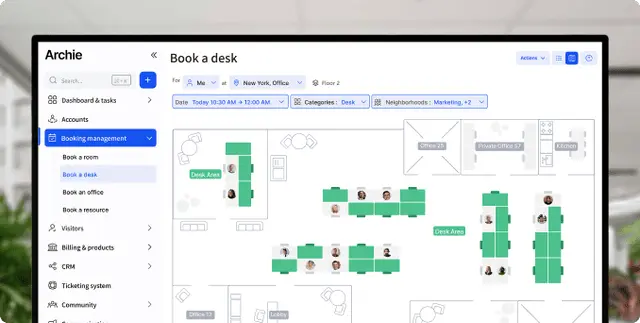
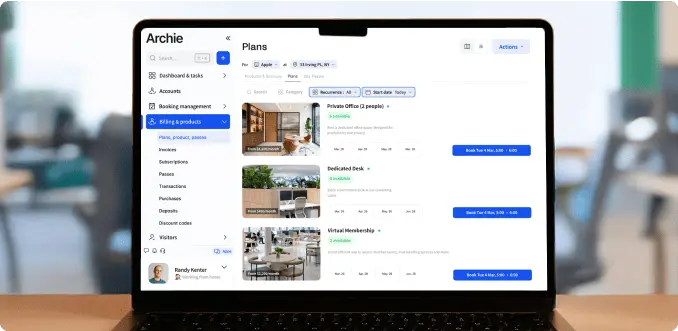
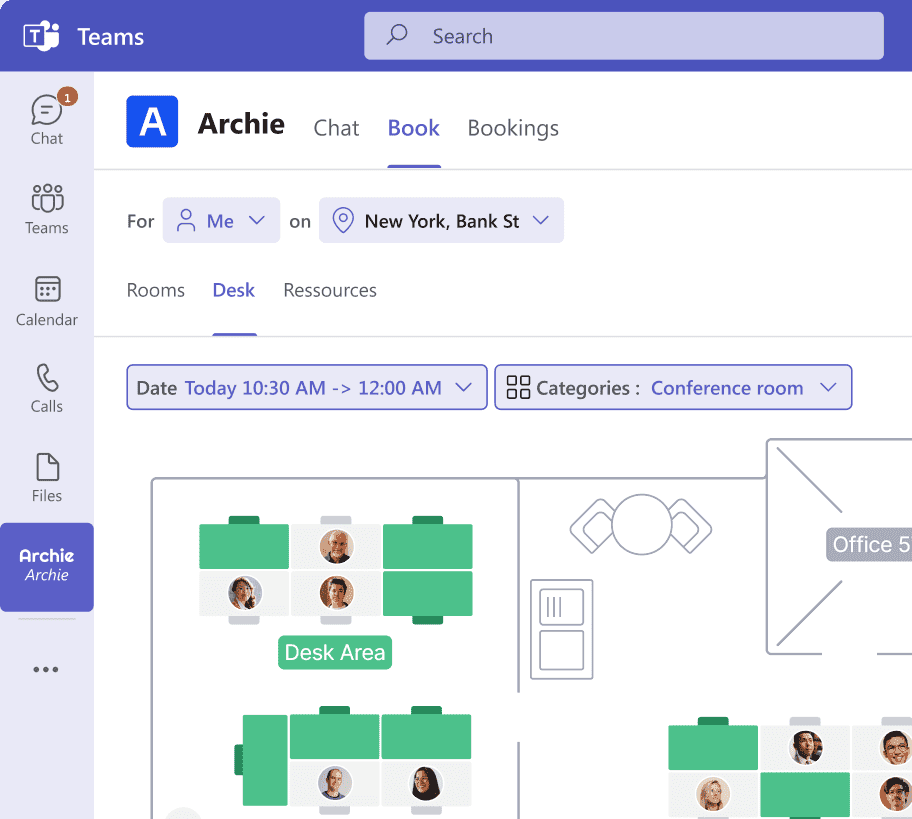
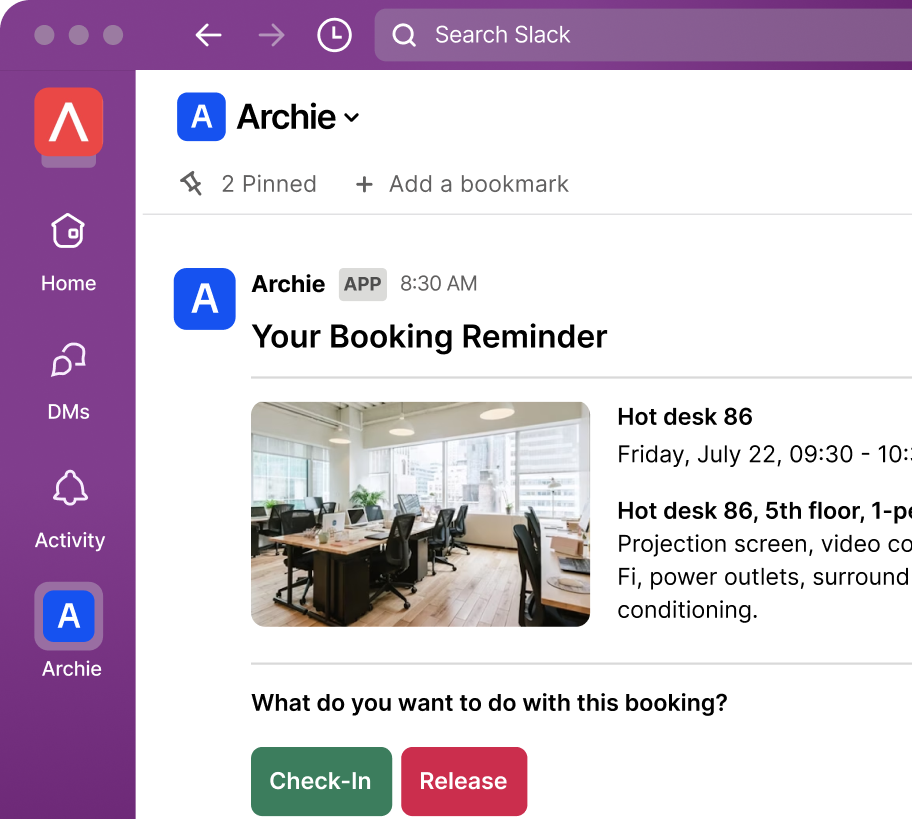
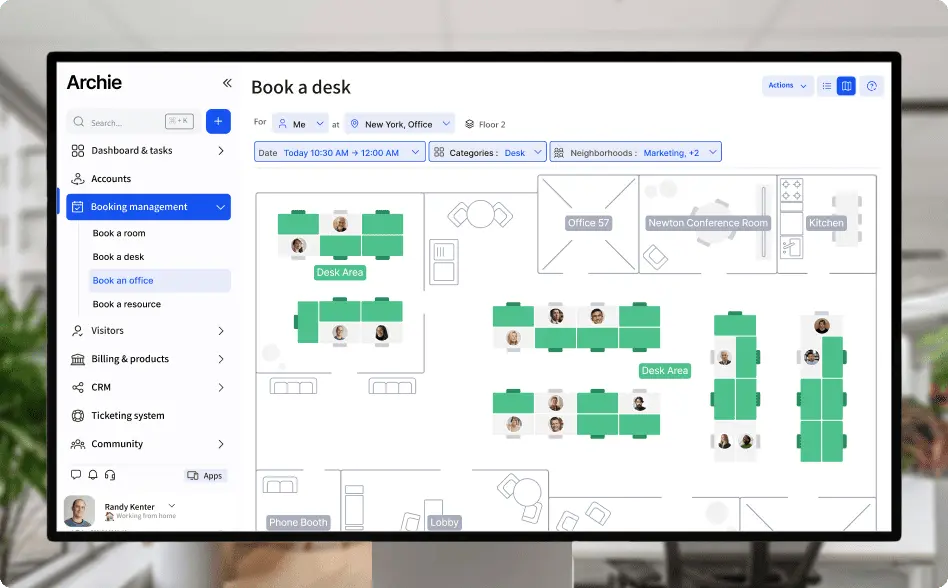
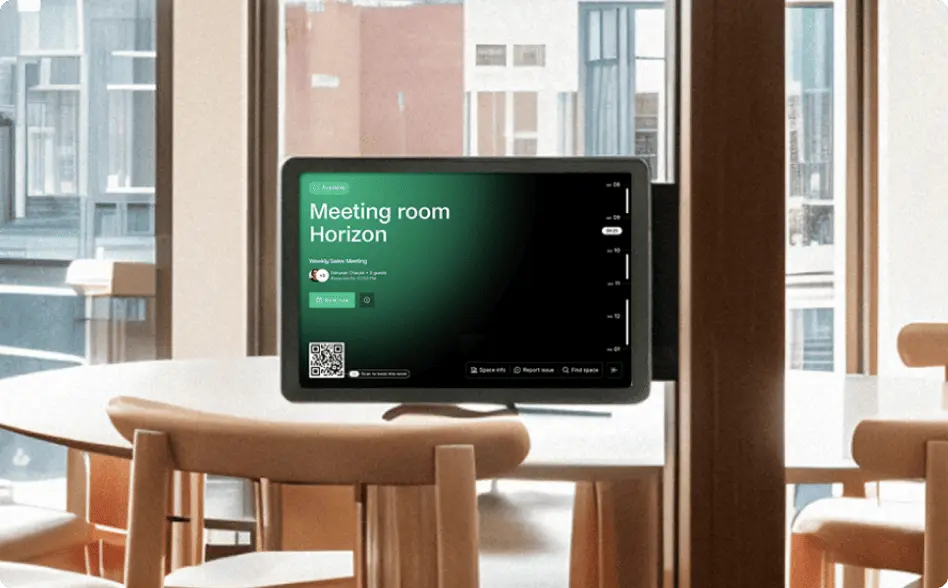
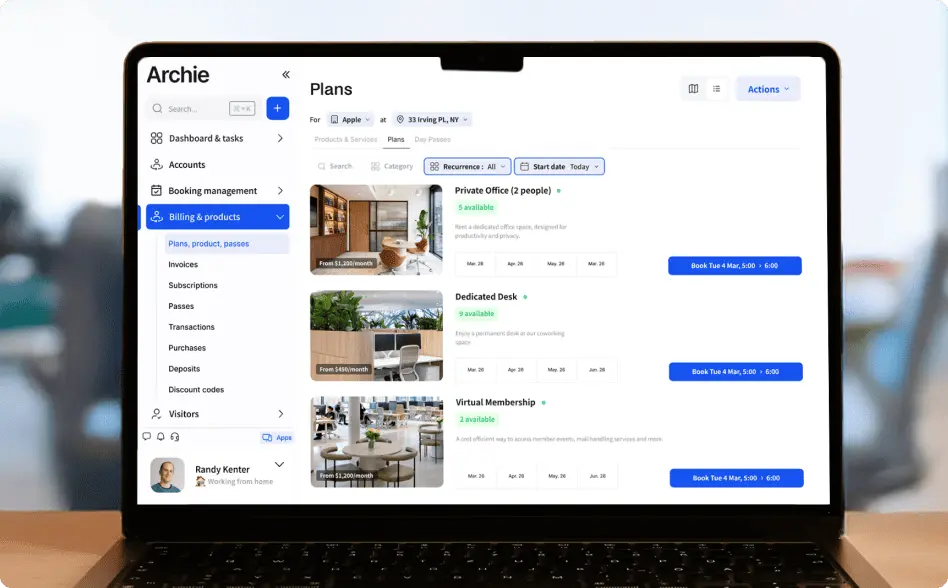
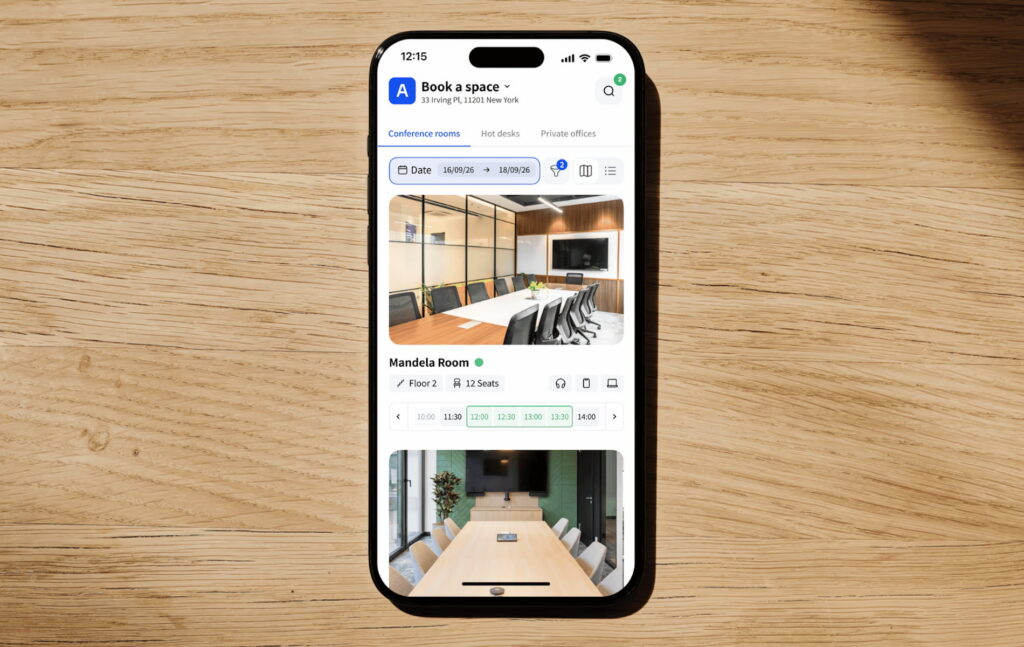
With Archie, you can add branded booking pages to your website and let people book trial days, meeting rooms, day passes, events, or memberships online. Instead of exchanging multiple emails, prospective members can find availability and book in just a few clicks.
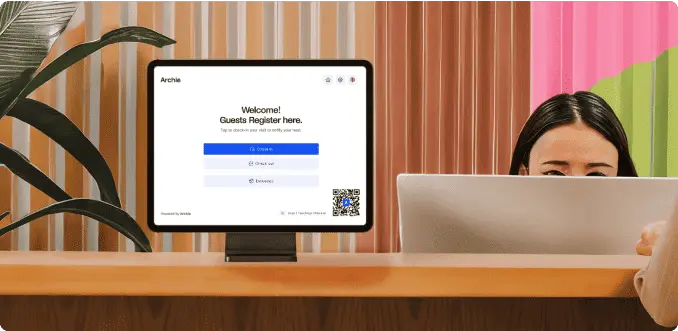
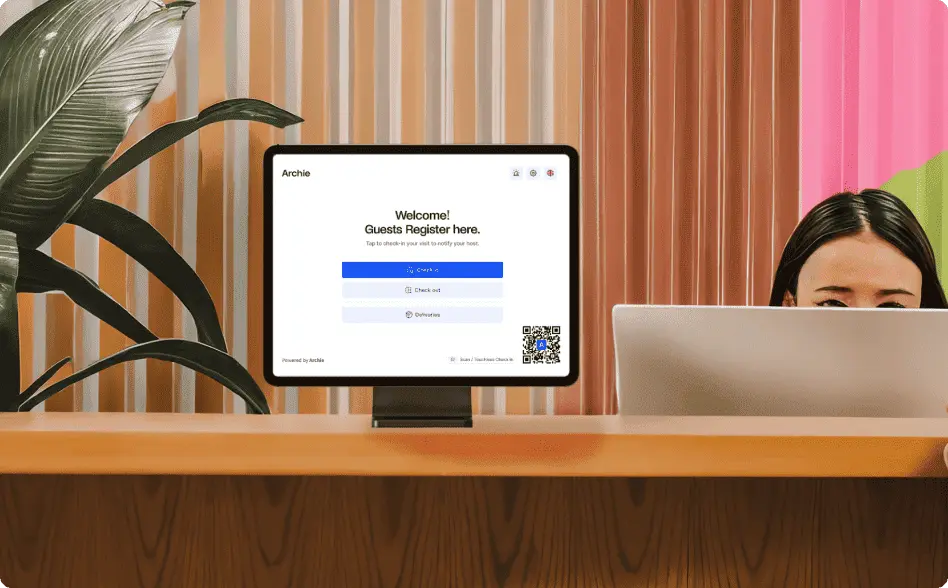
If you’re giving tours or inviting prospective members for a trial day, Archie’s coworking visitor management helps you welcome guests with a professional self-service check-in, host notifications, and optional visitor badges. It creates a smoother arrival experience while reducing work for your team.
Archie gives you access to occupancy reports, membership insights, booking activity, and other coworking analytics that help you understand how your space is performing over time. Combined with tools like Google Analytics, you can connect your marketing efforts to real business outcomes and focus on the channels that deliver the greatest return.
Finally, the branded member app makes it easy for members to manage their bookings and stay connected with your community. A great member experience encourages renewals, referrals, and positive reviews — all of which help your coworking space grow.
Coworking space marketing FAQs
How much should I budget for coworking space marketing each month?
Most coworking spaces spend between 5% and 10% of their monthly revenue on marketing, although newer spaces often invest more while building awareness. Start with a budget you can sustain, track where new members come from, and gradually invest more in the channels that consistently deliver the best results.
How do I market a coworking space in a saturated city?
Rather than trying to appeal to everyone, focus on what makes your space different. You might specialize in serving freelancers, startups, creative professionals, or remote teams. Build partnerships with local businesses, host community events, and create content that highlights why people should choose your space over others nearby.
Should I offer free trials or risk devaluing my memberships?
Free or low-cost trial days can be a great way to introduce people to your coworking space without devaluing your memberships. Limit each person to one trial, ask them to book in advance, and use the visit to showcase your community, facilities, and member experience. A great first impression is often what convinces someone to join.
How can I market corporate memberships differently from individual plans?
Companies often care about different things than individual members. Instead of focusing on community alone, highlight flexible office space, meeting rooms, employee wellbeing, and the ability to scale as teams grow. LinkedIn, local business events, and partnerships with HR or business organizations can all be effective ways to reach corporate decision-makers.
What is the best marketing channel for a coworking space?
There’s no single best marketing channel, but for most coworking spaces, Google Business Profile and local SEO deliver the most consistent results. People often search for terms like “coworking space near me” or “office space in [city],” making local search one of the best ways to attract qualified leads. Pair this with a strong website, positive Google reviews, community events, and referrals for the best results.
Is social media enough to market a coworking space?
Usually not. Social media is a great way to showcase your community, events, and day-to-day life, but most people won’t discover your space through social media alone. A well-rounded coworking space marketing strategy should also include local SEO, Google Business Profile, a user-friendly website, referrals, events, and partnerships with local businesses.
How do I get more Google reviews for my coworking space?
The best time to ask for a review is right after a positive experience, such as a successful tour, trial day, or community event. Make it easy by sharing a direct review link or displaying a QR code at reception. You can also include review requests in follow-up emails or onboarding messages. Most importantly, reply to every review to show that you value member feedback.
Should I invest in Google Ads or SEO first?
If you’re looking for quick results, Google Ads can help you reach people who are actively searching for coworking spaces in your area. SEO takes longer, but it can generate free, consistent traffic over time. If your budget allows, many coworking spaces benefit from using Google Ads while building their long-term SEO strategy.
How do I market a new coworking space before it opens?
Start building awareness before your doors open. Create and optimize your Google Business Profile, launch a simple website with an email signup form, and share construction updates or behind-the-scenes content on social media. Reach out to local businesses, attend community events, and consider offering early-bird memberships or exclusive preview tours to build excitement before launch.