







If you manage a hybrid office, you’ve probably seen the same issues over and over. Meeting rooms get booked twice, desks sit empty on some days but run out on others, and people waste time trying to find a space when they actually need one.
That’s where tools like Skedda and Robin come in. Both are built to help teams book desks and rooms more easily, but they’re made for different kinds of workplaces, and they’re priced very differently, too.
In this guide, I’ll compare Skedda vs Robin, plus a few other alternatives you might want to look at too (including Archie, of course). You’ll see what each tool does best, where each one can fall short, and which type of team each one is most likely to fit.
Skedda vs Robin comparison guide
What is Skedda?
Skedda is a booking platform used by over 12,000 customers and nearly two million users worldwide.
What makes Skedda stand out is its versatility. Some booking tools are built mainly for corporate offices, but Skedda works well in lots of different settings. That’s even more obvious when you look at AllBooked by Skedda, a separate product from the same team made for community and recreation spaces. Think pickleball courts, golf simulator venues, studios, coworking spaces, and recreation centers.
No matter the space, the idea is the same: let people book for themselves (so admins spend less time on scheduling), while still giving admins detailed control over who can book what, and when.
Skedda core features
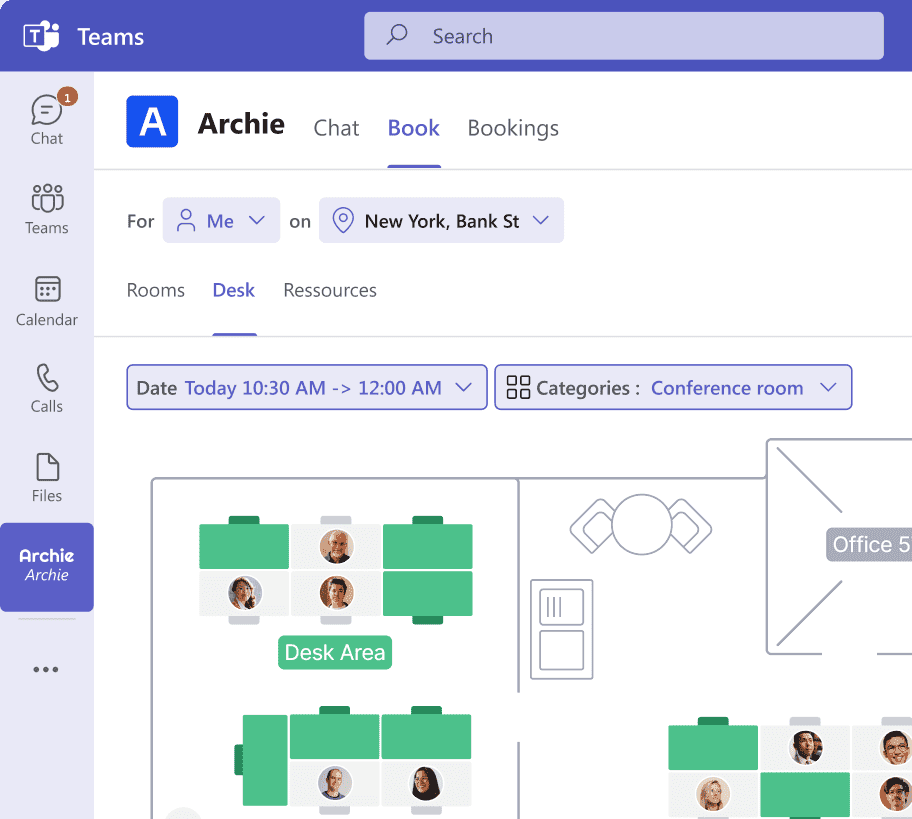
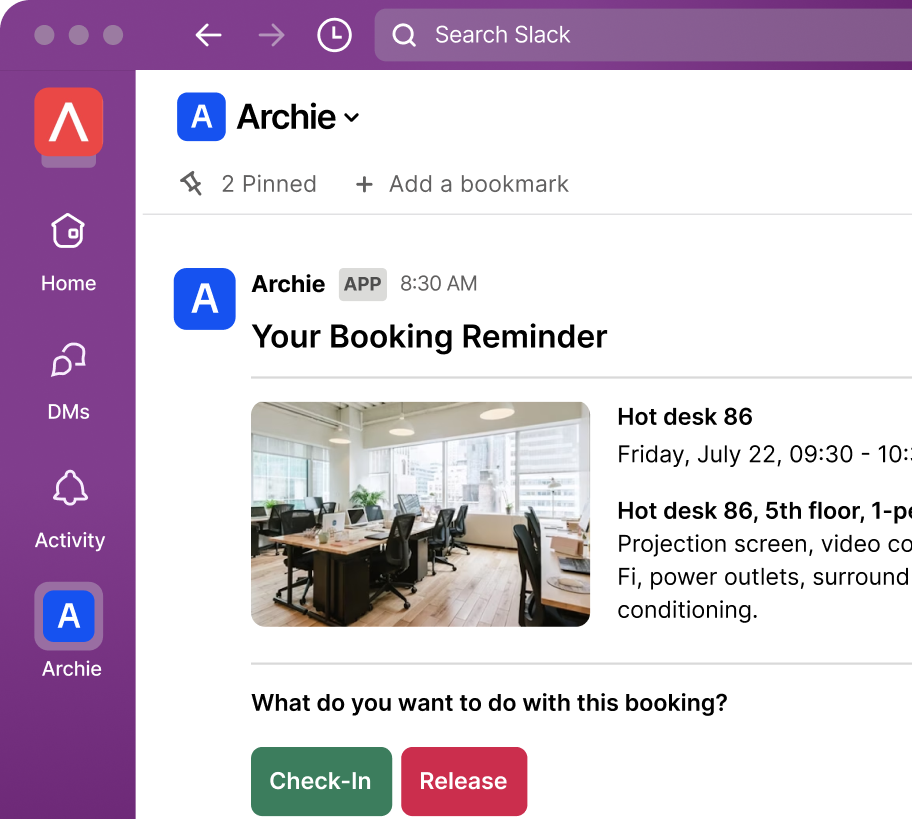
Desk booking and hot desking sit at the heart of the platform. Employees can create a new booking in just a few clicks through interactive floor plans, mobile apps, or integrations with Slack and Microsoft Teams. The system supports neighborhoods (designated zones for specific teams) and allows repeat bookings for those who prefer routine.
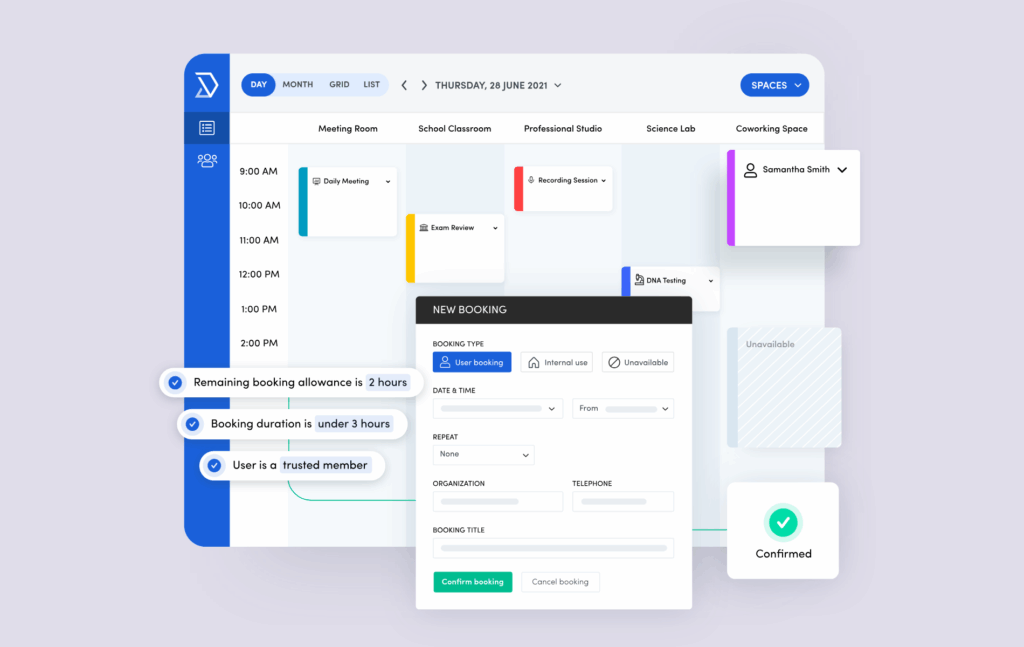
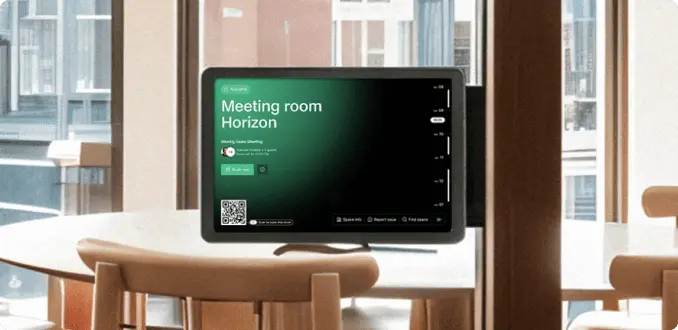
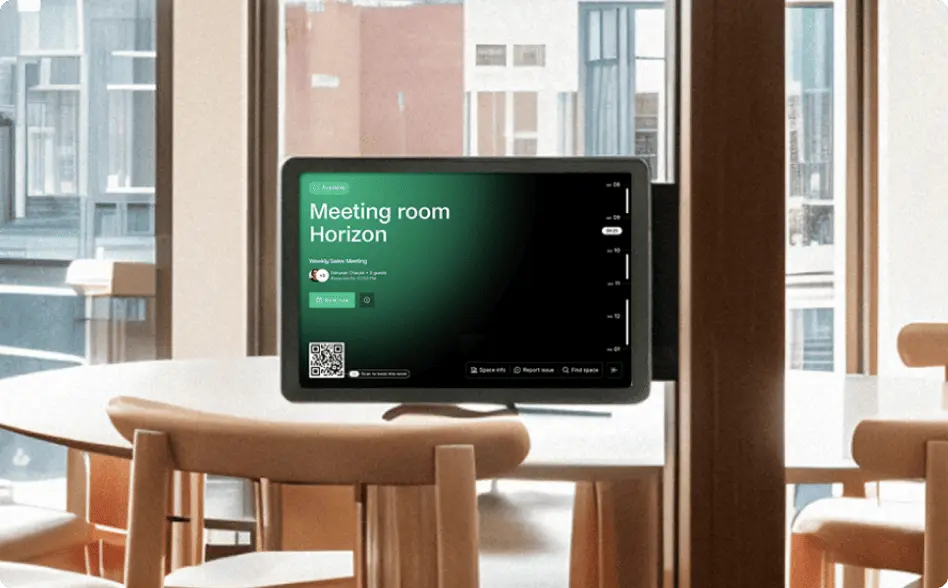
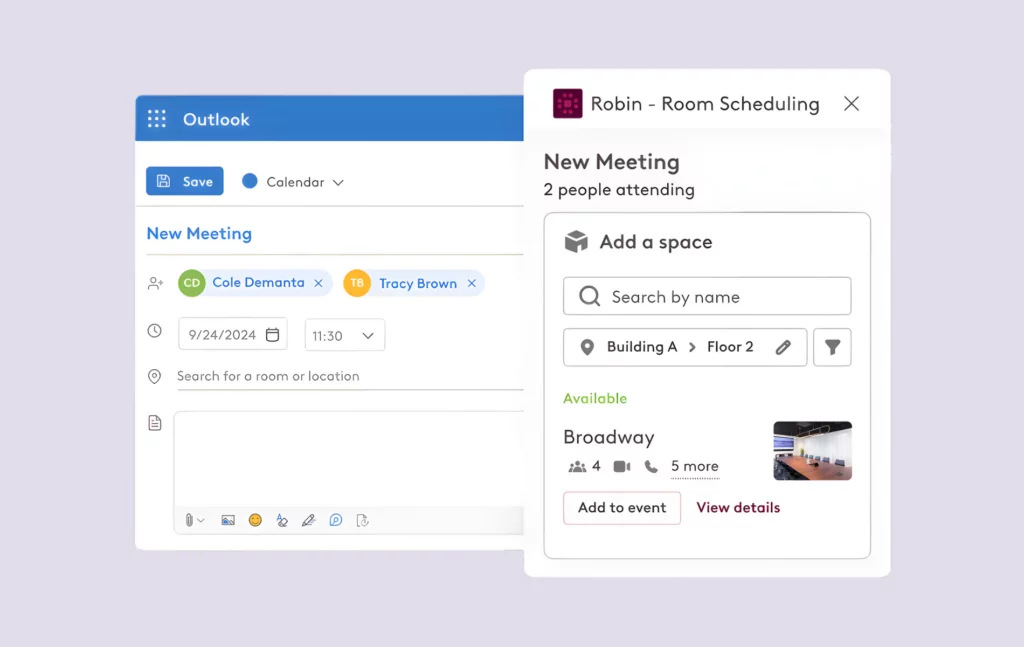
Meeting room booking works through the same interface, with calendar integrations keeping everything in sync. Users can book meeting rooms via tablet displays placed outside conference rooms, through the mobile app, or directly from their existing Google Calendar room booking or Outlook workflows.
Interactive floor plans let users visualize exactly where they’re booking. You can see which desks are available, filter by amenities, and spot where teammates are sitting before you commit to your space reservations.
Customizable booking rules are where Skedda really shines. The automation rules engine lets admins set specific permissions, booking windows, time limits, check-in requirements, and quotas for different user groups. This level of control helps teams control bookings without constant manual oversight.
Check-in functionality supports QR codes, mobile app check-in, or Wi-Fi presence detection. Miss your check-in window? A no-show protection system can automatically release your booking, solving the ghost booking problem that plagues most offices.
Workplace analytics provide insights into desk and meeting room usage, peak hours, and booking patterns. The data helps you understand how spaces are actually used. For a deeper dive into tracking office metrics, this workplace analytics guide covers the fundamentals.
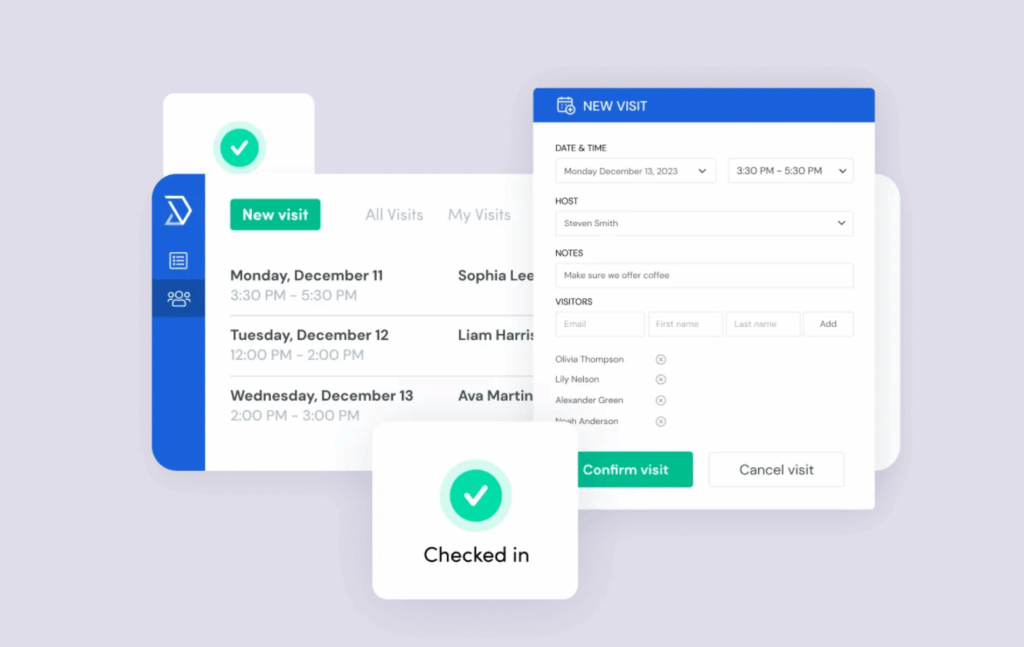
Visitor management rounds out the core offering, handling guest check-ins, host notifications, and digital visitor logs to keep your office secure.
Who Skedda is best for
Skedda finds its sweet spot with small to mid-market organizations looking for solid scheduling software without enterprise-level complexity or pricing. It’s particularly popular among non-profits and educational institutions, partly because of special pricing for qualified organizations.
Sports facilities, studios, and community spaces love Skedda too. The platform’s flexibility means you can manage court bookings, studio rentals, or equipment reservations with the same system designed for office spaces. If you need to manage multiple locations from a single account, Skedda handles that well.
What is Robin?
Robin positions itself as an AI-powered workplace management platform built for enterprise organizations. Founded in 2014 as a conference room scheduling app, the company has grown into a full-suite platform with more features for the future of work.
The platform makes clear it’s designed for organizations with 500 employees or more; specifically, those with at least 150 hybrid employees spread across multiple floors, offices, or buildings. This isn’t the tool for a 20-person startup.
Robin core features
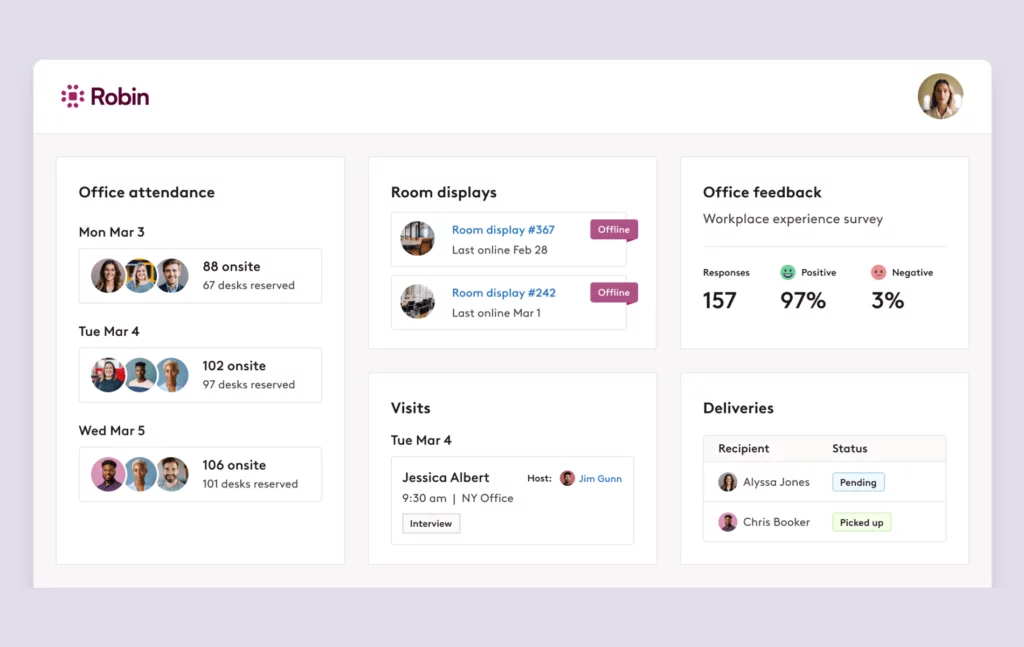
Desk booking and hot desking include AI-powered recommendations suggesting optimal desks based on who you’re meeting with, your typical preferences, and real-time availability. The service makes it easy for employees to find the right space. The office hoteling concept has become central to how Robin approaches flexible seating.
Room scheduling and displays go beyond basic room booking. Robin supports physical meeting room displays outside conference rooms and status boards in high-traffic areas. Users can sign up for rooms directly from these screens.
KPIs covering desk and room utilization, booking patterns, and no-show rates. The AI-powered forecasting helps predict future demand and connects data to real decisions.
Hybrid work scheduling features help teams coordinate which days they’ll be in the office together. The “who’s in” visibility makes planning collaborative work and events easier for everyone.
Office wayfinding guides employees through unfamiliar spaces, valuable for large campuses or organizations managing multiple locations.
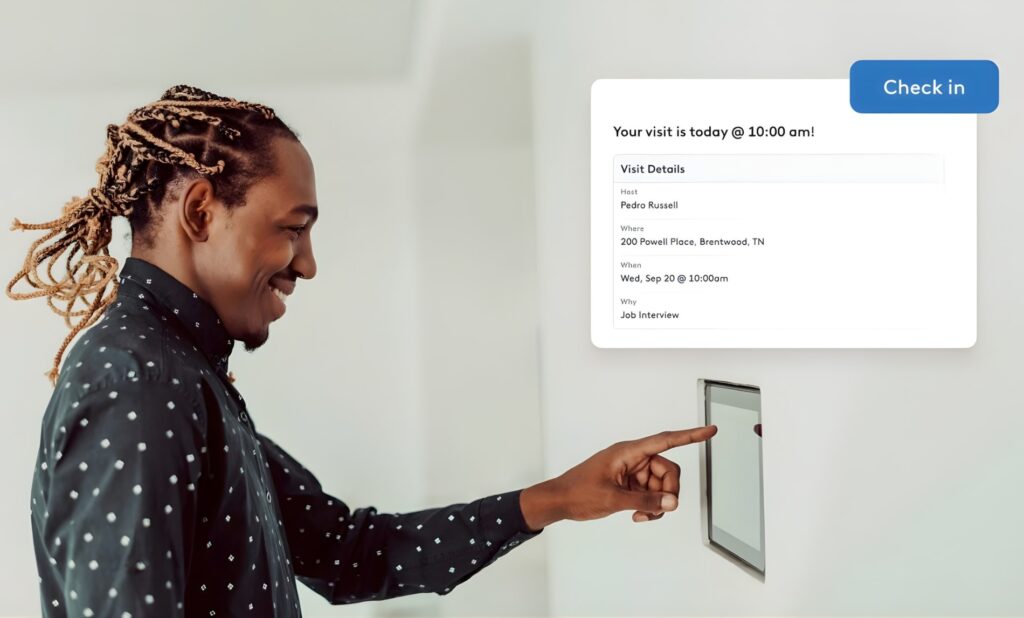
Visitor management handles guest pre-registration, compliance documents like NDAs, and host notifications. Kiosk displays only work on iPads, which can limit your hardware options.
Who Robin is best for
Robin serves mid-market to enterprise organizations with 500+ employees. Hybrid-first organizations benefit most from Robin’s scheduling features — when you have hundreds of people deciding independently when to come to the office, tools that show attendance patterns and help coordinate team days become genuinely valuable.
Companies focused on employee experience will appreciate Robin’s investment in UX polish and experience surveys. Organizations prioritizing deep analytics will find the 100+ KPIs and AI-powered forecasting useful for making data-driven decisions about space management. If workplace experience is part of your job to improve, Robin offers the data to back up your decisions.
Skedda vs Robin: Feature-by-feature comparison
Desk booking and hot desking
Skedda: ★★★★★ — Core strength with highly customizable rules. Want to limit certain desks to specific departments? Cap bookings per person per week? Require check-in within 15 minutes? Skedda handles it. Users can log in and book in just a few clicks.
Robin: ★★★★★ — Matches capability with nice UX and AI-powered recommendations. The platform suggests optimal desks based on your calendar and past preferences, making the booking process user-friendly for employees.
Room booking
Skedda: ★★★★☆ — Solid room bookings with strong calendar integrations. Supports tablet displays and syncs cleanly with Google Calendar and Outlook. The integration keeps all your room bookings in one place.
Robin: ★★★★★ — This was Robin’s original specialty. Physical room displays, status boards, and deep video conferencing integration create a seamless experience for managing meeting rooms.
Workplace experience analytics
Skedda: ★★★★☆ — Covers essentials: utilization rates, booking patterns, peak hours, no-show data. Enough for most mid-sized businesses to improve productivity and optimize their spaces.
Robin: ★★★★★ — 100+ KPIs and AI-powered forecasting. For organizations where real estate decisions involve significant dollars, this depth of data matters. Understanding desk occupancy patterns becomes much easier with these insights.
According to the Verdantix Hybrid Workplace Solutions Buyer’s Guide 2025, vendors are increasingly embedding AI-enabled features, and Robin leads here.
Customization and booking system rules
Skedda: ★★★★★ — Genuinely powerful rules engine with granular permissions, time-based restrictions, quotas, and automated behaviors. You can create rules that fit how your team actually works.
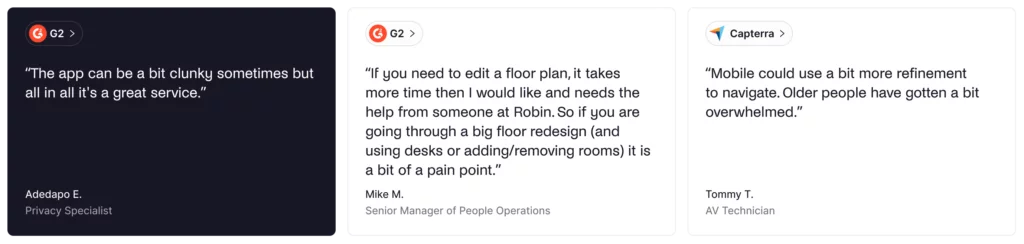
Robin: ★★★★☆ — Solid customization but less granular. Judging by some of the user reviews, floor plan edits require Robin support rather than self-service access for admins.
Visitor management
Skedda: ★★★☆☆ — Basic guest check-in, host notifications, and digital logs. Adequate for simple needs but lacks advanced service options.
Robin: ★★★★☆ — More robust with pre-registration workflows and compliance document collection. iPad-only kiosk limitation affects some setups. For organizations prioritizing this area, understanding visitor management system features helps clarify what to look for.
Integration ecosystem
Both platforms understand that booking software needs to connect with existing tools and apps in your tech stack:
Skedda integrates with: Microsoft 365 and Google Workspace (two-way calendar sync), Microsoft Teams and Slack, SAML SSO providers (Google, Microsoft, Okta), and SCIM for automated user provisioning.
Robin integrates with: Microsoft 365 and Google Workspace, Teams and Slack, Zoom, physical access control systems, HR systems like Rippling, and SSO providers including Okta and Azure AD.
Robin’s integration ecosystem is broader, particularly around hardware and enterprise systems. Skedda covers core collaboration tools well, but doesn’t extend as far into specialized enterprise systems.
Mobile app experience
Both platforms offer mobile apps for iOS and Android. Skedda’s application is functional and clean, offering self-service bookings from anywhere. Robin’s mobile experience is seemingly more polished, with location-based reminders and smooth calendar integration. But Robin’s mobile app comes up as a weaker spot in some reviews.
Skedda vs Robin: Pricing comparison
Skedda pricing
Skedda uses flat tiers based on bookable “spaces” (desks, rooms, parking spots—any resources you can reserve). All plans include unlimited users and bookings:
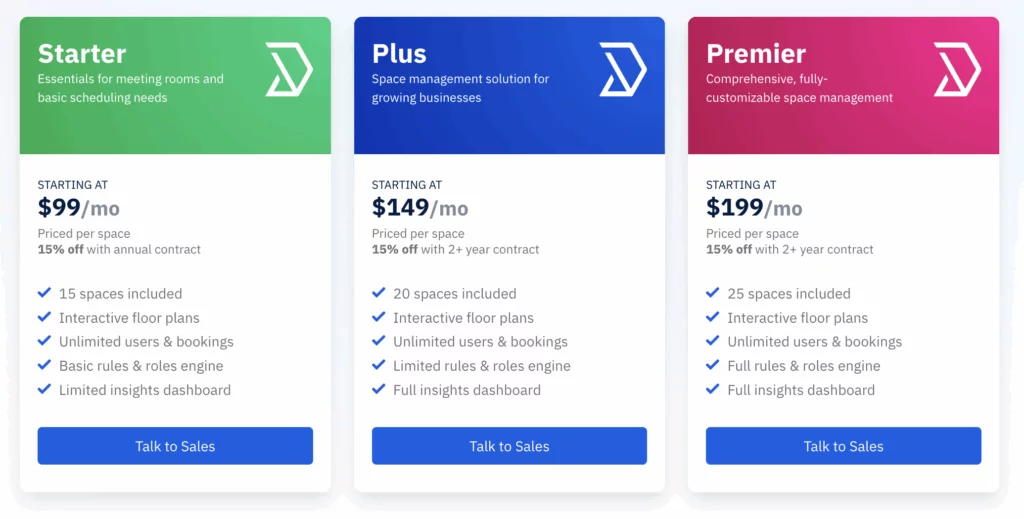
Visitor Management is a $99/month add-on available on all tiers. SSO is included across plans. Larger organizations can access expanded tiers (Plus at $249/month for 35 spaces, Premier at $349/month for 45 spaces) or custom Enterprise pricing. For a broader comparison of desk booking software pricing models, the differences between per-user and per-resource approaches are significant.
Robin pricing
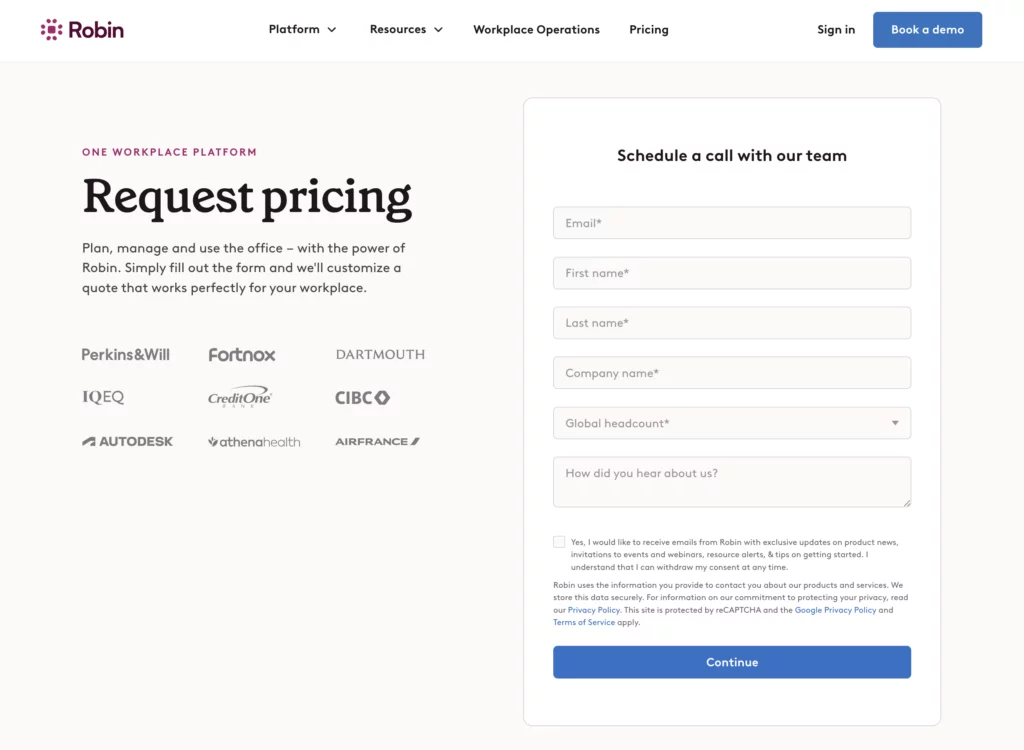
Robin uses custom, quote-based pricing, and it’s mainly built for big organizations (usually 500+ employees). Because pricing isn’t published, you’ll need to talk to sales to get an exact number.
Based on third-party pricing data and product research, many teams seem to start around $5,000 per year (roughly $419/month), with pricing often working out to about $40 to $45 per desk per year or around $70 per user per year, depending on your setup and volume.
Value considerations
The pricing gap is substantial. A 500-person organization could pay under $200/month with Skedda versus several thousand with Robin.
But raw price comparison misses important context. Robin’s deeper analytics, AI features, and enterprise integrations may justify the premium for organizations where real estate decisions involve significant dollars and employee experience directly impacts retention.
For smaller teams, Skedda delivers more features per dollar. For enterprise organizations, Robin’s premium pricing makes sense.
Skedda vs Robin: User reviews and ratings
What users say about Skedda
Skedda is known for being easy to learn and quick to roll out. The booking experience is simple and clean, so most teams can get started without much training. Reviews often call it intuitive and easy to use.
Support is another big plus. Many users say the support team is fast, knowledgeable, and genuinely helpful when something comes up.
Skedda also offers a relatively long free trial, which makes it easier to test before committing. Just keep in mind that some advanced features are not included in the trial.
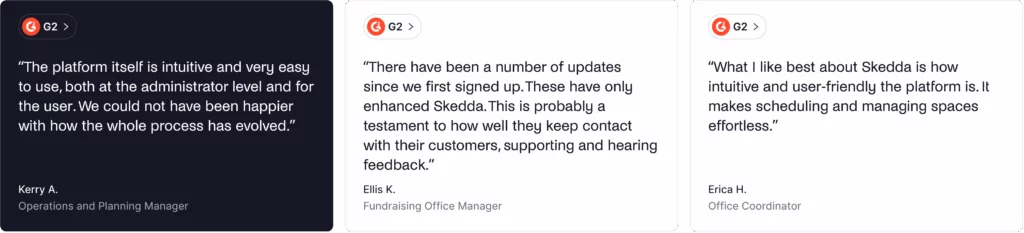
But, as teams grow, pricing can get tricky. Skedda charges per “space,” and plan limits can be easy to hit as you add desks or other bookable resources. That can lead to sudden jumps in cost, and some users mention that pricing feels steep at scale.
Integrations get mixed feedback. Calendar sync is generally fine, but Slack and Microsoft Teams can feel less seamless than people expect. Some users also mention issues with Outlook syncing.
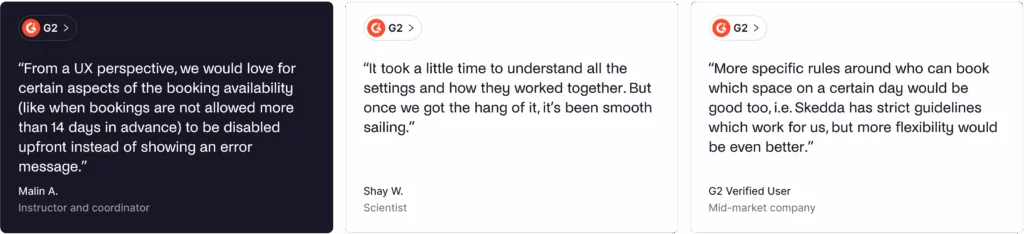
And while Skedda works well for everyday booking, admin tasks can feel a bit clunky. A few reviewers say the interface is not as smooth or modern as newer tools, especially when you’re doing a more complex setup. Some also want more flexibility in certain booking rules and custom settings.
What users say about Robin
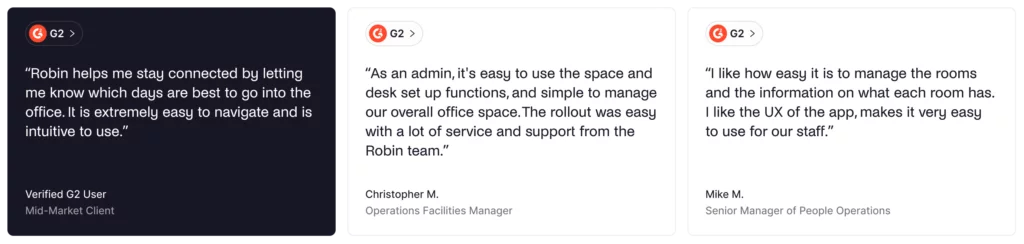
Based on reviews, Robin gets a lot of praise for its polished look and feel, and for how easy it is for employees to book desks and rooms. People often mention that it’s simple to find coworkers on the floor plan, add visitors, and get around the app once they’ve learned the layout. Many also say the desktop and mobile experience feels modern and smooth.
Admins tend to like Robin for the same reason. It has a lot of settings, booking rules, and controls, which can really help keep a busy office organized.
The flip side is that all that power can feel like a lot. Some admins say it takes time to learn because there are so many options. Others mention that the platform can feel a bit “overstuffed,” with small bugs, dashboards that do not always match reality, and settings that sometimes behave in unexpected ways.
The mobile app also comes up as a weaker spot in some reviews. A few users describe it as clunky or inconsistent, even if it still gets the job done.
Another common frustration is floor plan updates. Making bigger changes can be time-consuming, and some teams say they need Robin’s help to rework maps. If your office is going through renovations or frequent layout changes, that can turn into real extra work.
Support feedback is mixed, too. Some customers are happy, but others mention slower response times or a bit of friction when they need help. And when a tool is this expensive and complex to roll out, people naturally expect onboarding and support to be a strong point.
Skedda vs Robin: Pros and cons
Skedda pros and cons
🟢 Pros:
- Highly customizable booking rules
- Good value for money
- User-friendly interface
- Versatile across space types
- Quick setup
🔴 Cons:
- Analytics not as deep as enterprise competitors
- Visitor management is less strong
- Less suitable for very large enterprises
Robin pros and cons
🟢 Pros:
- Excellent booking UX with AI recommendations,
- Strong employee experience features
- Deep analytics with 100+ KPIs
🔴 Cons:
- Designed for 500+ employees
- Higher price point
- Floor plan edits require support
Best alternatives to Robin vs Skedda
Archie
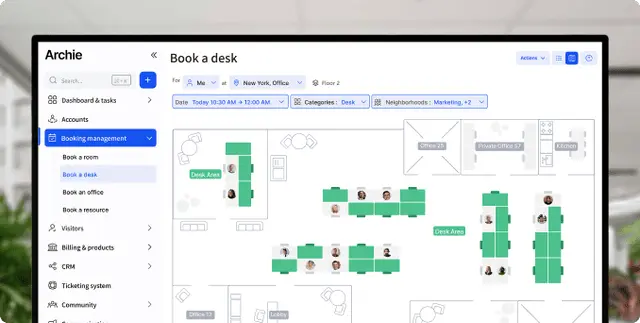
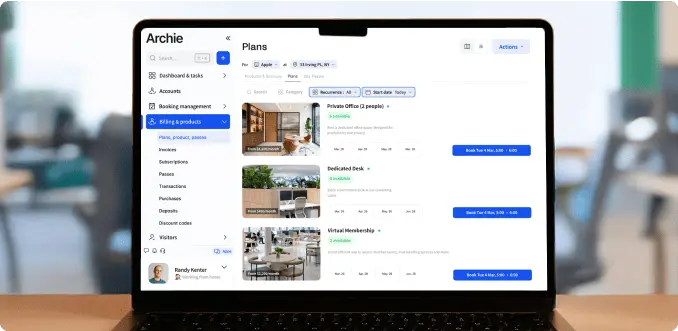
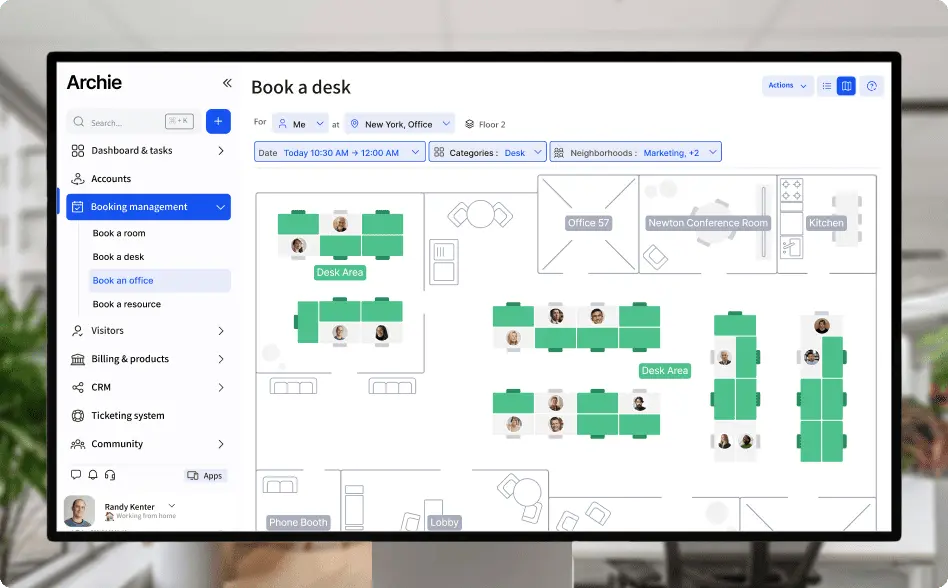
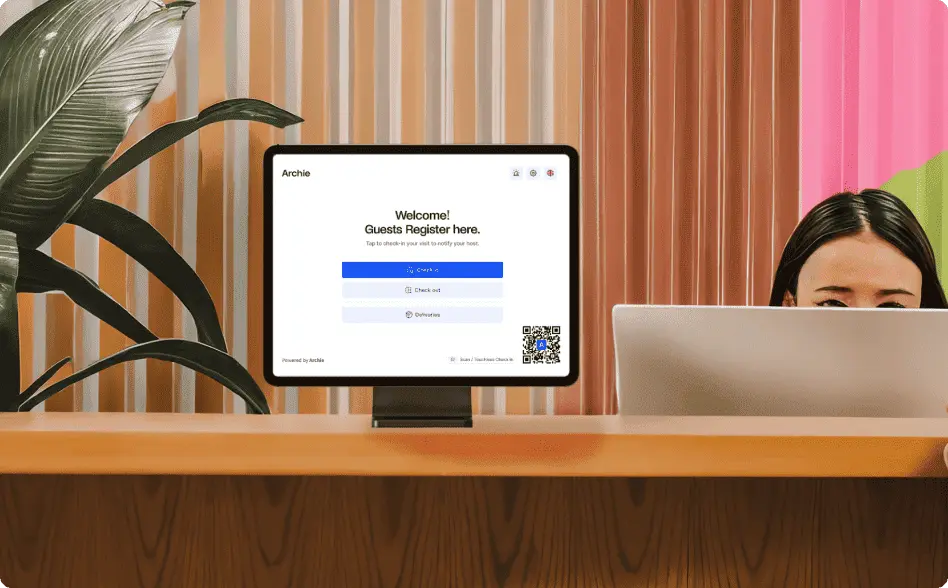
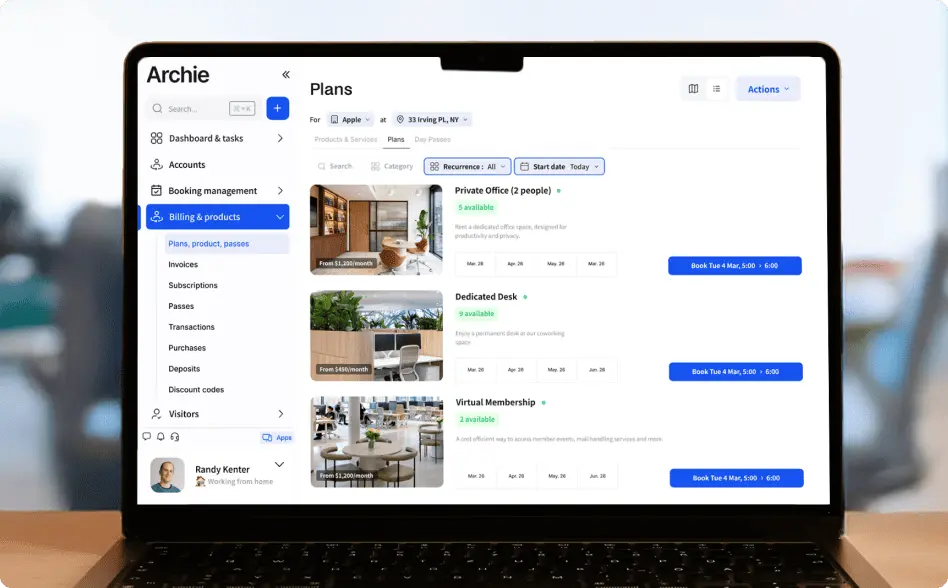
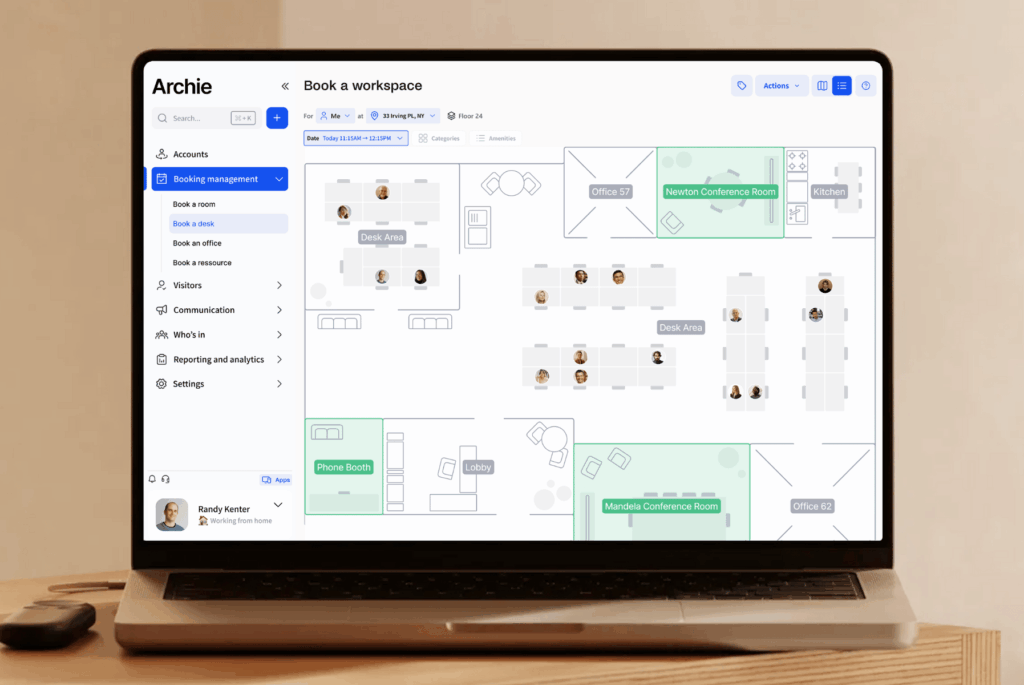
Archie delivers clean desk booking and room booking through interactive floor plans, a polished mobile app, and integrations with Google Calendar, Outlook, Slack, and Teams (just to name a few). The occupancy analytics track office occupancy, team attendance, most-used resources, and no-show rates; data that helps you understand how people actually use your spaces.
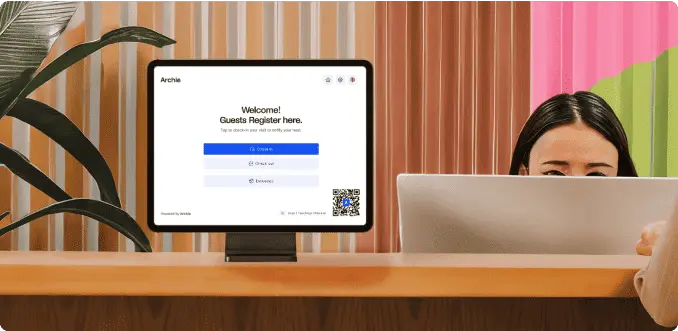
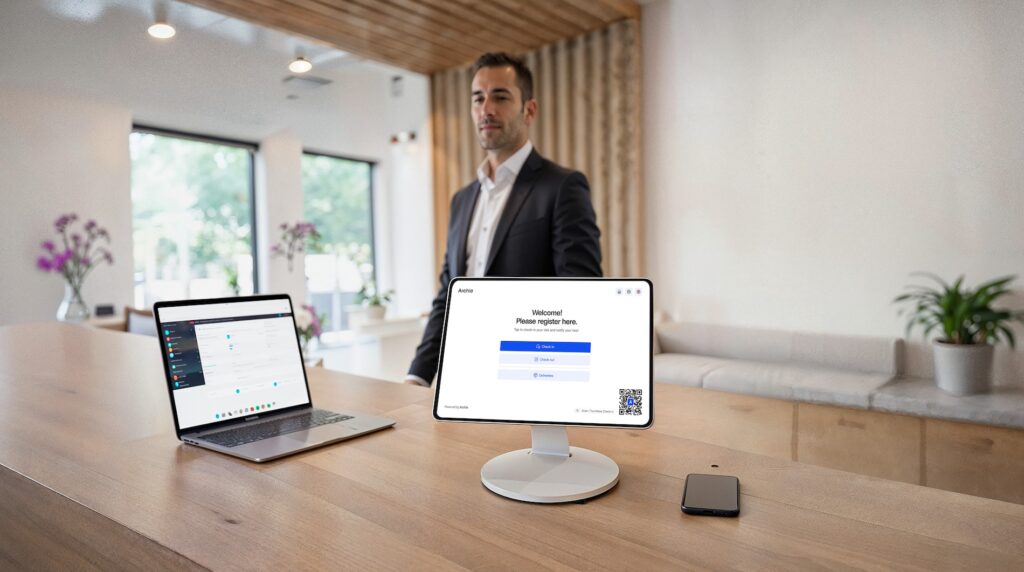
The visitor management system includes self-service kiosk check-in (works on any tablet, not just iPads), host notifications, and customizable workflows for different visitor types, be it guests, contractors, or deliveries.
What sets Archie apart is the combination of simplicity and completeness. Users consistently rate it highly for ease of use, both for employees booking spaces and admins managing the system.
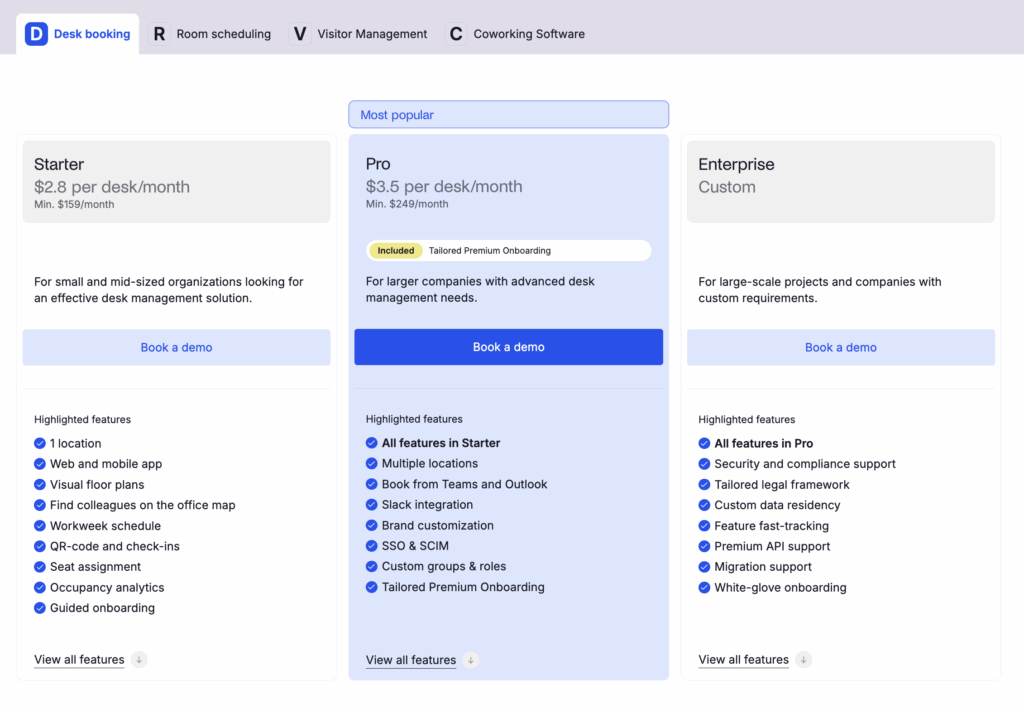
It also takes a different approach to pricing: charging per resource (desk or room) rather than per user. This makes it particularly cost-effective for businesses with many employees but limited physical spaces.
Best for: Hybrid enterprises and mid-sized companies wanting comprehensive space management without enterprise complexity or pricing. Organizations that want transparent, resource-based pricing rather than per-user models.
Other alternatives to Skedda vs Robin
- Envoy — Workplace booking with a strong visitor management focus with per-user pricing for multiple offices.
- OfficeSpace — Enterprise-grade space planning for organizations frequently reconfiguring layouts.
- Eptura — Comprehensive workspace management targeting large enterprises with complex needs.
💡 For those specifically exploring options beyond Skedda, this Skedda alternatives comparison covers pricing and features in depth. Similarly, organizations considering moving away from Robin can explore Robin alternatives to find the right fit.
Archie vs Skedda vs Robin: which should you choose?
Choose Archie if...
You want resource-based pricing, a clean user experience, solid visitor management, transparent pricing without hidden add-ons, quick implementation, and responsive support. It’s ideal for teams that want to manage bookings without complexity. For a direct feature comparison, the Archie vs Skedda and Archie vs Robin pages break down the differences.
Choose Skedda if...
You’re a small to mid-sized organization, budget is a primary concern, you manage diverse space types across multiple offices, or you’re a non-profit or educational institution.
Choose Robin if...
You have 500+ employees, need deep analytics and AI forecasting, and prioritize employee experience and adoption.
Archie vs Skedda vs Robin: Comparison table
Feature | Archie | Skedda | Robin |
|---|---|---|---|
Best for | Mid-size to large offices | SMBs, non-profits | Enterprises 500+ |
Desk booking | ★★★★★ | ★★★★★ | ★★★★★ |
Room booking | ★★★★★ | ★★★★★ | ★★★★★ |
Visitor management | ★★★★★ | ★★★★☆ | ★★★★☆ |
Pricing model | Per resource | Per space (tiers) | Custom pricing |
Starting price | $159/month | $99/month | ~$419/month |
G2 rating | |||
Final verdict
Skedda delivers great value for small to mid-sized organizations with straightforward space reservation needs and tight budgets. The platform’s strength lies in its customizable booking rules and versatility across different types of spaces, from corporate offices to sports facilities to educational institutions.
Robin serves enterprise organizations willing to pay premium prices for deep analytics, AI features, and polished employee experience. If you have 500+ employees and need to make data-driven decisions about millions of dollars in real estate, Robin’s investment in workplace intelligence pays off.
If you’re a mid-sized hybrid workplace that’s outgrown Skedda’s capabilities but can’t justify Robin’s pricing, alternatives like Archie fill that gap nicely, offering comprehensive features without complexity or hidden costs.
The right choice depends on your organization’s size, budget constraints, and how much you need from workplace analytics. Still, you should take advantage of the Archie demo.
Skedda vs Robin FAQs
Skedda targets small to mid-sized organizations with flexible, budget-friendly space management software. Robin focuses on enterprises with 500+ employees, offering deeper analytics and AI features at premium pricing.
Both rate highly on desk booking; this is core functionality for each platform. Skedda offers more granular booking rules; Robin provides better AI recommendations.
Both score well for being user-friendly. Skedda wins on admin simplicity; Robin wins on end-user experience polish.
Skedda is significantly more affordable ($99/month vs ~$419/month, according to third-party sources).
Sources
- Competitor websites
- G2 & Capterra reviews
- Product research
- Vendr.com pricing estimates
- Verdantix Hybrid Workplace Solutions Buyer’s Guide 2025

Berenika Teter
Archie's Content Manager, fueled by filter coffee and a love for remote work. When she’s not writing about coworking spaces and hybrid workplaces, you can probably find her exploring one.