







Optix is coworking space management software known for its mobile-first member experience and a powerful workflow automation builder you’d usually find hidden behind “custom pricing” in enterprise tools.
But does that make it the right choice for you, or should you look at other coworking software alternatives?
In this guide, we’ll walk through when Optix is a great fit and when it might make more sense to choose a coworking software alternative.
💡 TL;DR:
Optix is one of the best coworking software options for operators who want a mobile-centric experience, a white-label app, and intuitive workflow automation tools. It is used by small and mid-sized spaces, and can also support multi-location operations that need modern software with strong support.
If you want a better balance between mobile and web, deeper built-in features like e-signatures, or a more inclusive pricing model, it is worth looking at Optix alternatives like Archie.
Optix software vs alternatives
What is Optix?
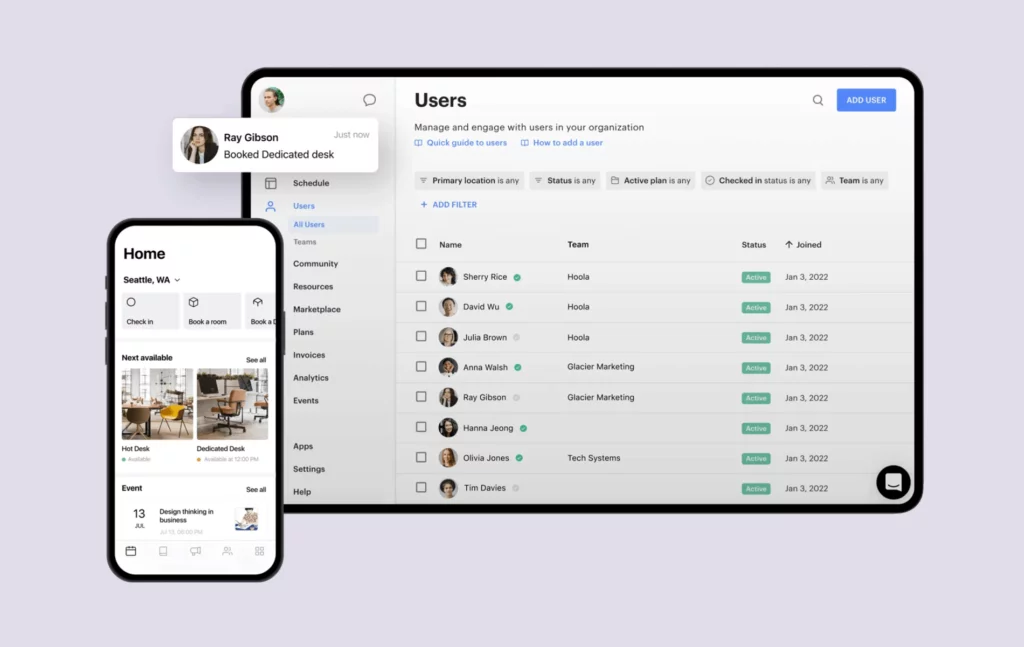
Optix was started by ShareDesk in 2015. It’s one of the first coworking platforms that was built with a mobile-first approach. Basically, the company pioneered mobile apps for coworking members and is still delivering a polished, user-friendly member experience.
Since then, Optix software has grown into an all-in-one coworking space management platform by consistently implementing customer feedback. It’s designed for operators who want a complete solution that handles bookings, billing, member management, and community engagement through a modern UI, while maintaining its mobile-first focus.
The platform offers both a member-facing mobile app and an admin web dashboard, with the ability to white-label the mobile experience under your own brand.
What you get with Optix
- Mobile-first member app: Polished iOS and Android apps for members to book spaces, pay invoices, and become part of the community.
- White-label mobile app: Custom-branded apps for iOS and Android with your logo and colors.
- Workflow automation: Visual automation builder for member onboarding, offboarding, and reminders (and all the boring operations that take up half your day).
- Membership management: Plans, contracts, renewals, and member profiles.
- Automated billing: Recurring invoices, payment processing via Stripe, usage-based charges.
- CRM and communications: Member directory, messaging, announcements, and email campaigns.
- Community features: Event management, member directory, community feed, and perks.
- Visitor management: Guest pre-registration and check-in workflows.
- Analytics and reporting: Occupancy reports, revenue tracking, check-in heatmaps.
- Resource booking: Desks, meeting rooms, shared spaces, and any other resource you have, with real-time availability.
Optix pricing
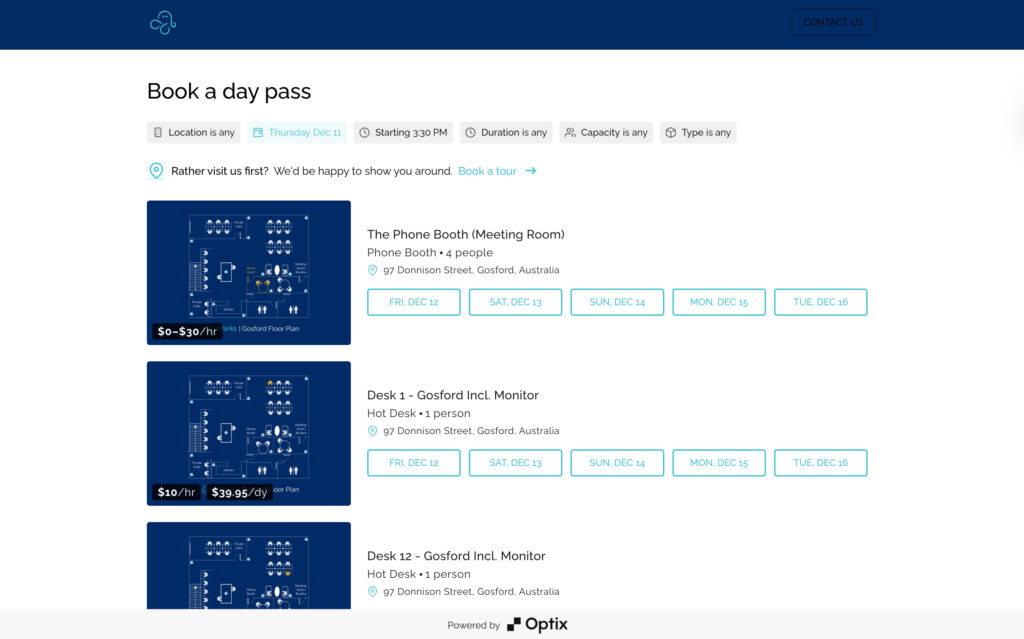
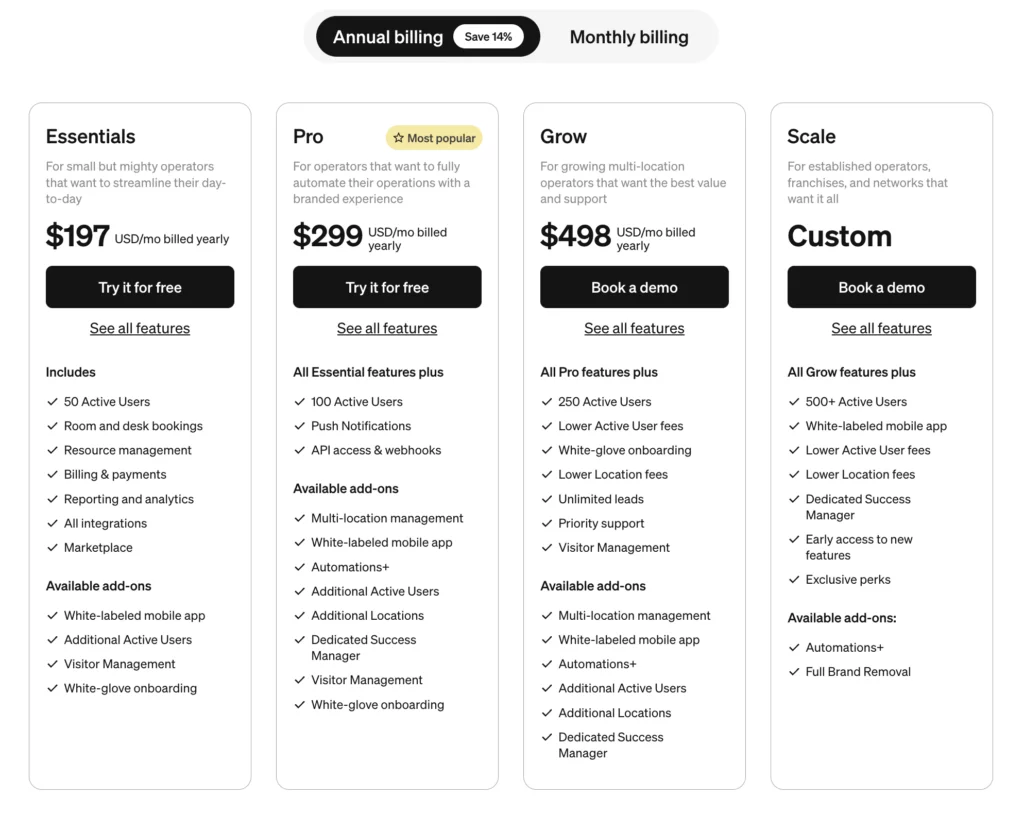
Optix coworking software offers four main pricing tiers: Essentials, Pro, Grow, and Scale. All plans include core features like resource booking, analytics, member management and engagement, mobile apps, automated billing, and basic support.
- Essentials: $197/month when billed annually (50 users + 1 location included)
- Pro: $299/month when billed annually (100 users + 1 location included)
- Grow: $498/month when billed annually (250 users + 1 location included)
- Scale: Custom pricing
The main differences between plans come down to the features included and the number of members, locations, and automations supported. Optix does not clearly define what an “active user” means, though, so it’s worth confirming the exact rule with their team, especially if you are comparing costs across tools.
On the Essentials and Pro plans, for example, visitor management costs an extra $42/month, while it’s included in Grow and Scale. Other features, like the white-label app, additional payment gateways, and premium automation workflows, are charged extra.
Each plan lets you add extra users for a per-member fee. On Pro, you can add up to 2 extra locations at $85/month each, and on Grow you can add up to 5 extra locations at $68/month each. The Scale plan removes both member and location limits.
Full brand removal is only available on Scale, for a one-time fee of $1199.
What’s great about Optix
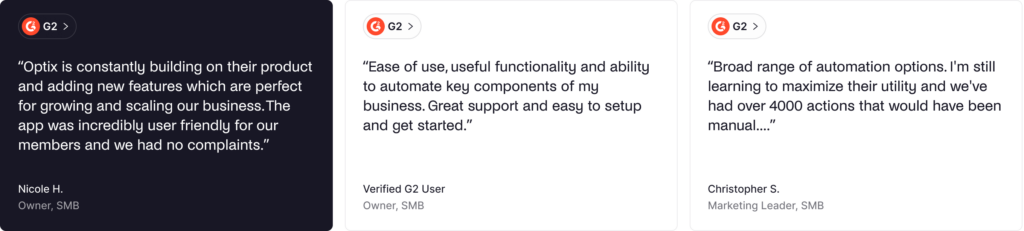
🟢 Great mobile experience: As expected, most reviews from coworking operators often highlight how easy Optix is for members to use. The UI is modern and minimal, and the overall experience is usually praised by reviewers.
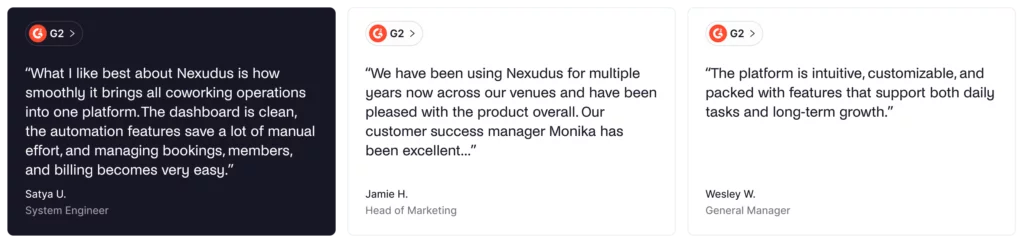
🟢 All-in-one functionality: Operators appreciate that Optix offers an all-in-one solution. Most software does this, sure, but Optix combines all the tools really well and has integrations for what isn’t a built-in feature (yet?). One reviewer perfectly describes this: “Easy to use dashboard experience, with every mainstream integration that you’ll ever need to operate any space. All aspects of the dashboard have as much depth as you’ll need that any other CRM and management dashboard simply cannot compare when it comes to being in all-in-one solution, every point of operation is married perfectly”.
🟢 Powerful automation: The automation features also get a ton of positive mentions. It is one of Optix’s flagship features after all, with operators reporting saving time through automated invoice reminders, emails, and other workflows. For instance, one operator running 3 locations with 400+ members said: “Broad range of automation options. I’m still learning to maximize their utility and we’ve had over 4000 actions that would have been manual (sending invoice requests, follow-up messages, changing user types based on behaviour, sending tips and instructions for bookings)”.
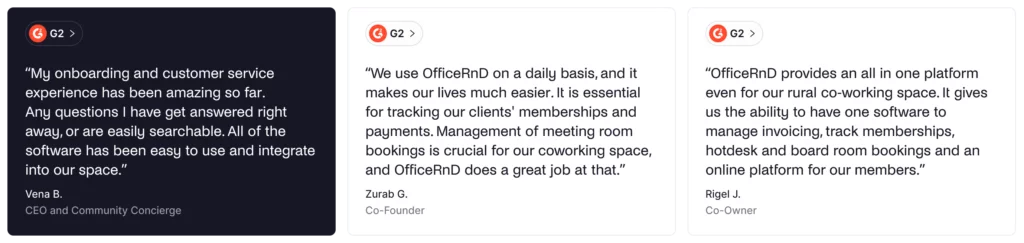
🟢 Support & Onboarding: The customer support often gets excellent marks. Many Optix reviews mention the support team’s responsiveness and willingness to listen. According to users, support questions are typically answered within minutes, and the Optix team often goes above and beyond. Here’s what one operator had to say: “The onboarding team and overall service team are amazing. Any time we had a question, they responded quickly and were beyond helpful”.
What could be improved
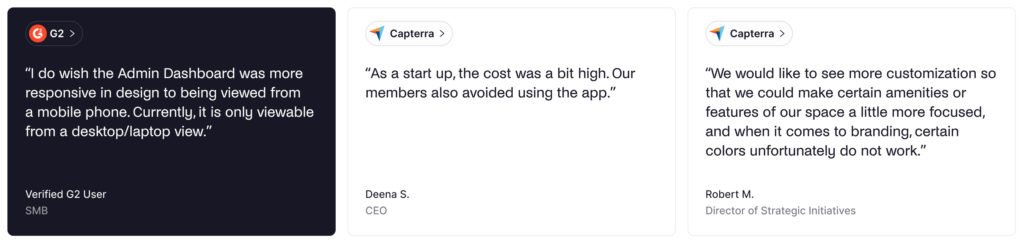
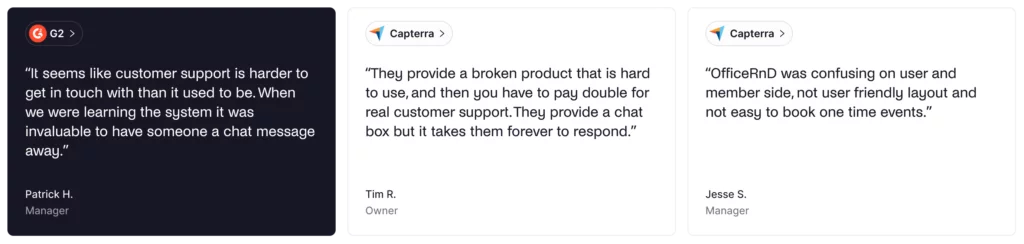
🔴 Web vs Mobile experience: Optix’s strong focus on the mobile app can be a downside for those members who “live on their laptop”. Also, on the admin side, Optix only provides a web dashboard, leaving the mobile experience to members only. As one operator puts it: “Wish there were a little more offered through web widget”, or “The app doesn’t support some features needed as admin”.
🔴 Pricing and add-ons: Cost is occasionally mentioned as a con. Particularly for smaller spaces and startups on a tight budget, Optix’s pricing “isn’t the cheapest” solution. One operator said, “As a start-up, the cost was a bit high”.
🔴 Limited customization: While Optix offers a great white-label mobile app, there are some complaints about the depth of the customization. Most Optix reviews that mentioned this issue did note, however, that it’s not the end of the world. Here’s what one reviewer wrote: “We would like to see more customization so that we could make certain amenities or features of our space a little more focused, and when it comes to branding, certain colors unfortunately do not work… but otherwise not much to dislike about”.
🔴 Fewer native integrations than competitors: Compared to some competitors, Optix coworking software relies on Zapier for many third-party connections. Platforms like OfficeRnD or Nexudus have a long list of direct native integrations; Optix covers the essentials in-house and has been steadily adding integrations, but primarily counts on Zapier to achieve similar breadth.
💡 Bottom line: Optix is an excellent choice for coworking operators who want a modern, mobile-first platform with powerful automation and strong support. If you need a more robust web experience for members, want built-in e-signatures, or find the add-on pricing adds up quickly, Optix may not be the perfect fit.
Luckily, there are several strong Optix alternatives to consider.
What's the best alternative to Optix?
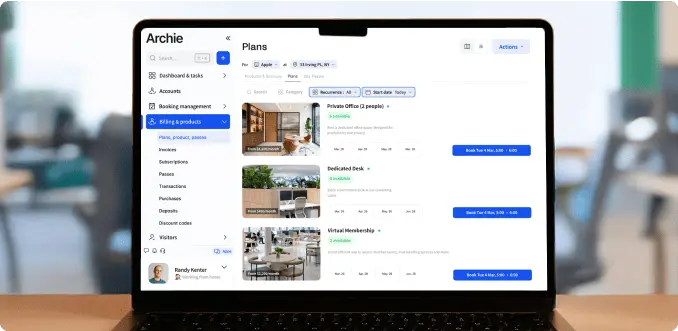
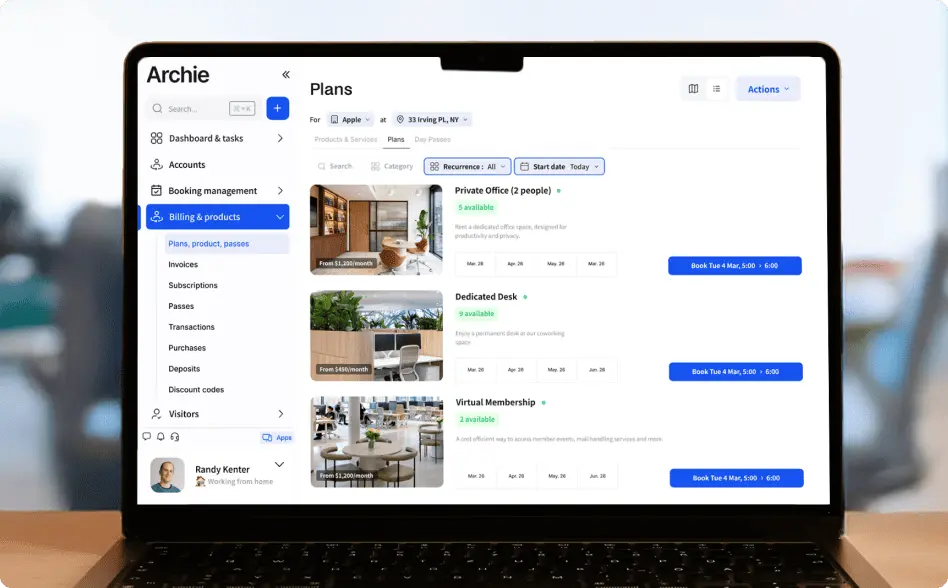
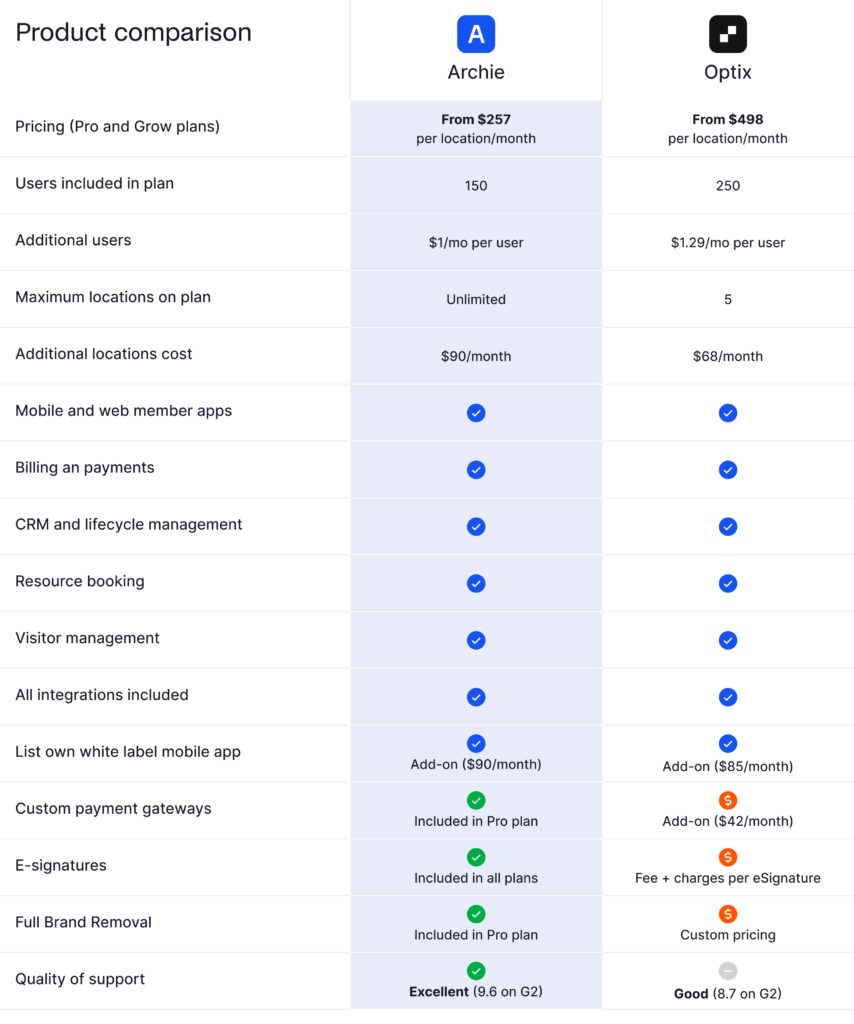
For most mid-sized coworking spaces and growing operators, Archie is the best alternative to Optix. It provides the same core coworking management features, including space booking, membership management, automated billing, and community tools.
On top of that, though, Archie offers built-in e-signatures (Optix has that capability only through integrations and charges per signature), includes visitor management at the Pro tier (you’ll have to pay extra for it on Optix’s basic plans), and has a more balanced approach between mobile and web experiences.
While Optix is great in its mobile-first design and visual automation, Archie delivers a complete platform with fewer pricing add-ons required, making it easier to predict costs as you scale.
Optix alternative #1: Archie
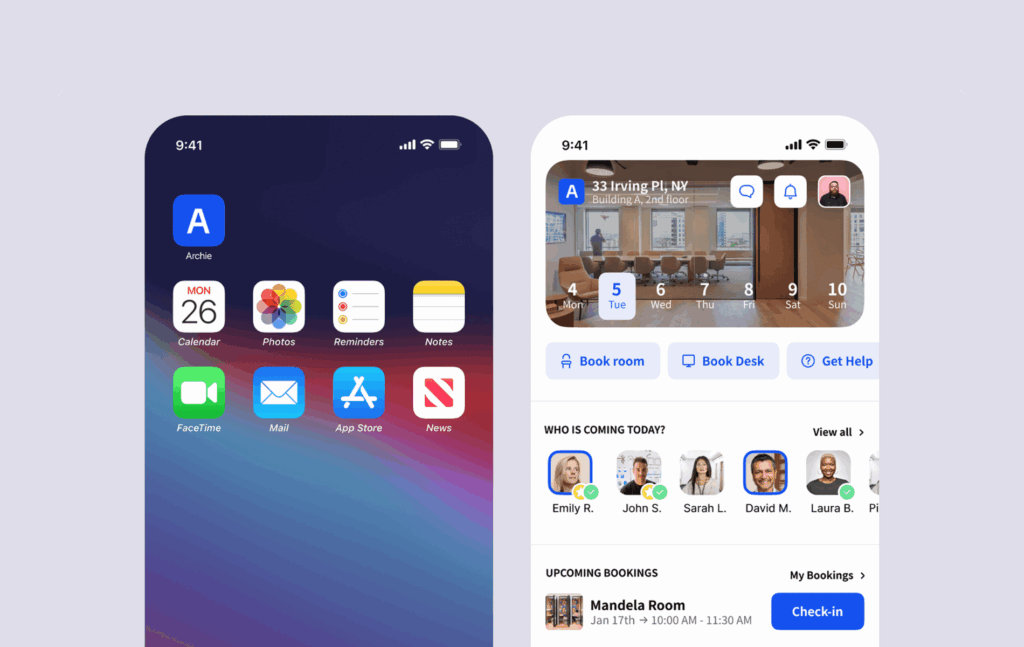
Archie Coworking is an all-in-one coworking space management platform that offers all the core features you need to run your space. Membership management, space booking, billing automation, and visitor management are all part of one system working well on both web and mobile.
Plus, Archie focuses on providing a modern member experience while including most of its features in the base plans, so you don’t have to stack on add-ons.
What you get with Archie Coworking
- Cross-platform member experience: iOS and Android apps plus a full-featured web portal for members who prefer desktop.
- Automated billing: Recurring invoice reminders and automated payments with custom billing terms and multiple payment methods and providers.
- Built-in e-signatures: Native digital signature tools for membership contracts and agreements, no third-party integrations required.
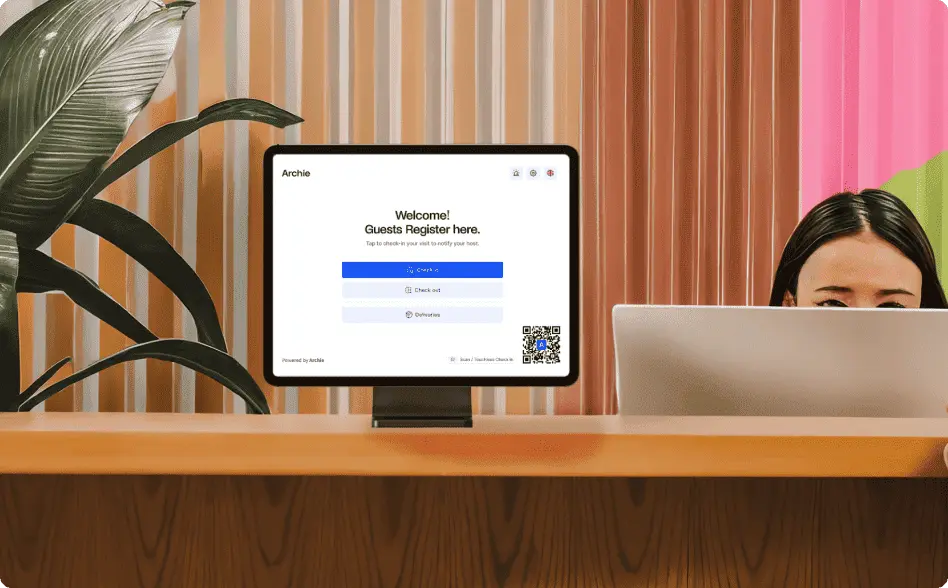
- Visitor management: Pre-registration, QR check-in, badge printing, host notifications, and visitor logs included in the Pro plan.
- Community features: Custom profiles, community feed, member directory, and chats, as well as perks and discounts.
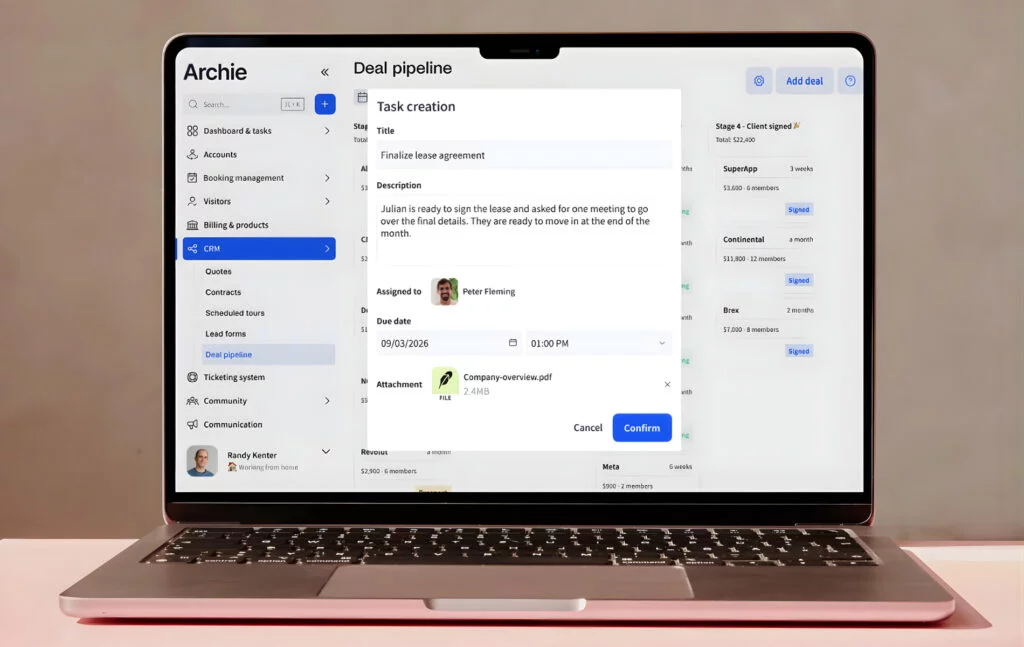
- Coworking CRM: Day passes, custom plans, and lifecycle management.
- White-label domains: Custom URLs for member portals included in the Pro plan, with full brand removal available. A white-label mobile app is an add-on.
- Analytics and reporting: Revenue reports, occupancy analytics, who’s on site, booking patterns, and member insights.
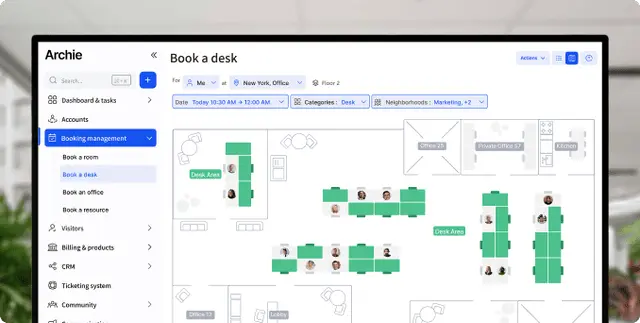
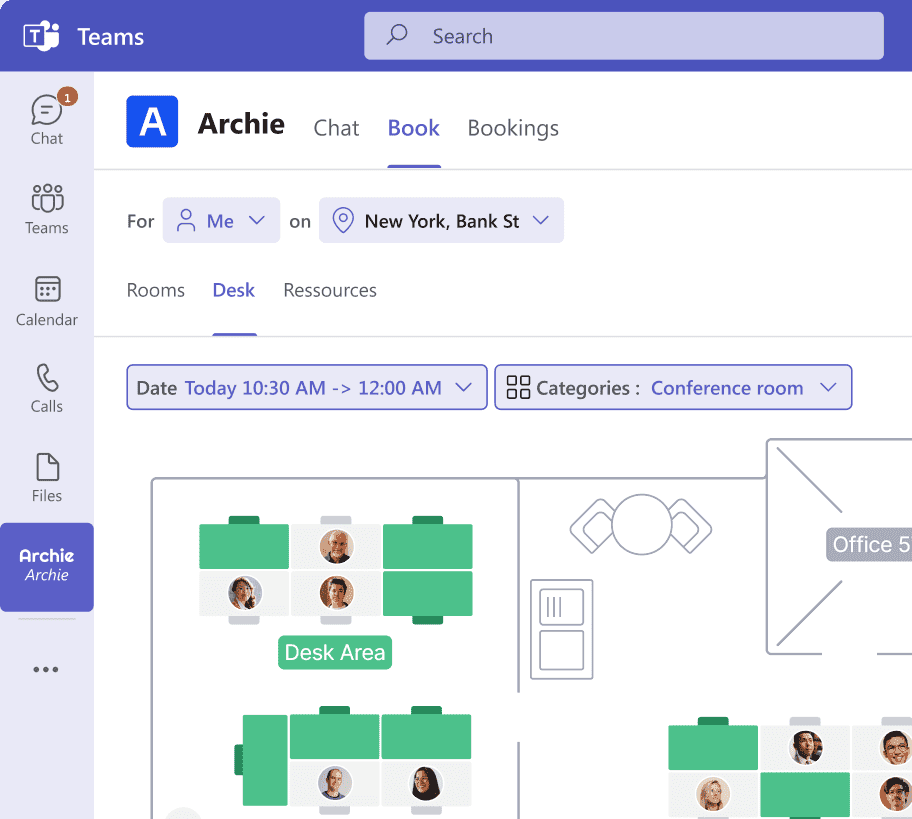
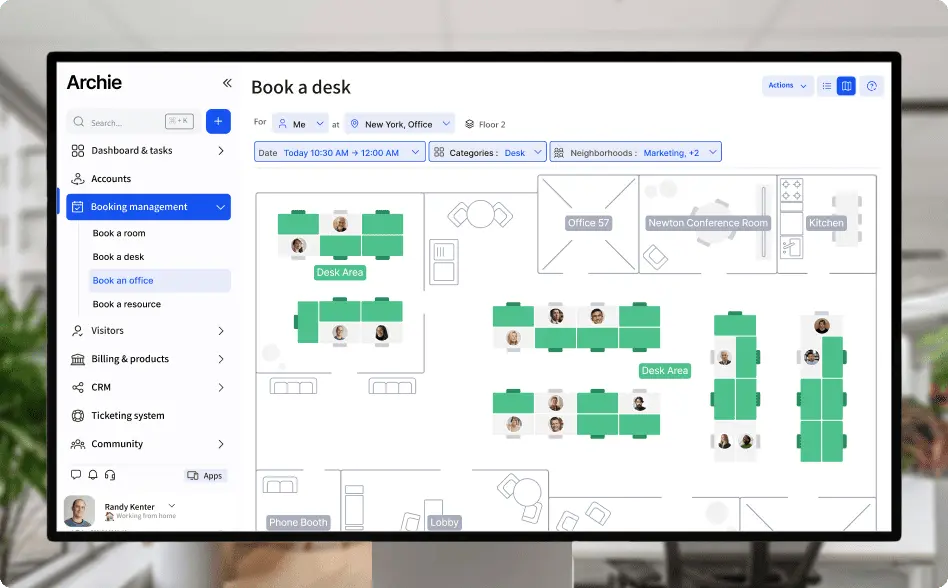
- Space booking: Meeting rooms and desks can be booked from the calendar, the interactive floor plans, or via third-party integrations.
How much does Archie cost?
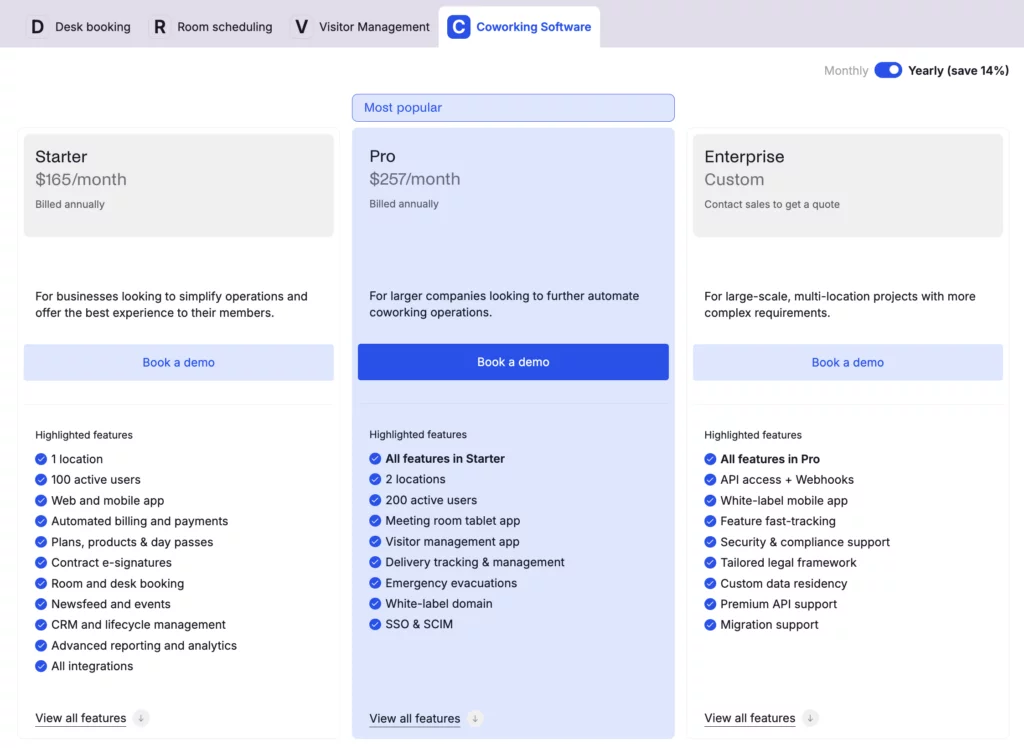
Archie Coworking has two main pricing plans you can choose from. If billed annually, they’ll cost you:
- Starter: $165/month
- Pro: $257/month
- Enterprise: Custom pricing
Starter has all the core features you’ll need and allows you to run 1 location with up to 100 members, while Pro comes with extras, like a white-label domain and visitor management, and allows you to run up to 2 locations with up to 200 members.
Additional location costs start at $90/month, and each additional 50 members costs $50/month.
An active user is someone who books something (like a desk, meeting room, or private office) or is on a subscription plan. Visitors and event attendees do not count, so you only pay for people who actually use the platform. If the same person is added to multiple locations, they still count as just one user.
Who’s Archie best for?
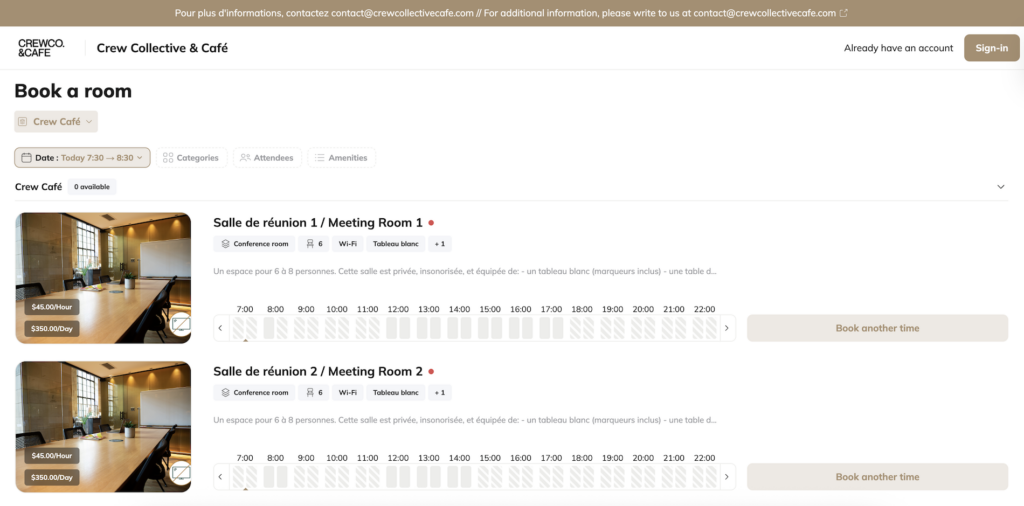
Archie is best for mid-sized coworking spaces and growing operators who want a complete platform without the complex UI and complicated pricing plans that include a lot of add-ons.
If you need a good balance between mobile apps and a web experience for your members and admins, Archie has got you covered. Plus, if you want features, like built-in e-signatures and visitor management, the platform offers both within its two main plans.
Archie Coworking limitations
Archie doesn’t offer a visual workflow automation builder as Optix does. While the platform automates most core operations, such as billing, booking confirmations, and member communications, you won’t get the same level of built-in custom automation sequencing.
Optix alternative #2: Spacebring
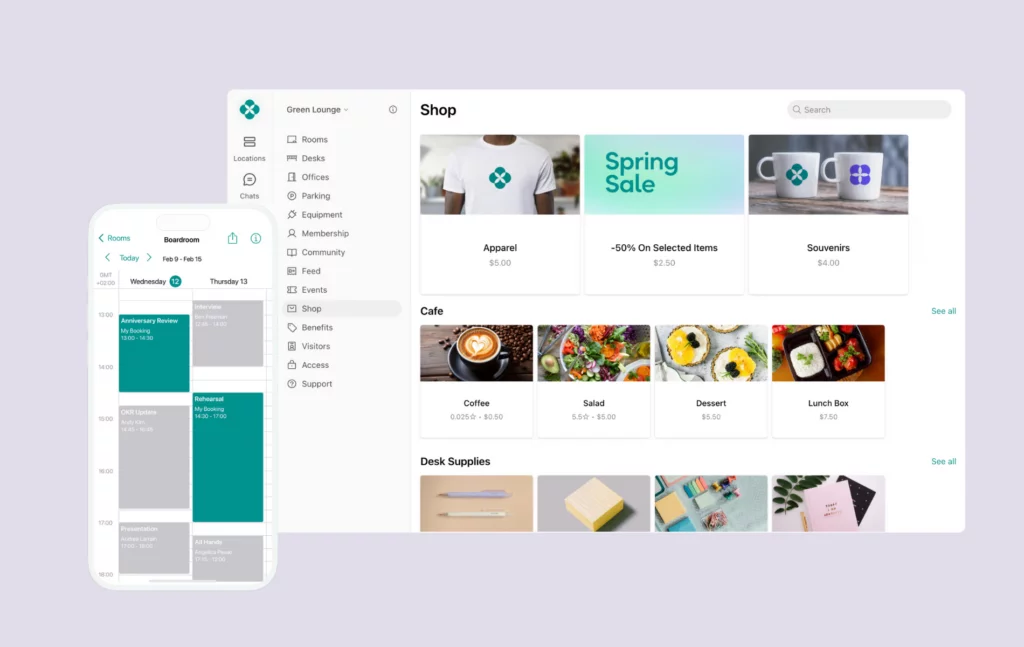
Spacebring is a coworking management platform focused on delivering a great member experience and keeping people engaged. It has become one of the top choices for spaces outside North America, especially in Europe, thanks to its strong multi-language support and user-friendly interface.
Spacebring covers the full range of coworking operations, including bookings, billing, CRM, and community management. The platform also comes with a custom domain and white-label member portal across all of its pricing plans.
What you get with Spacebring
- Full web and mobile experience: Comprehensive web portal for members plus iOS and Android apps.
- Multi-language support: Interface available in multiple languages.
- Membership management: Plans, contracts, invoices, and member profiles.
- Automated billing: Recurring charges, built-in discounts, and contracts.
- Community features: Member directory, messaging, event management, and community feed.
- Access control integrations: Native integrations with Kisi, Salto, and other systems.
- CRM tools: Member communications and lifecycle management.
- Analytics: Booking reports, revenue tracking, occupancy data.
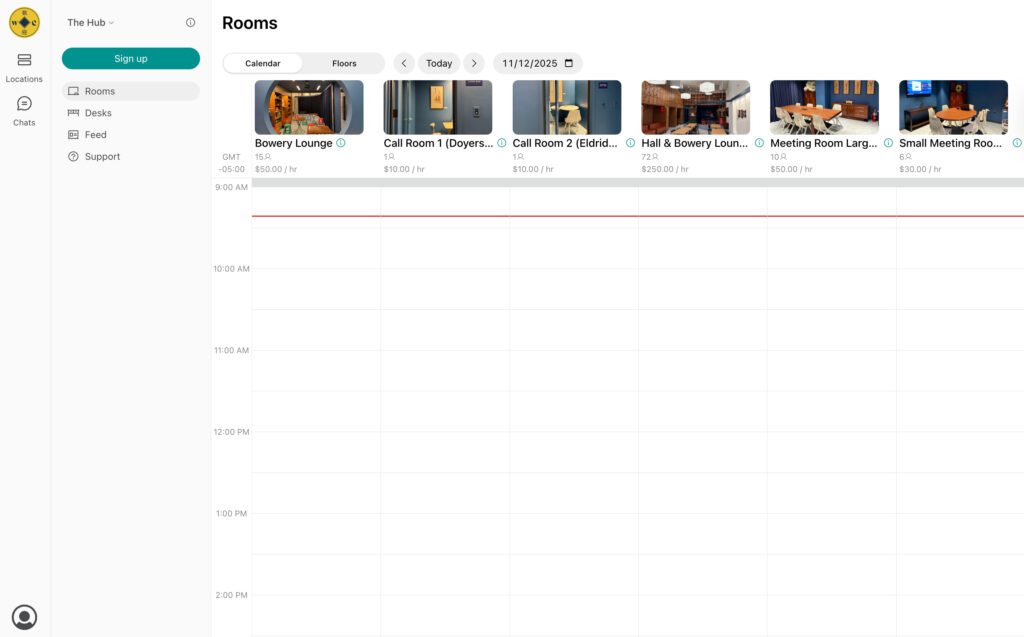
- Resource booking: Meeting rooms, desks, as well as parking and equipment.
- White-label options: Custom branding for member portal.
How much does Spacebring cost?
Spacebring offers two tiers:
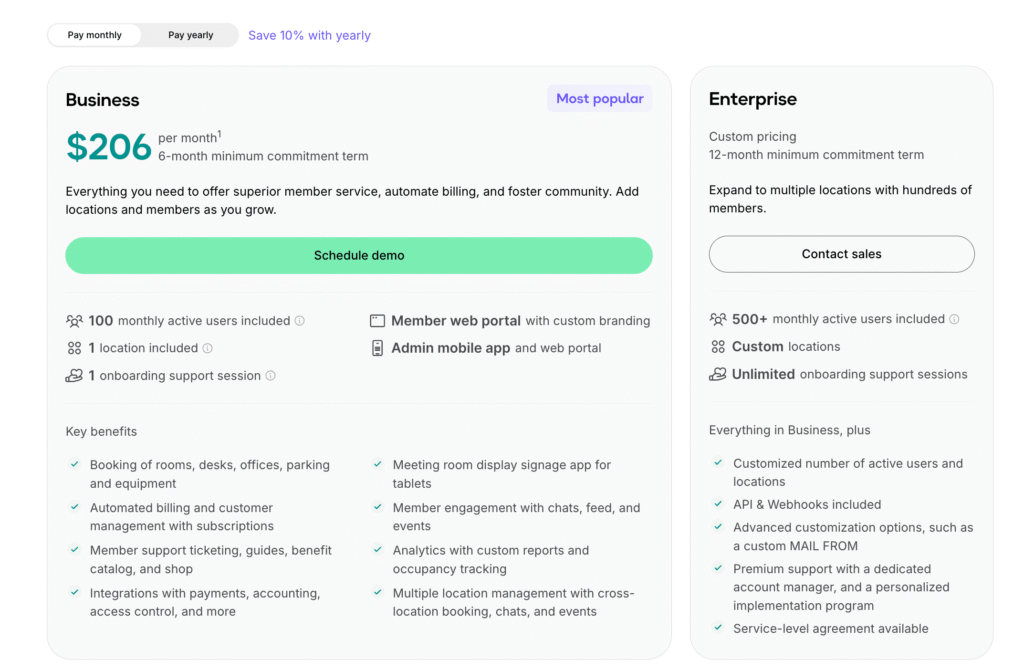
- Business: $186/month billed annually (or $206/month billed monthly), with a 6-month minimum. Includes 100 monthly active users, 1 location, 1 onboarding session, a custom-branded member portal, and an admin app + web portal.
- Enterprise: Custom pricing with a 12-month minimum, aimed at multi-location teams. Includes 500+ monthly active users, custom locations, and unlimited onboarding.
An active user is anyone who has a subscription, booking, or payment in the billing period.
Add-ons include the member mobile app ($118/month first location + $89/month each extra), visitor reception ($59/location), floor plans ($30/location + setup fee), and API & webhooks ($30/location).
USD pricing may vary slightly because billing is based in EUR.
Who’s Spacebring best for?
Spacebring is best for coworking operators who need multi-language support and interface. With the platform based in the EU, support hours align well with European time zones, and it handles multi-currency and VAT requirements natively.
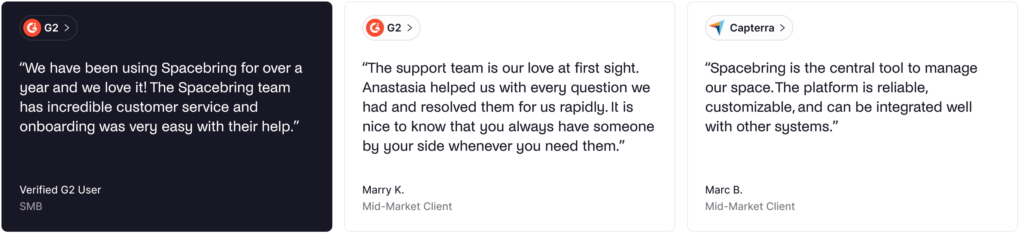
Apart from that, Spacebring has one of the most user-friendly interfaces in the industry, backed by support that customers consistently describe as “top-notch”. The full web portal, alongside mobile apps, also suits spaces whose members prefer desktop access.
Spacebring limitations
Support hours run until 5 pm Eastern Time, which can be challenging for North American operators on the West Coast who need quick help. While the platform works globally, it is more optimized for European operations.
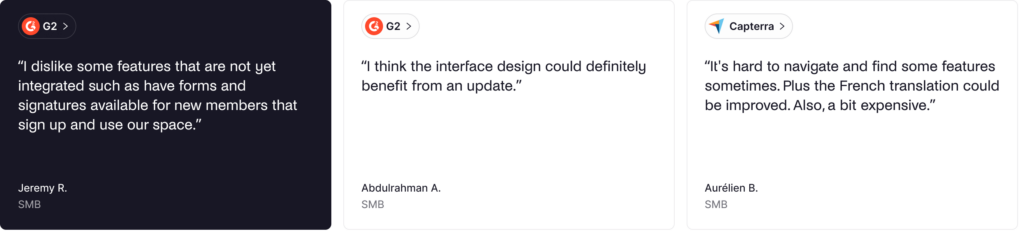
There are also a few outlier complaints about customization and design. Some reviews say the apps and web portal are not as modern or intuitive as other tools, including Optix. Automation is a bit more limited, too. Most advanced workflows require Zapier, whereas Optix offers a built-in visual workflow builder.
Optix alternative #3: Nexudus
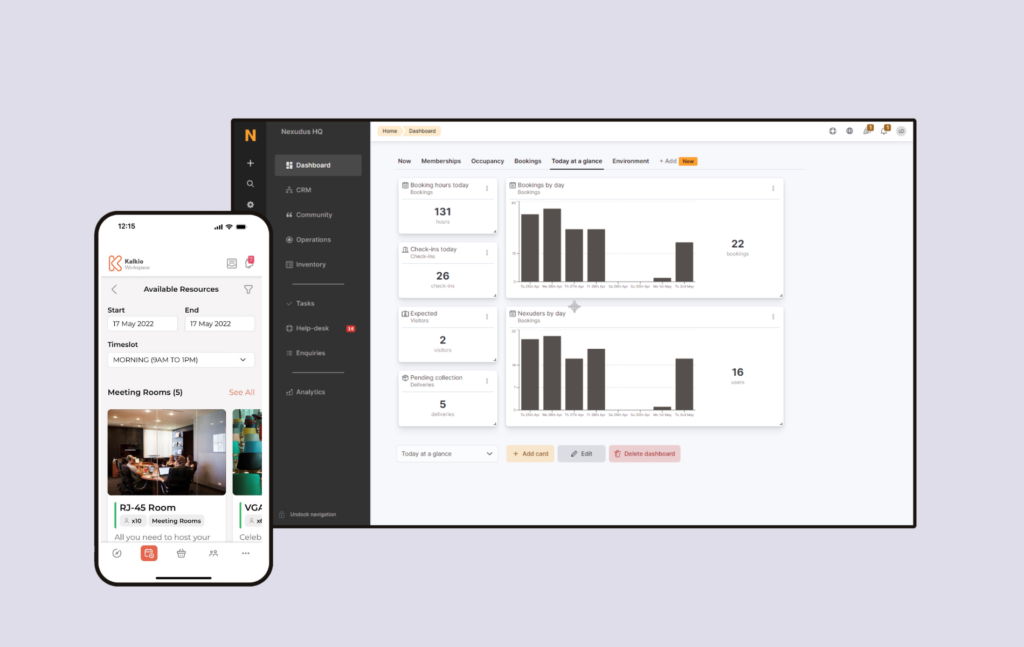
Nexudus is one of the most established coworking management platforms, known for having an incredibly comprehensive feature set and customization options. The platform was one of the first to be truly all-in-one and has since added more and more features and integrations to support most coworking use cases.
What you get with Nexudus
- Advanced membership management: Complex plan structures, contracts, renewals, credits, passes, and memberships.
- Automated billing: Recurring charges, usage-based billing, and invoicing.
- Built-in CRM and email marketing: Member communications, newsletter campaigns, and marketing automation.
- White-label member portal and apps: Custom-branded web portal and iOS/Android apps.
- Native integrations: Direct integrations including accounting, access control, communication tools, and business systems.
- Community platform: Built-in social network features, events, and member directory.
- Visitor management: Guest registration and check-in workflows.
- Native point-of-sale: Built-in POS for café or retail operations.
- Multi-location management: Centralized management for multi-location operations.
- Advanced analytics: Detailed reports, forecasting, and business intelligence tools.
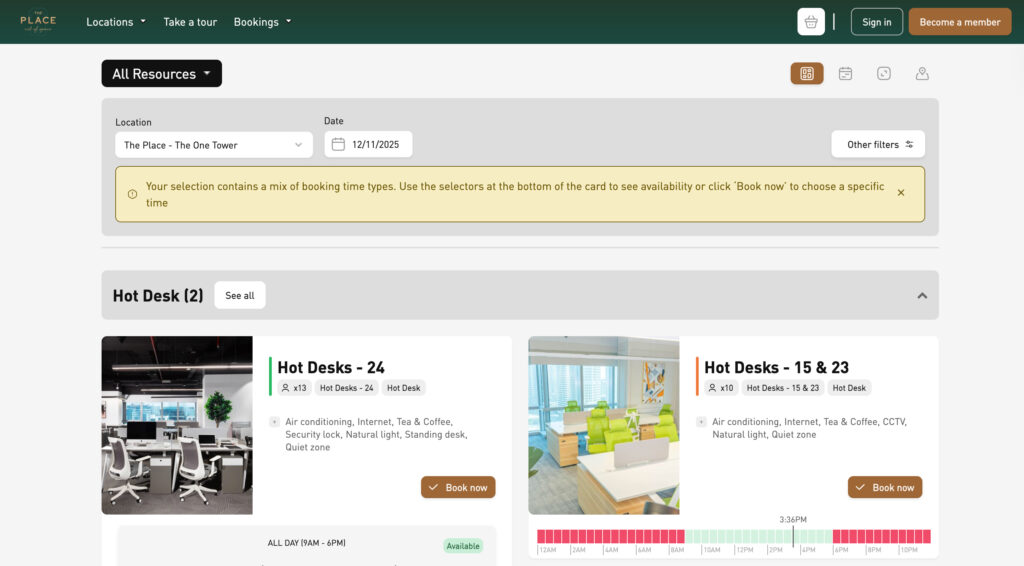
- Comprehensive resource booking system: Meeting rooms, desks, and pretty much any bookable resource.
How much does Nexudus cost?
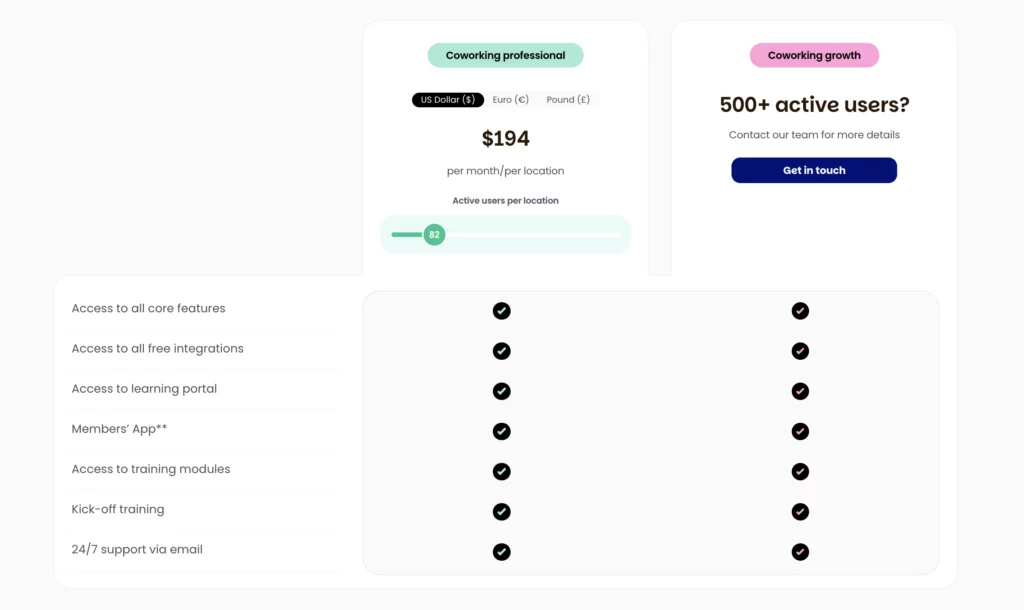
Nexudus offers a base pricing plan that scales based on the number of active members.
The base price is $150 per month per location for up to 80 active users. For Nexudus, active users are those with a current membership or who have been invoiced or made a booking in the last 30 days. Other contacts stay in your CRM at no cost.
Some of the add-ons include:
- White-label mobile app: $150/month for up to 5 locations (+ Apple developer account at $99/year to publish the iOS app).
- Explore Pro analytics: $100/month + $25/month per location for advanced dashboards.
- Nexudus Academy training: $150/month for one location + $25/month per additional location (3-month minimum).
Who's Nexudus best for?
Nexudus is best for established large operations, multi-location operators, and spaces with complex requirements that need flexibility. It’s also one of the best options for operators that rely on data and analytics for business decisions.
If you need every possible feature, want extensive native integrations, require custom plan structures and billing arrangements, or operate at enterprise scale, Nexudus can handle it. The platform is particularly strong if you need full control of your member portal’s design.
Nexudus limitations
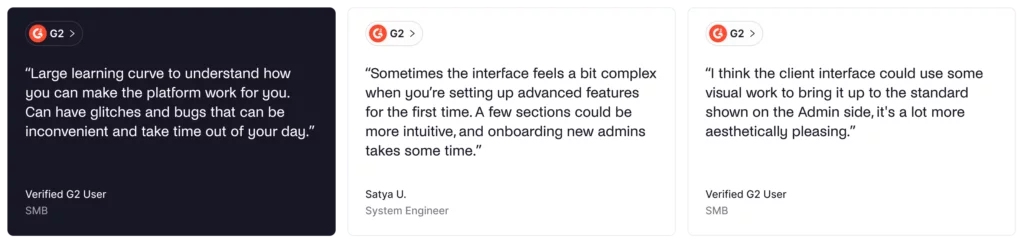
One of the main complaints about Nexudus is its steep learning curve. There are so many features and configuration options that operators can get lost when it’s time to learn and implement.
Also, the user interface, while improved in recent years, still feels more traditional and less polished compared to newer platforms like Optix.
Optix alternative #4: OfficeRnD
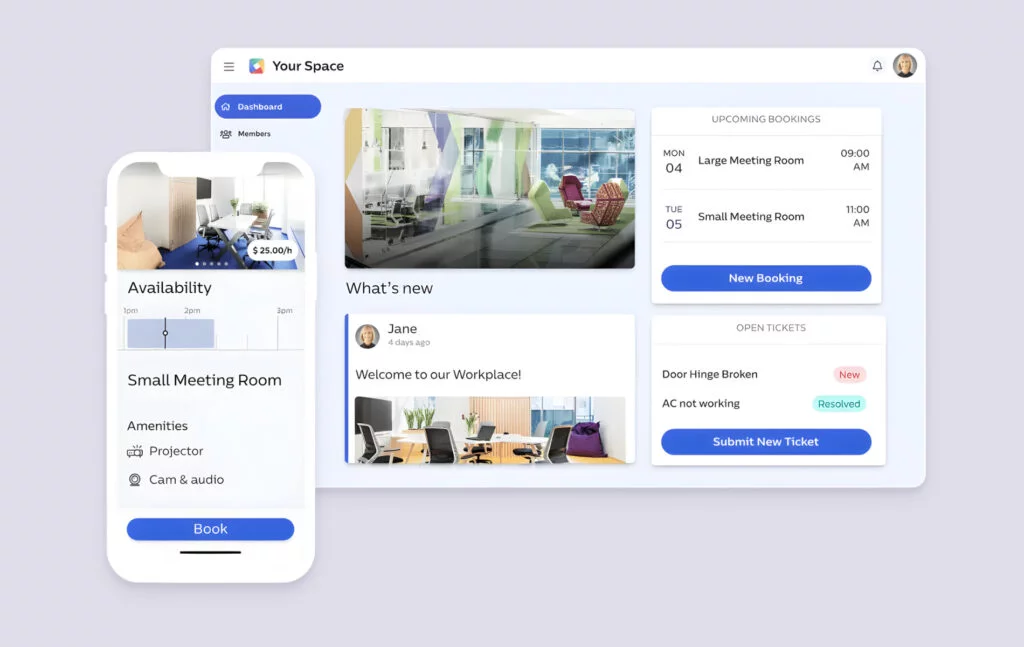
OfficeRnD Flex is a comprehensive coworking management platform designed for large, multi-location coworking operations. ORnD has grown to serve spaces globally and is particularly strong with complex billing scenarios and corporate accounts.
What you get with OfficeRnD
- Complex membership management: Individual and team accounts, corporate billing, syncing with your accounting tools.
- Advanced billing: Recurring charges, usage tracking, proration, complex invoicing scenarios.
- CRM and lead management: Member profiles, lead tracking, sales pipeline.
- Access control integrations: Native connections to Kisi, Salto KS, and other systems.
- Multi-location management: Designed to support multi-location operations.
- Advanced analytics: Revenue reports, occupancy analytics, forecasting.
- API access: RESTful API for custom integrations.
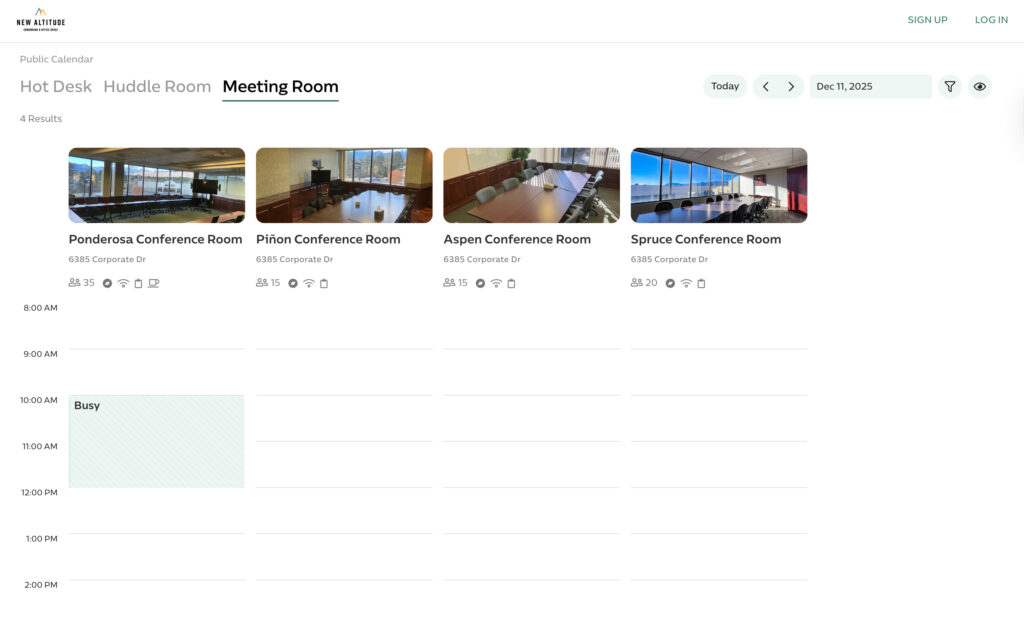
- Space booking and management: Meeting rooms, desks, private offices, shared spaces, and any other resources, like phone booths.
- White-label member portal and apps: Custom-branded web portal and mobile apps.
How much does OfficeRnD cost?
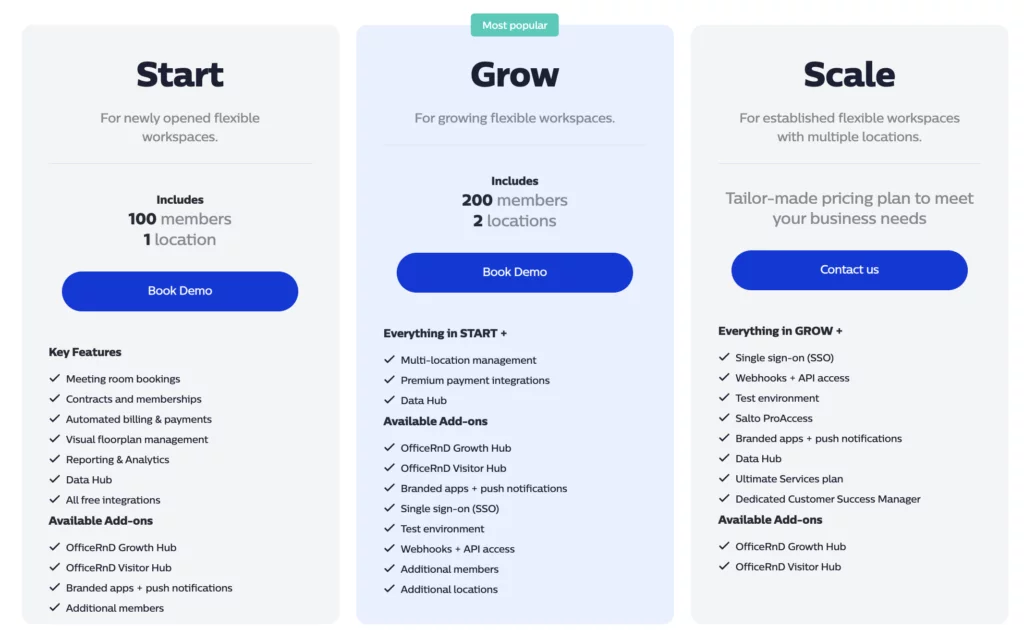
OfficeRnD used to list its pricing publicly. Plans started at around $165/month for a single location with 100 members. Today, OfficeRnD uses custom pricing, so it is harder to know what you will pay without contacting them directly.
Who’s OfficeRnD best for?
OfficeRnD Flex is best for established coworking operators, landlords with flex space, and coworking spaces that work extensively with corporate clients and complex billing scenarios.
If you manage multiple locations, need detailed financial reporting for landlord partnerships, or work with many corporate accounts that require sophisticated billing, OfficeRnD handles these scenarios well.
OfficeRnd limitations
The platform requires significant setup and onboarding time. Implementation typically takes weeks, often with the help of paid professional services. This is longer than newer platforms like Optix or Archie that can be deployed within days.
The user interface is functional but more “enterprise-like” than consumer-focused platforms. While OfficeRnD has improved usability over time, it doesn’t match the polish and intuitiveness of Optix’s mobile app or modern OfficeRnD alternatives.
Other alternatives to Optix
If none of the options above fit your needs, here are other coworking space management tools worth considering:
- Cobot: Budget-friendly option with solid core features, good for smaller spaces with straightforward needs.
- Coworks: Modern platform focused on community engagement and member experience.
- Essensys: Enterprise coworking platform designed for flexible office operators and landlords with flex space.
Which Optix alternative should you choose?
There are many Optix alternatives to choose from. But, besides the price and features, what are some other things you should think about?
✅ Mobile vs web. Do you want your members to primarily use mobile apps, or book spaces and engage with others from a desktop? Optix is mobile-first, while alternatives like Archie or Spacebring offer more balanced web/mobile experiences.
✅ Automation. Consider how much custom workflow automation you require. Optix’s visual builder is powerful, but more advanced features come at a cost. If you don’t need extensive automation or can make do with a Zapier integration, simpler platforms may be more cost-effective.
✅ Add-ons. When budgeting, consider all costs, including required add-ons. Optix’s base price is competitive, but features like visitor management and white-label apps cost extra.
✅ Integrations. List your must-have integrations. Nexudus has tons of native integrations, while Optix might rely on Zapier for the ones you need. Archie includes key integrations like access control natively.
✅ ‘Client portal’ quality and branding. Pay close attention to the client portal experience: design, booking flow, payments, and how far you can customize it without extra work or add-ons.
✅ White-label. Decide whether you need custom domains, branded mobile apps, or a full app store presence.
Why Archie is usually the best all-around pick
- Balanced mobile and web experience. Archie provides quality mobile apps and a full-featured web member portal, giving members a choice in how they access your space.
- Advanced features without add-ons. Built-in e-signatures, visitor management in the Pro tier, and native coworking integrations mean fewer surprise costs as you scale.
- Predictable and transparent pricing. Clear per-location pricing makes budgeting straightforward. No hidden add-on fees for essential features.
- Fast deployment. Get operational quickly without lengthy implementation projects. Most spaces are live within days, not weeks or months.
- Strong for multi-location operators. Centralized management with location-specific control makes it easy to run multiple spaces efficiently.
Quick head-to-heads
- Archie vs Optix: Both provide comprehensive coworking management features, but Archie includes more in base pricing (visitor management, e-signatures, full brand removal) and provides a more visually appealing web member portal.
- Archie vs Spacebring: Both offer balanced mobile/web experiences with straightforward pricing. Spacebring better suits European operators needing multi-language support. Archie provides stronger North American support, has e-signatures built in, and includes visitor management in the Pro tier.
- Archie vs Nexudus: Nexudus offers the most features and configurability, but requires a longer implementation and a steeper learning curve. Archie delivers core features with significantly better usability and faster deployment.
- Archie vs OfficeRnD: OfficeRnD might handle very large coworking operations and complex billing scenarios better, but Archie provides similar core features with easier implementation and more transparent pricing.
💡 Worried about switching coworking software? Archie’s team can handle the heavy lifting for you. We can move your floor plans, resources, member data, and help connect your existing tools so everything keeps running smoothly.
Sources
- Optix feature & pricing pages
- Demo videos
- G2 & Capterra profiles
- Archie’s product research

Alexios Georgakopoulos
Archie’s Content Writer, coffee fiend, and resident Gen Zer who hates working in offices but loves writing about them. When he is not deep in hybrid work and coworking topics, he is obsessing over a new hobby that will probably last about a day.