








- What you’ll learn
- The core differences between Envoy and Robin
- Where each tool works best (and where it doesn’t)
- How pricing really works in practice
- Why Archie is a solid alternative to both solutions
So, you’re trying to choose between Envoy vs Robin. That’s a pretty common spot to be in.
Both tools have solid reputations, and both can cover the basics for a modern office. But they’re built with different goals in mind. Which basically means that if you pick the wrong tool, you can waste time on setup, pay more than you need, or end up with a system people do not like using.
In this guide, I’ll cover what each platform does well, where each one can fall short, and what alternatives (yes, just like Archie) to consider if you want something simpler or easier to budget for.
Ready when you are.
What is Envoy?
Envoy launched back in 2013 with a straightforward mission: replace those clunky paper sign-in sheets with a digital visitor management system. Guests tap their name on an iPad at the front desk, the host gets pinged, and everyone moves on with their day. Clean and simple.
But Envoy has grown way beyond that original idea. These days, the platform handles desk & room booking, package tracking, and workplace analytics alongside its visitor features. Big names like Tesla Motors, Netflix, and Warby Parker rely on Envoy to keep their office space organized and their operations humming along.
Envoy core features
Visitor management is still where Envoy shines brightest. You can customize check-in flows however you need them, print badges on the spot, collect signatures on legal documents, notify hosts automatically, and screen visitors against blocklists. If your organization deals with high visitor volume, you’ll appreciate how thoroughly the system tracks visitor logs and handles compliance features. G2 has named Envoy one of the top visitor management systems five years running, and that recognition didn’t come out of nowhere.
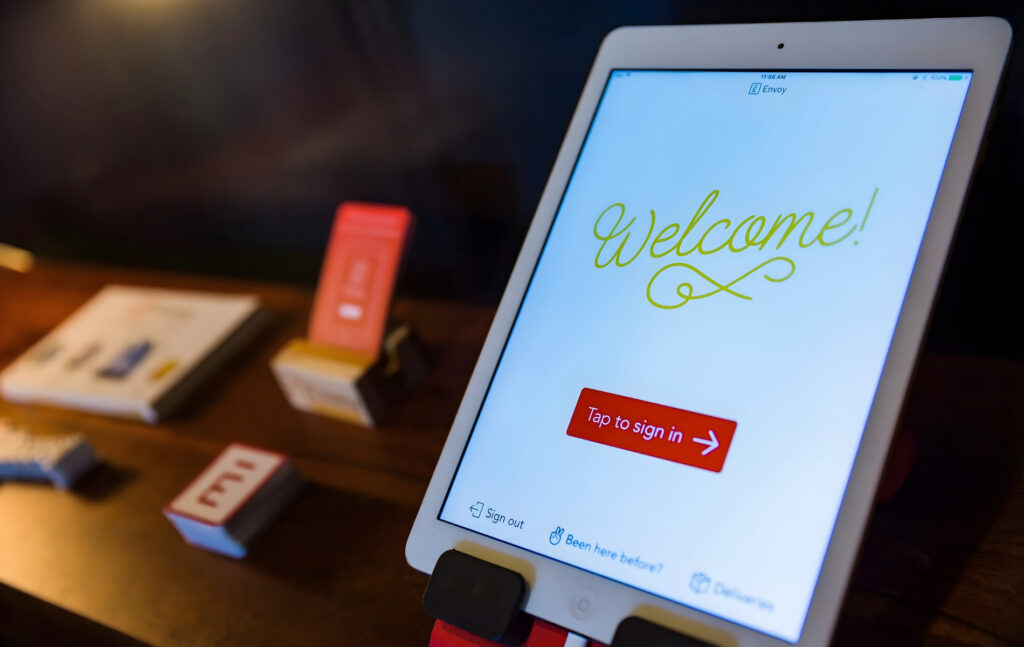
On top of that, delivery management keeps tabs on incoming packages and fires off automated notifications so nothing sits in the mailroom forgotten.
Desk booking software, on the other hand, gives your employees the ability to reserve desks through a mobile app or browser. You can create neighborhoods for assigning desks by team, set up permanent assigned seating, or embrace full hot desking for maximum flexible work options.
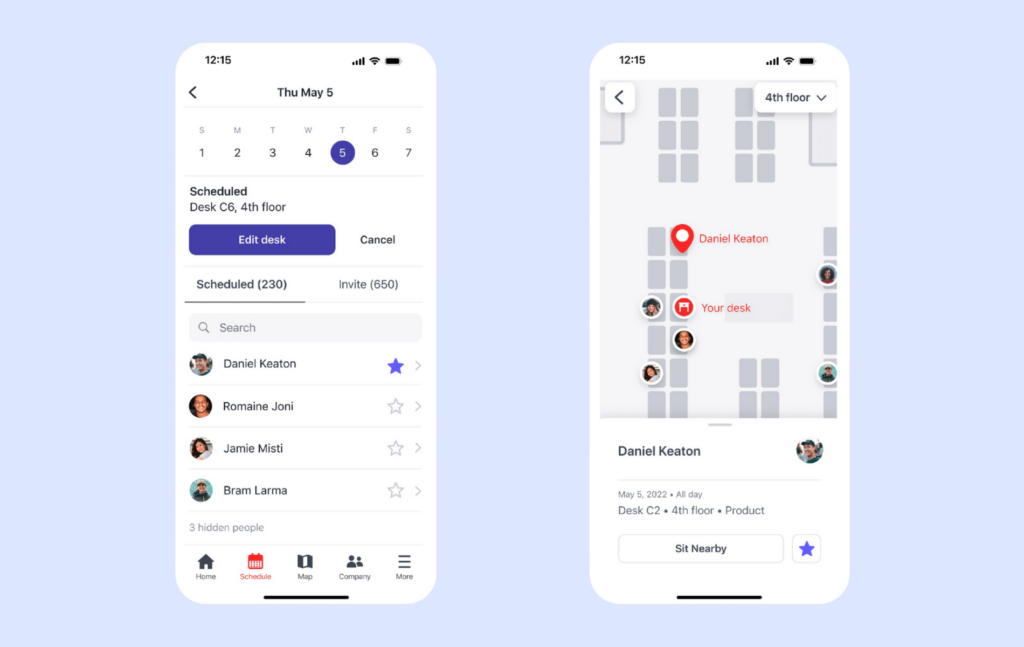
Then, there’s meeting room scheduling that plugs directly into Google Calendar and Microsoft Teams. Your team can grab a conference room in seconds, and the system automatically triggers auto-release for meeting spaces that go unused.
Workplace analytics pulls together occupancy data, attendance patterns, and office space utilization into reports you can actually customize and use.
Last but not least, interactive office maps make it easy for employees to find free workspaces, track down coworkers, locate printers, find emergency exits, and navigate each location without wandering around lost.
Who Envoy is best for
Envoy hits the mark for enterprise companies dealing with serious visitor volume and strict compliance requirements. We’re talking corporate headquarters, healthcare facilities, higher education campuses, and financial institutions where advanced security screening and detailed audit trails aren’t optional; they’re mandatory.
If you’re juggling multiple locations, you’ll like having everything centralized on one platform. And if visitor management ranks higher on your priority list than desk reservations or room booking, Envoy delivers the depth you need.
What is Robin?
Robin showed up in 2014 with one goal: make room booking software extremely easy to use. The founders wanted people to find and reserve meeting spaces without jumping through hoops. That was the whole pitch.
Since then, Robin has branched out into desk booking, workplace analytics, visitor management, and AI-powered scheduling. The company now markets itself as an “AI-powered workplace operations platform” built specifically for hybrid teams.
Robin doesn’t hide who they’re targeting either. Their marketing states the platform is “designed for companies with 500 employees or more, with at least a third of those using the office regularly.” And that focus makes sense: Zoom’s research on hybrid work shows 75% of business leaders expect their workplace to transform by 2026. Robin is betting big on that shift.
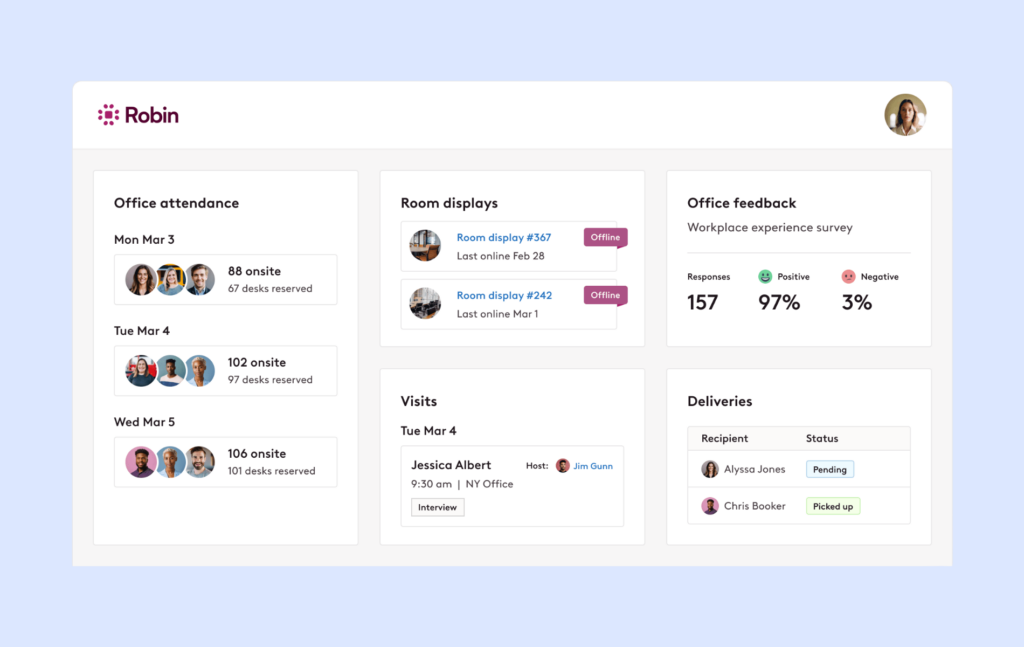
Robin core features
Desk booking is Robin’s bread and butter. Your employees can book desks through mobile apps, web browsers, or straight from their calendars. The system supports hot desking and lets you set up team-based neighborhoods so people can sit near their colleagues.
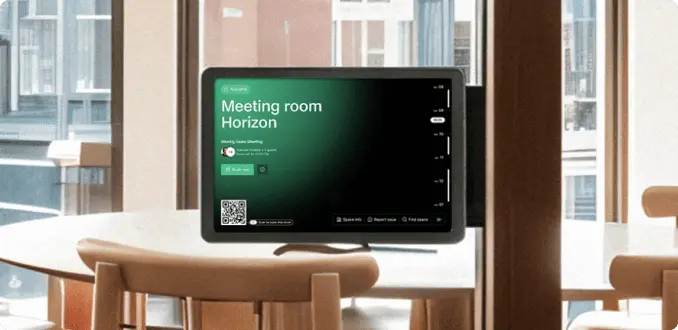
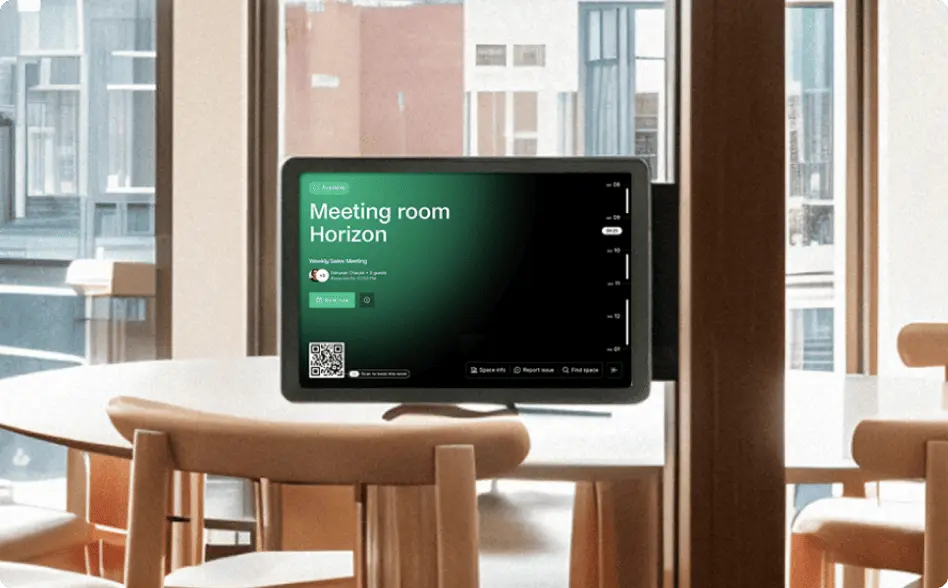
Meeting room scheduling includes calendar integrations, as well as support for physical room displays you can mount outside each room. These tablets show real-time availability and let people handle quick meeting room booking right at the door, no phone or laptop required.
Employee experience features are another thing Robin does well. The platform includes office feedback surveys to measure satisfaction after visits, and announcements to keep employees informed about floor closures, facility maintenance, IT issues, or policy changes through push notifications. ‘Office activities’ let admins plan and share events, from new hire welcomes and cultural celebrations to weekly fitness classes and trivia lunches, creating opportunities for in-person connection that make the office feel worth the commute.
Hybrid work scheduling software helps your employees coordinate which days they’re coming in and shows who else plans to be on-site, keeping the whole team on the same page about when to show up.
And then there’s office occupancy analytics, which goes deep with custom reports, executive dashboards, an analytics API for developers, and AI-powered predictions about future office space needs.
Who Robin is best for
Robin works well for mid-market and enterprise organizations that have gone all-in on hybrid work and need serious tools to manage it properly.
If your main headache is optimizing desk reservations and meeting room booking (and not necessarily managing visitors on top of that), Robin’s specialization pays off. Plus, Owl Labs’ 2025 State of Hybrid Work Report found that the organizations getting hybrid right are the ones listening to employees and adapting fast. Robin’s intuitive design philosophy fits that employee-first mindset.
Envoy vs Robin: Feature-by-feature comparison
Visitor management
Envoy: ★★★★★ | Robin: ★★★☆☆
This category belongs to Envoy, hands down. Their visitor management product includes touchless sign-in, health screening, ID scanning, NDA collection, badge printing, and emergency alerts. The system keeps meticulous visitor logs and packs in the compliance features that security-focused organizations demand. Robin bolted on visitor management later with basics like pre-registration and check-ins, but it doesn’t come close to Envoy’s depth.
Desk booking and hot desking
Envoy: ★★★★☆ | Robin: ★★★★★
Robin owns this space. G2 reviewers consistently praise the clean interface and smooth mobile app. Features like auto-release for no-shows keep availability accurate throughout the day. Your employees can book desks with less friction than most competing platforms allow. Envoy’s desk booking works fine, but it feels tacked onto their visitor management core rather than built from the ground up.
Room scheduling
Envoy: ★★★★☆ | Robin: ★★★★★
Robin pulls ahead here, too, thanks to physical room displays, ghost meeting detection, and AI-assisted scheduling. Unlike Envoy, Robin was born as a meeting room booking platform, and that DNA shows up in how polished the experience feels. Envoy offers calendar integrations for their meeting room scheduling, but Robin’s features are noticeably more refined.
Workplace analytics
Envoy: ★★★★☆ | Robin: ★★★★★
Both platforms deliver analytics, but Robin goes further with custom reports, an analytics API, and AI-powered forecasting. Envoy pulls solid occupancy data, though Capterra notes that some advanced security features sit behind custom pricing tiers.
Integrations
Envoy: ★★★★★ | Robin: ★★★★★
You can connect both platforms to Google Calendar, Microsoft Outlook, and various access control systems. Envoy advertises over 100 integrations; Robin offers an API for custom builds. Both let you manage bookings inside Slack or Teams, so your organization stays connected regardless of which communication tools you prefer.
Envoy vs Robin: Pricing comparison
Envoy pricing
Envoy prices its products separately, with different billing models depending on what you buy:
- Envoy Visitors: Basic is free (limited features). The main paid tier is Premium at $362 per location per month (billed annually), and Enterprise is custom pricing for more complex security, safety, and compliance needs.
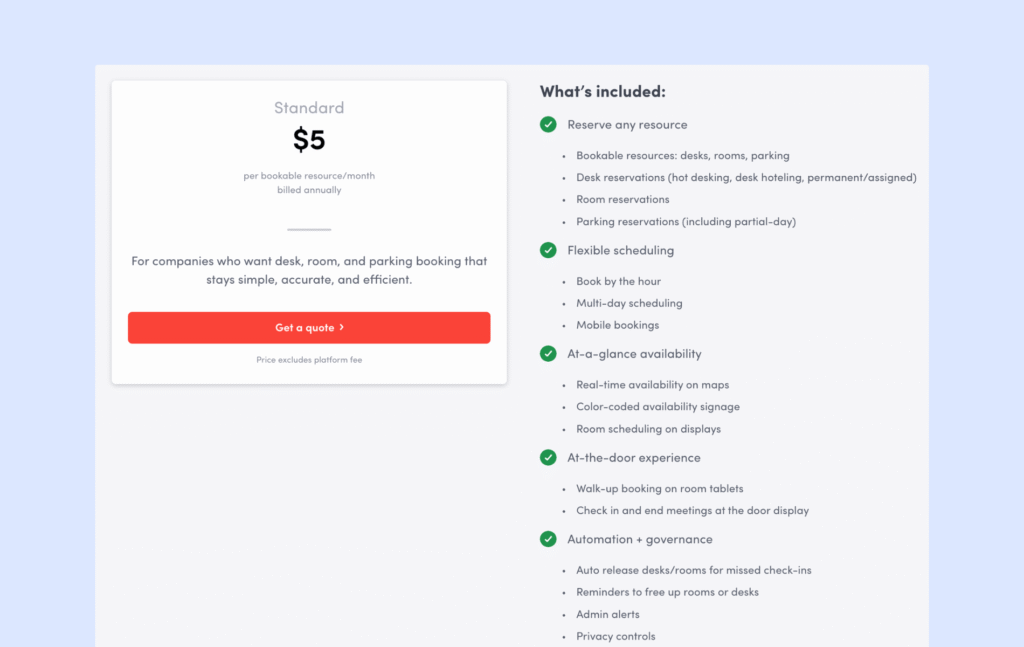
- Envoy Reservations: Pricing starts at $5 per bookable resource per month (billed annually), and Envoy also charges a separate platform fee on top.
Robin pricing
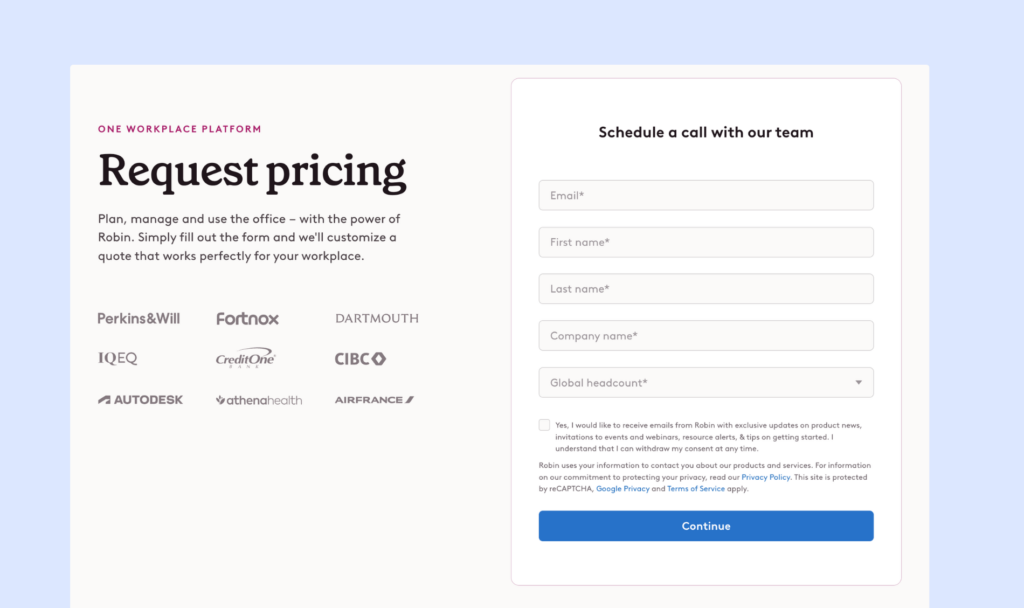
Robin goes the custom pricing route based on your organization’s size. G2 describes it as “pricing customized to fit the needs of your business.” Product research suggests many companies start at around $5,000 per year, about $40-45 per desk or $70 per user annually. Since Robin targets companies with 500+ employees, small teams often find that such desk booking costs don’t make financial sense.
Value analysis
Envoy’s modular setup lets you start lean, but costs stack up fast once you start adding products and add-ons. Robin’s bundled pricing might deliver better value if you need the complete feature set.
On the other hand, Envoy charges extra for emergency alerts and real-time alerts on lower tiers. Robin sells hardware separately. Both platforms may require add-ons for advanced analytics or priority support. Don’t forget the operational complexity of coordinating multiple vendors — that adds hidden costs too. Brian Elliott, coauthor of How the Future Works, points out that workplace data typically lives in silos scattered across real estate, HR, and departmental systems. Make sure you’re factoring integrations into your budget.
Envoy vs Robin: User reviews and ratings
What users say about Envoy
Envoy Visitors holds a 4.7/5 rating on G2 with over 400 reviews.
🟢 Common praise: Reviewers love the customization options for sign-in flows, dependable host notifications, and the polished first impression it creates for visitors arriving at the front desk.
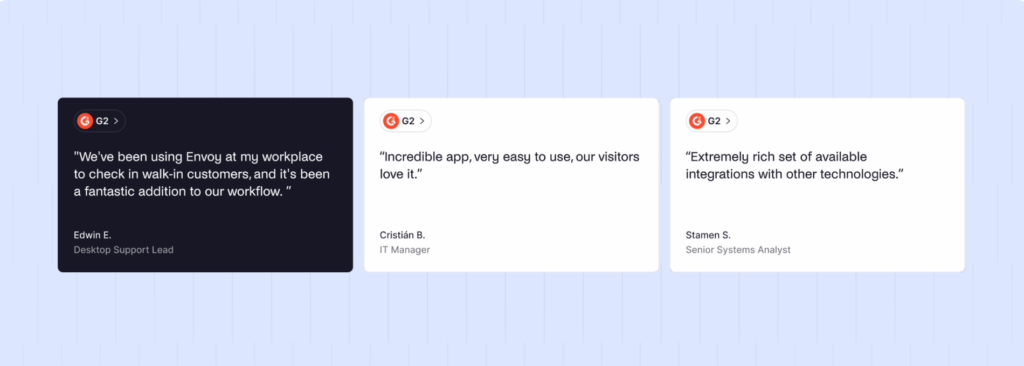
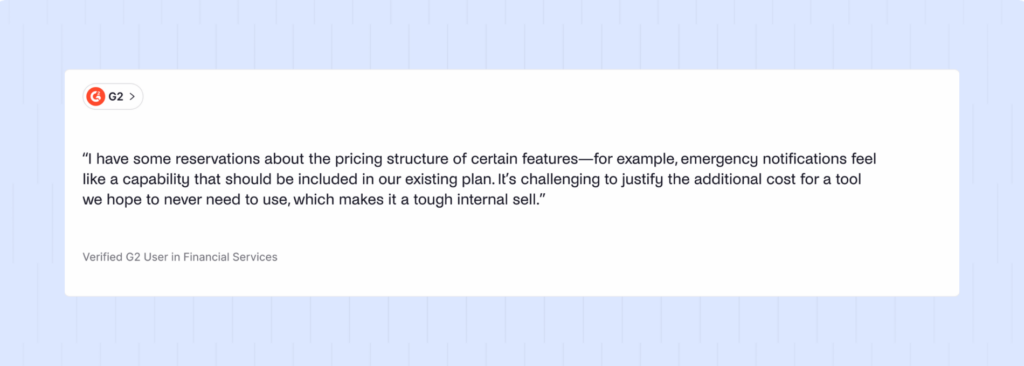
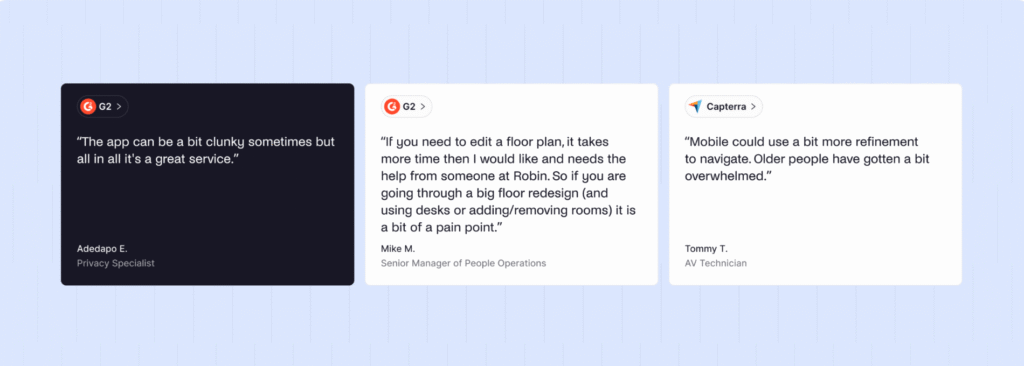
🔴 Common complaints: Pricing frustrations surface frequently for multi-location deployments. Users also mention feature limitations on lower tiers and unexpected costs for add-ons.
What users say about Robin
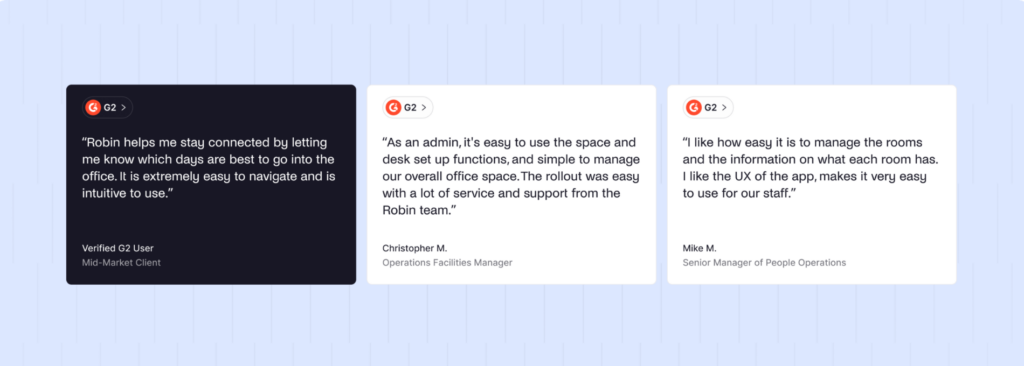
Robin scores 4.5/5 on G2 with over 200 reviews. Capterra rates it 4.7 for ease of use.
🟢 Common praise: The clean interface and straightforward desk booking win consistent praise. One reviewer put it simply: “I didn’t need to spend any time learning how to use Robin.”
🔴 Common complaints: Some users report occasional glitches with booking confirmations. Pricing feels steep for small teams.
Envoy vs Robin: Pros and cons
Envoy pros and cons
🟢 Pros:
- Advanced visitor management with robust compliance features
- Scales across multiple locations at the enterprise level
- Solid delivery management capabilities
- Five consecutive years as G2’s visitor management leader
- Strong access control integrations
🔴 Cons:
- Desk booking and room booking feel secondary
- Per-user pricing for workplace booking features gets expensive as your team grows
- Emergency alerts are locked behind higher tiers
- The visitor app is limited to iPad only
Robin pros and cons
🟢 Pros:
- Outstanding desk booking and meeting room scheduling experience
- Powerful analytics with AI-driven insights
- Physical room displays showing real-time availability
- Intuitive interface your employees will actually want to use
🔴 Cons:
- Visitor management features are not as advanced
- Custom pricing targets organizations with 500+ employees
- Hard to budget without transparent plan options
- Complex setup process for large-scale deployments
Best alternatives to Envoy and Robin
Archie
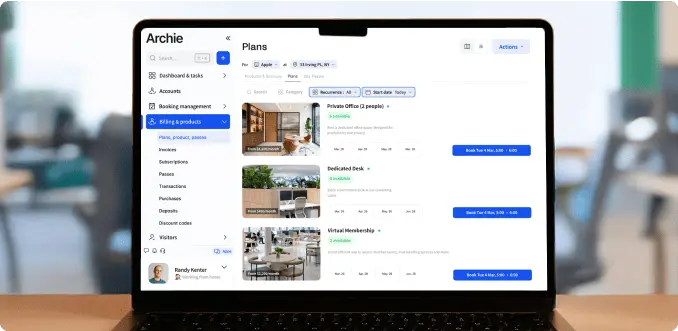
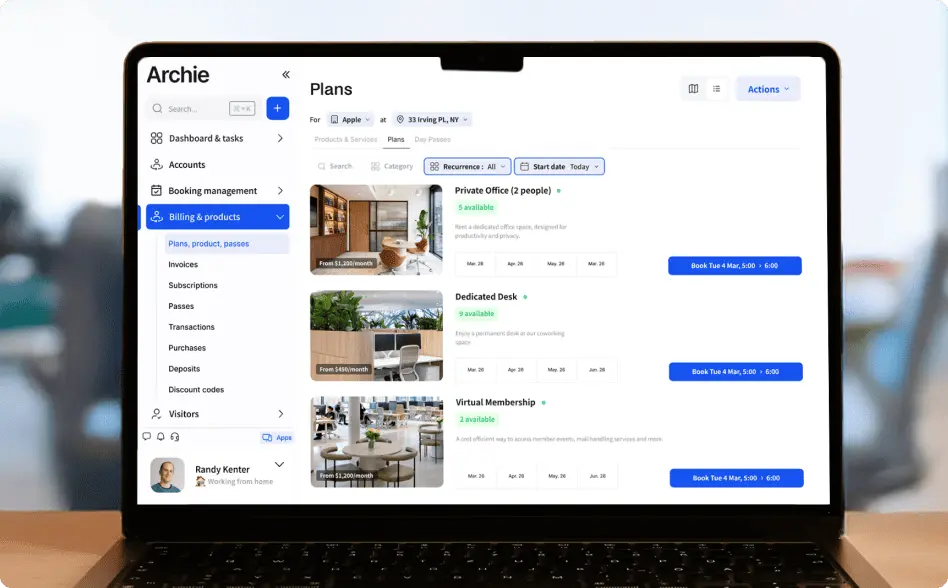
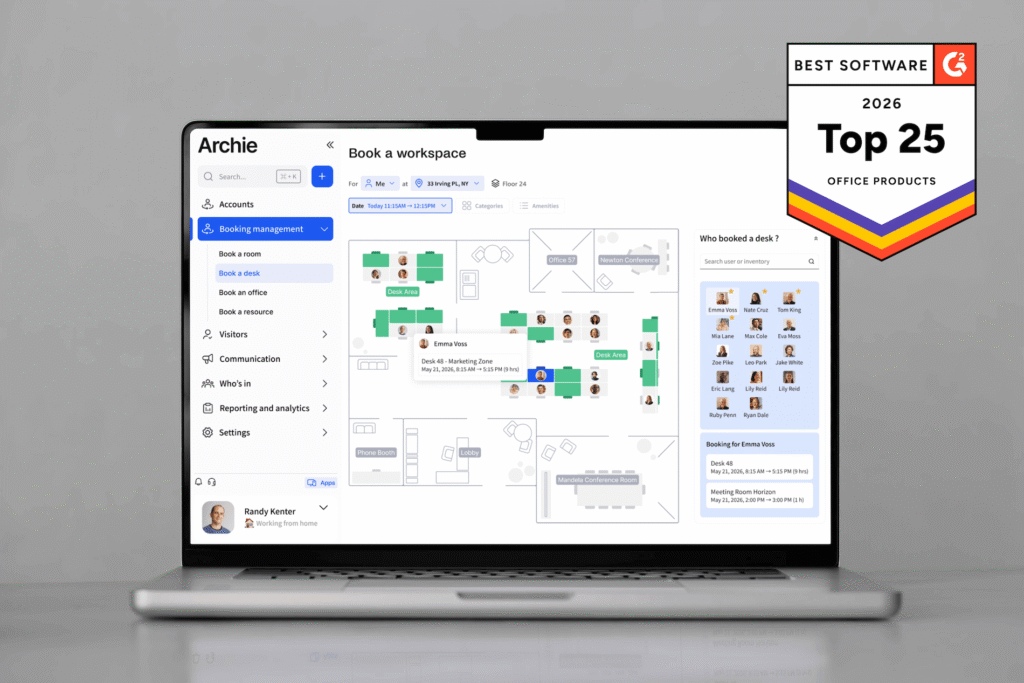
Archie is the best Robin and Envoy alternative for organizations that want comprehensive features without complex pricing. Instead of charging per user or “hiding” pricing plans, Archie prices by resources: desks and rooms. This works well for hybrid teams where not everyone comes in every day.
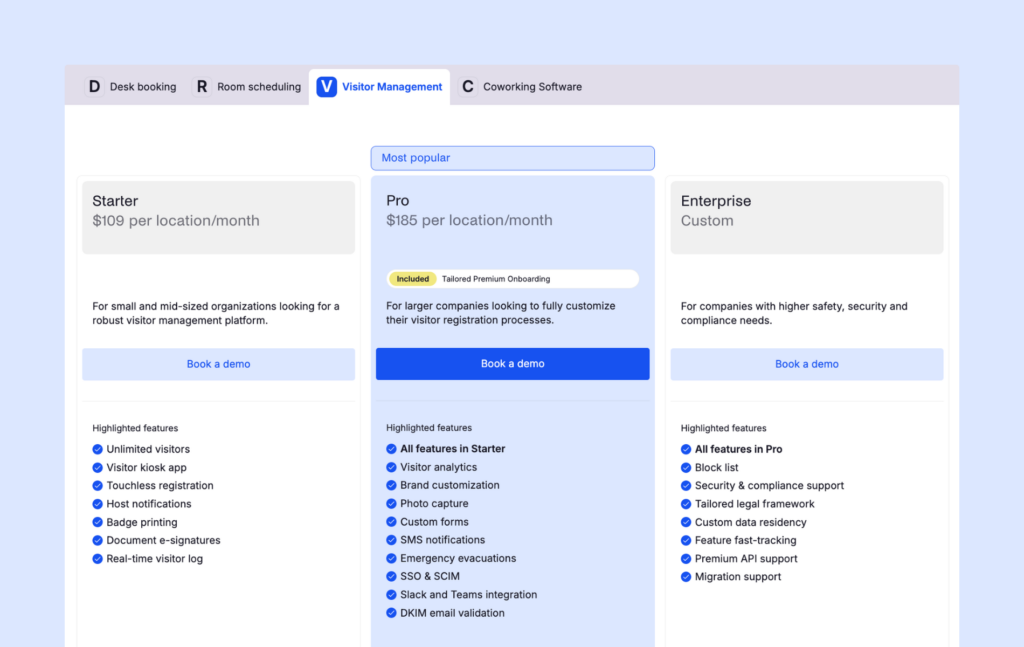
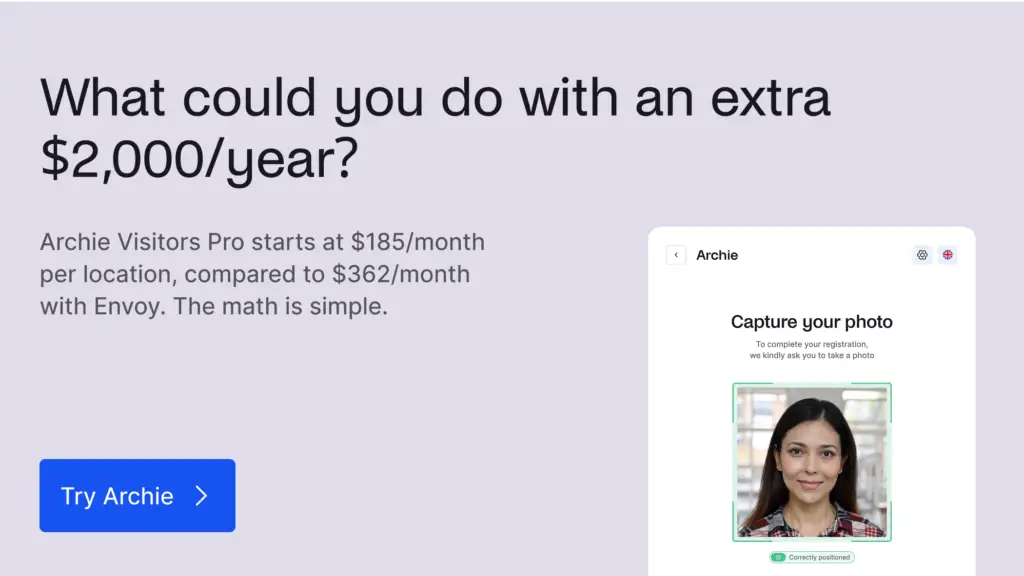
In fact, Archie starts at $2.80 per desk and $8 per room (minimum $159/month), often coming in more affordable than both Envoy and Robin for mid-sized organizations. G2 reviewers rate it highly for ease of use and customer support. For small teams and growing companies alike, it offers a secure and scalable solution.
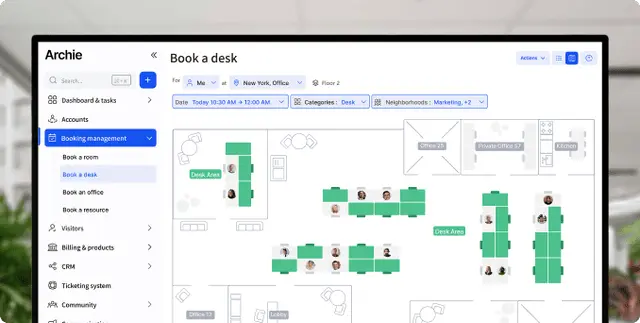
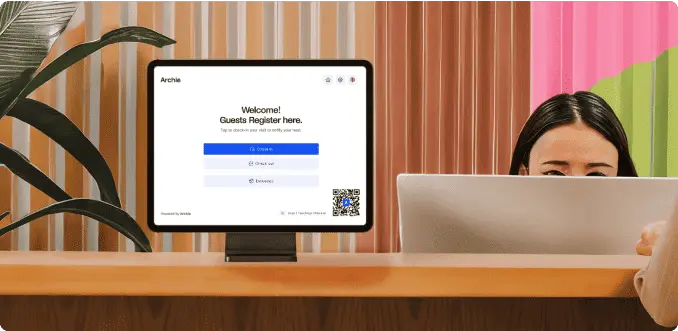
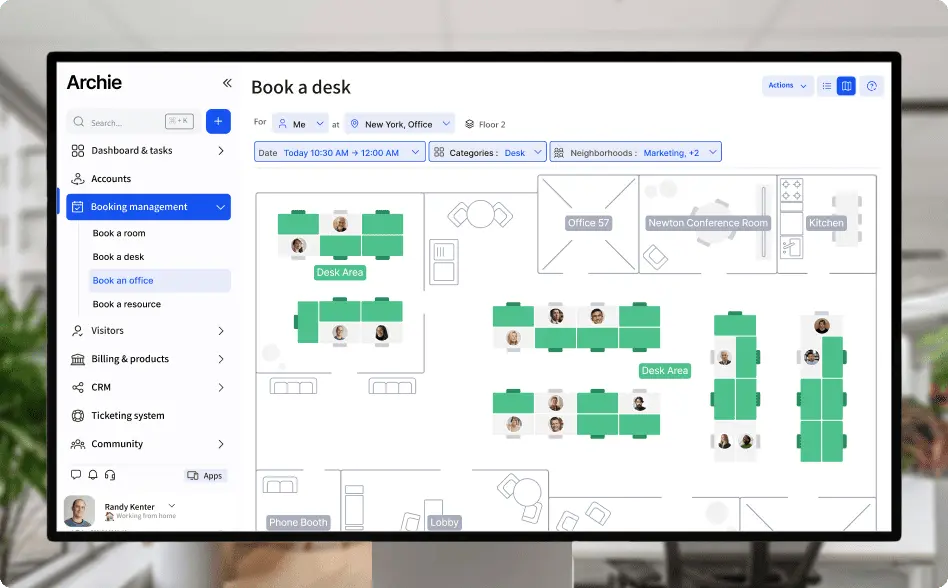
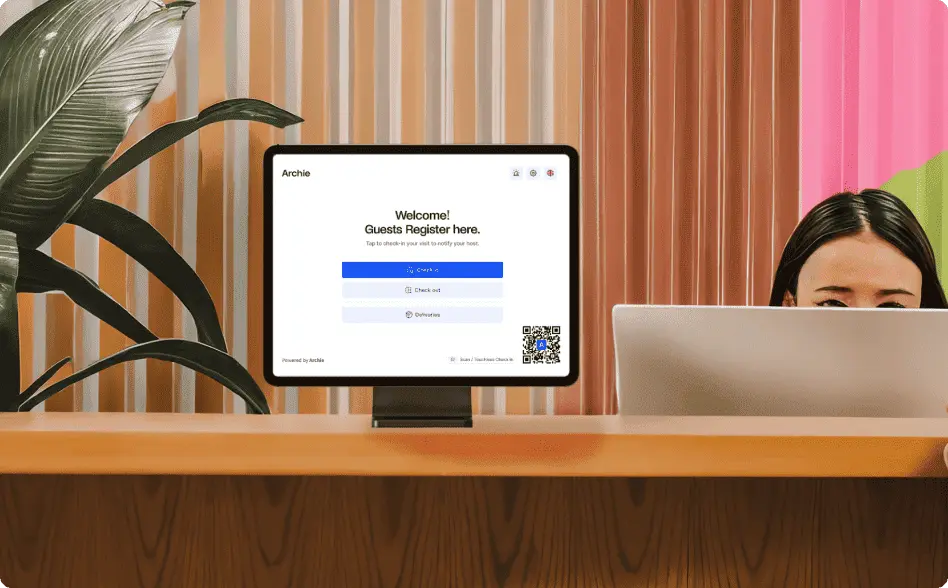
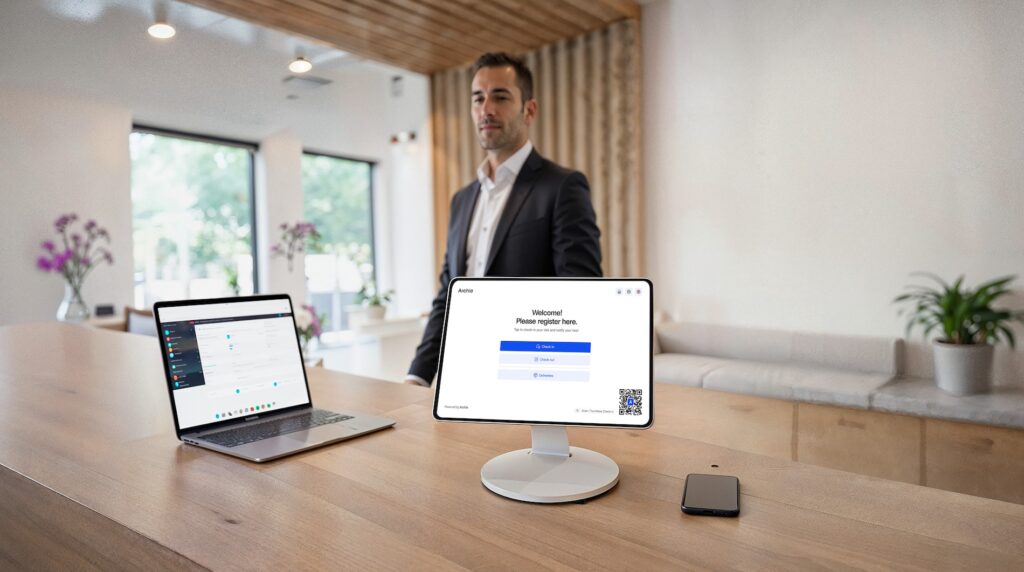
The platform covers desk booking, meeting room scheduling, visitor management, interactive floor plans, and workplace analytics in one platform. Unlike Envoy’s iPad-only visitor app, Archie runs on both iPad and Android tablets, giving you more flexibility at each location.
What sets it apart when comparing Archie vs Envoy and Archie vs Robin is that it combines comprehensive features with simpler pricing. You get desk reservations, room booking, check-ins, visitor logs, automated notifications, and real-time alerts without piecing together separate products. The platform handles the common pain points offices face: no-shows blocking rooms and desks, double bookings creating conflicts, and employees wasting time hunting for the right meeting spaces.
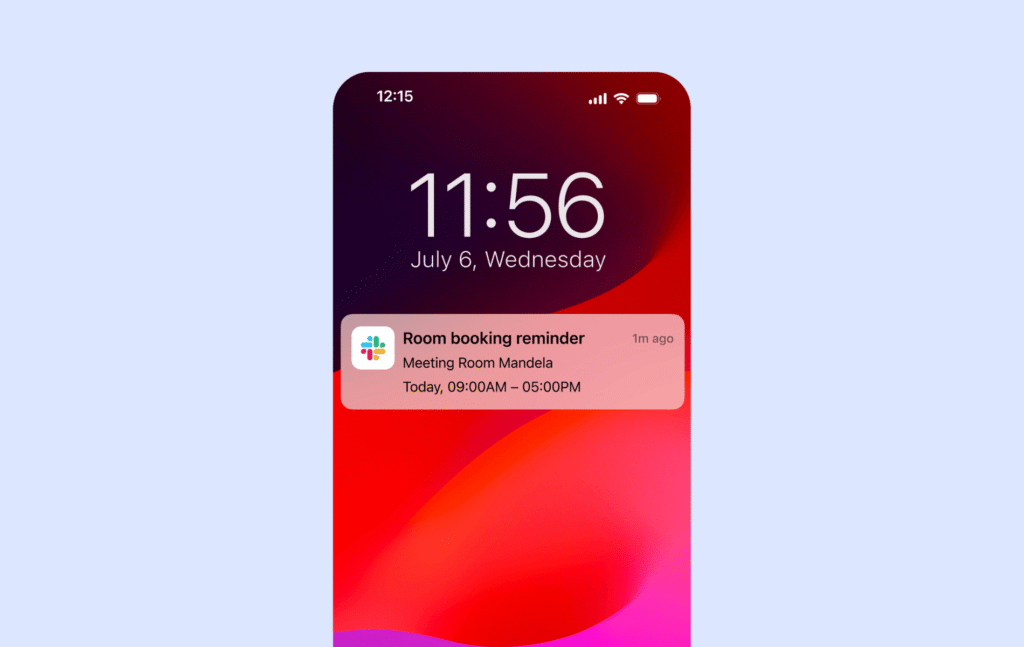
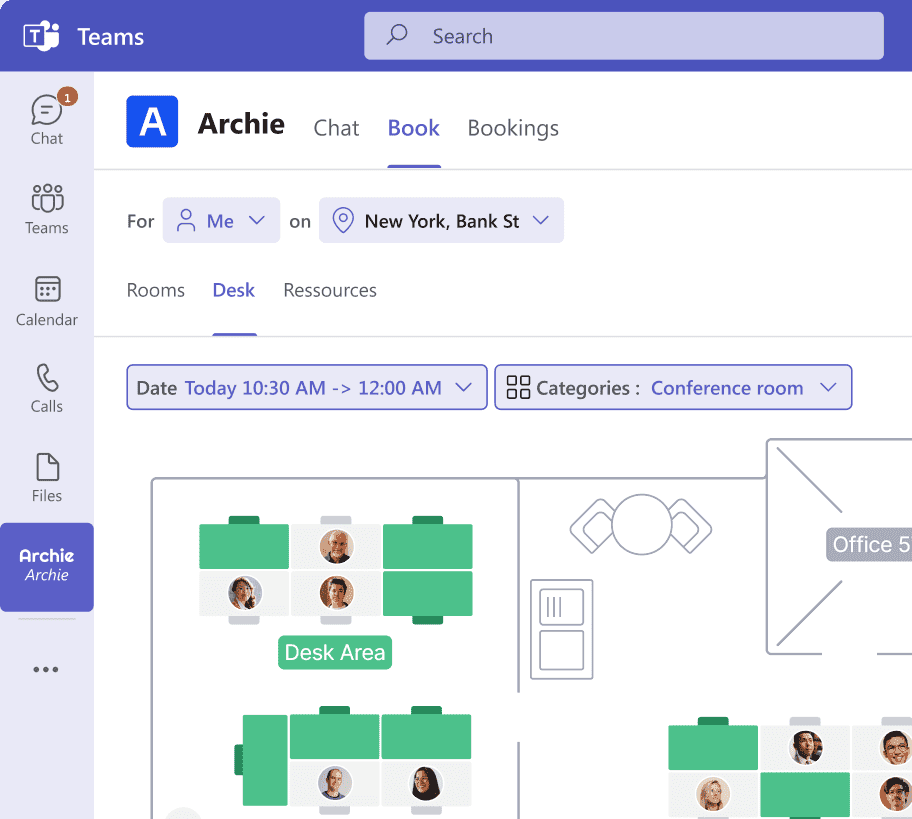
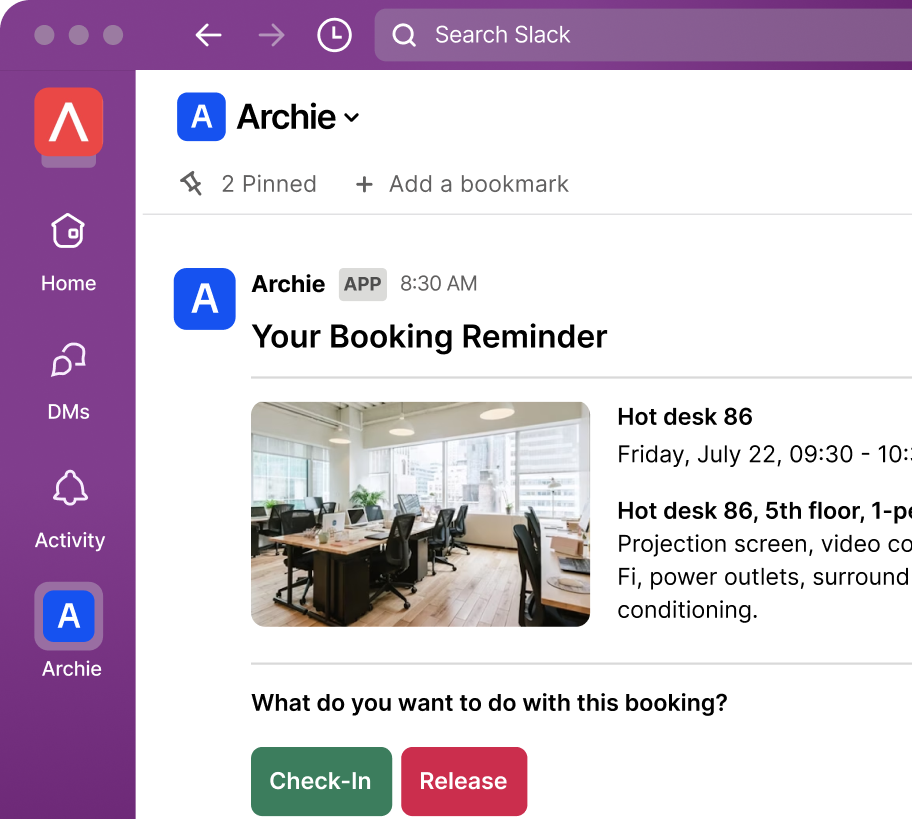
Key features include auto-release for unused bookings, buffer times between meetings, QR code check-ins, host notifications when visitors arrive, and customizable floor plans showing who’s in the office. Teams can reserve desks near teammates, and access everything from a standalone app or inside Slack and Microsoft Teams.
Other alternatives to Envoy vs Robin
- OfficeSpace focuses on space planning and facility management with robust analytics. Good for complex real estate portfolios, though pricing runs higher. Here’s how OfficeSpace compares to Robin.
- Skedda offers straightforward booking at accessible prices. Works well for small teams needing simple desk reservations and room booking without enterprise complexity. Here’s how Skedda compares to Robin.
- Eptura targets enterprise workspace management with deep facility capabilities. Best for organizations managing maintenance, assets, and office space together.
Archie vs Envoy vs Robin: Which should you choose?
Choose Archie if...
You want the best of both worlds without the enterprise price tag. Archie delivers strong visitor management alongside excellent desk booking and meeting room scheduling; all bundled into one platform with transparent, resource-based pricing. If you’re running an office where headcount fluctuates, and you don’t want costs to spiral every time you hire someone new, Archie’s public per-resource pricing model keeps your budget predictable.
It’s also the smart pick if you need more device flexibility for your visitor management kiosk. Unlike Envoy’s iPad-only setup, Archie runs on both iPad and Android tablets. You get visitor logs, compliance features, automated notifications, and real-time alerts.
Choose Envoy if...
- Your organization handles significant visitor volume with compliance requirements
- You need comprehensive delivery management
- You want an all-in-one enterprise solution and have the budget for it
- You already have Envoy Visitors and want to expand to Envoy Workplace (or the other way around)
Choose Robin if...
- You care about employee & visitor feedback
- You’re a hybrid-first organization coordinating office days
- Workplace analytics matter most to leadership
- Employee experience is the top priority
- Custom, quote-based pricing is not an issue
Archie vs Envoy vs Robin: Comparison table
Feature | Archie | Envoy | Robin |
|---|---|---|---|
Best for | Mid-size to large offices | Visitor-heavy enterprises | Hybrid workplaces at enterprise scale |
Visitor management | ★★★★☆ | ★★★★★ | ★★★☆☆ |
Desk booking | ★★★★★ | ★★★★☆ | ★★★★★ |
Room booking | ★★★★★ | ★★★★☆ | ★★★★★ |
Analytics | ★★★★☆ | ★★★★☆ | ★★★★★ |
Pricing model | Per resource + per location | Per resource + per location | Custom pricing |
Starting price for workplace booking | $2.80/desk/month | $60/resource/year + fees | Custom quote |
Starting price for visitor management | $109 per location/month | $4,345 per location/year | Custom quote |
Free plan | No (free trial) | Yes (Visitors only) | No (free trial) |
G2 rating | |||
Final verdict
The Envoy vs Robin choice ultimately depends on what problem you’re trying to solve. When you’re weighing Robin vs Envoy, start with your primary use case.
If visitor management drives your requirements, think compliance-heavy industries, high visitor volume, or advanced security screening, Envoy’s depth is tough to beat.
If your employees’ satisfaction is a priority, Robin’s employee-focused booking experience delivers real value.
But plenty of organizations need solid coverage across visitor management, desk booking, room booking, and analytics without shelling out enterprise prices for each piece. That’s exactly where Archie makes sense as an Envoy and Robin alternative, offering resource-based pricing that stays predictable as your team scales. See it for yourself.
Envoy vs Robin FAQs
Envoy built its reputation on visitor management with thorough compliance features: blocklist screening, NDA collection, emergency alerts, the works. Robin carved out its niche in desk booking and meeting room booking, backed by strong workplace analytics. Both have expanded their feature sets since then, but their origins still shape their key features today.
Robin generally fits hybrid work scenarios better. The scheduling tools help hybrid teams coordinate office days and see who else plans to show up. The desk booking experience feels more polished, too. Features like auto-release for no-shows and team neighborhoods support flexible work patterns naturally. That said, if your hybrid office also handles significant visitor volume with compliance requirements, Envoy’s or Archie’s features might make more sense.
Good question! Envoy Visitors has a free Basic plan, then Premium at $4,345 per location per year (billed annually), with Enterprise pricing by quote. For desk and room booking, Envoy Reservations starts at $60 per bookable resource per year (billed annually) plus a separate platform fee, so the real total is higher than the per-resource math alone. Robin still tends to use custom quotes, which can make direct comparisons harder, and third-party estimates often place it around $5,000 per year depending on setup. For a 500-person company, Envoy can quickly reach several thousand dollars a month once you factor in multiple locations, paid Visitors tiers, a large number of bookable desks and rooms, and the platform fee. If you want a more budget-friendly alternative with strong features, Archie is often the easier choice.
- Key sources